 ultimate-guide
Benefits of Construction Project Oversight
Table of Contents
- What Construction Project Oversight Actually Means
- The Real Cost of Skipping Independent Oversight
- Budget Control: How Oversight Prevents Cost Overruns
- Schedule Adherence and Delay Mitigation
- Mitigating Construction Project Risk Through Proactive Oversight
- Quality Assurance, Safety Compliance, and Defect Reduction
- Construction Project Accountability Strategies That Work
- Owner's Representation Services vs. Traditional Project Management
- Frequently Asked Questions
Last Updated: September 7, 2026
What Construction Project Oversight Actually Means
Construction project oversight is the independent, owner-focused discipline of monitoring a project's budget, schedule, quality, and compliance throughout the entire build. Unlike a general contractor who manages day-to-day trades, oversight exists to protect the owner's financial position and long-term asset value. At Vincenzo Consulting, LLC, we have spent over 35 years applying this discipline to ultra-luxury residential, commercial, and infrastructure projects.
For high-net-worth individuals and developers, the stakes are immense. A single unresolved defect in a custom estate can cost more than the entire oversight fee. The practice involves regular site inspections, financial audits, schedule reviews, and quality control checks that keep every phase aligned with the original scope. Effective oversight means someone with executive authority is watching out for your interests, not the contractor's.
The core distinction is simple: oversight engineers and consultants serve the owner exclusively. They review contractor performance, verify that work meets technical requirements, and flag problems before they become expensive disputes. For anyone funding a capital project, this independent perspective is the difference between a smooth delivery and a costly surprise.
The Real Cost of Skipping Independent Oversight
The decision to forgo independent oversight is often framed as a cost-saving measure. However, a simple framework reveals the potential financial exposure. The true cost of a project is not just the initial contract sum; it is the sum of the contract plus the cost of unmanaged risks. When oversight is absent, the owner assumes the full variance of these risks.
A common pattern in the industry is that the cost of correcting a defect increases exponentially the later it is found (nist.gov). A minor framing error caught during a pre-pour inspection might cost a few hundred dollars to fix. The same error discovered after the concrete is poured could require demolition and re-construction, costing tens of thousands. If it leads to a structural failure years later, the liability is in the millions. This is the core of the '1-10-100 Rule' often cited by quality professionals: the cost of prevention is $1, the cost of correction is $10, and the cost of failure is $100 (asq.org).
To make this tangible, consider a simplified ROI calculation for a mid-sized commercial project with a $10 million budget. Oversight fees depend on the project's scope and complexity. Industry data suggests that rework alone can account for a significant portion of a project's contract value. Even if independent oversight only prevents a fraction of that potential rework, the savings can offset the oversight fee. This does not even account for avoided cost overruns, schedule delay penalties, or legal fees from disputes, which frequently dwarf rework costs.
The most expensive outcome is litigation. Contractor disputes over scope, defects, and payment often stem from a lack of clear documentation and accountability. Independent oversight provides the paper trail that protects owners in these disputes, and it frequently prevents them entirely by catching issues early. For a family office or private owner, the oversight fee is insurance against problems that routinely cost multiples of the fee to resolve.
Budget Control: How Oversight Prevents Cost Overruns
Budget control is where construction project oversight delivers its most tangible return. An oversight professional reviews every invoice against the schedule of values, confirms that work is actually complete before authorizing payment, and questions line items that seem inflated. This financial discipline is the primary reason owners hire representation in the first place.
Change order management is another critical function. Contractors routinely propose changes that increase cost; an oversight engineer evaluates whether each change is necessary, fairly priced, and aligned with the owner's objectives. Without this review, scope creep becomes the norm rather than the exception.
A common approach is to require line-item transparency on all invoices and monthly financial reports that track the budget against actual spending. This allows owners to see exactly where money flows and to intervene early when a line item trends over budget. The result is predictability, which matters more than raw cost savings when you are managing a multi-million-dollar build.
Schedule Adherence and Delay Mitigation
Schedule slippage is the silent killer of construction profitability. Every week of delay carries carrying costs, financing charges, and opportunity costs that owners rarely calculate upfront. Construction project oversight keeps the schedule honest by tracking project milestones against the baseline and identifying delays while they are still correctable.
Oversight professionals hold contractors accountable for their own scheduling promises. They review the critical path, flag procurement bottlenecks, and coordinate between trades to prevent the idle time that stretches projects. When a delay does occur, the oversight team documents the cause and determines whether the contractor or the owner bears responsibility.
This documentation is vital for avoiding disputes. A detailed schedule baseline, updated weekly, provides the evidence needed to negotiate liquidated damages or extension claims fairly. For owners, the benefit is twofold: projects finish closer to the promised date, and when they do not, the owner has the use to recover losses.
Mitigating Construction Project Risk Through Proactive Oversight
Mitigating construction project risk requires identifying threats before they materialize, and oversight is the most effective early-warning system available. Risk in construction falls into several categories: financial, schedule, quality, safety, and regulatory. Each demands a different monitoring approach.
Financial risk is addressed through budget reviews and payment verification. Schedule risk requires active milestone tracking. Quality risk demands site inspections and testing protocols. Safety risk involves verifying that contractors maintain proper protocols and insurance. Regulatory risk means confirming that permits, inspections, and code compliance are current.
The best oversight teams maintain a risk register that is updated throughout the project lifecycle. This document tracks every identified risk, its likelihood, its potential impact, and the mitigation strategy in place. Reviewing this register monthly keeps the owner informed and ensures that no risk is silently ignored.
Quality Assurance, Safety Compliance, and Defect Reduction
Quality assurance and quality control are distinct but complementary functions. Quality assurance focuses on the processes that prevent defects, while quality control involves inspecting the finished work. Both are essential to protecting the long-term value of a property.
Oversight engineers conduct regular site inspections at key construction phases. They verify that materials meet specifications, that installation follows manufacturer guidelines, and that workmanship matches the standard the owner expects. For luxury homes, this might mean checking the waterproofing behind stone facades or the tolerances on custom millwork. For commercial projects, it means confirming that structural and MEP systems meet code.
Safety compliance is a legal and ethical requirement. The Occupational Safety and Health Administration sets the standards that govern construction site safety in the United States. An oversight team verifies that contractors maintain compliant safety protocols, reducing the risk of workplace injuries that can halt a project and expose the owner to liability.
Defect reduction flows naturally from this vigilance. When problems are caught during construction rather than after occupancy, the cost of correction drops dramatically. Rework is one of the largest hidden costs in construction, and oversight is the most direct way to minimize it.
Construction Project Accountability Strategies That Work
Construction project accountability strategies center on clear contracts, documented communication, and enforced consequences. Accountability is not about distrust; it is about creating a structure where everyone knows their responsibilities and the standards they will be measured against.
The most effective strategies include:
- Requiring detailed schedules of values before any payment is authorized
- Mandating weekly progress reports with photographic evidence
- Establishing a formal change order process that requires owner approval
- Conducting joint site walkthroughs with the contractor and oversight team
- Documenting every decision in writing to prevent disputes later
Accountability also extends to the owner. Decisions delayed by indecision cost real money in a construction schedule. An oversight professional helps owners make timely, informed choices by presenting clear options with cost and schedule implications. This partnership keeps the project moving and prevents the owner from becoming the bottleneck.
Owner's Representation Services vs. Traditional Project Management
The terms 'project manager' and 'owner's representative' are often used interchangeably, but conflating them is a costly mistake. The distinction is not just about title; it's about fiduciary duty, reporting structure, and ultimate allegiance.
A traditional project manager (PM) is often an employee of the general contractor or a construction management firm. Their primary responsibility is to deliver the project on time and within budget as defined by the contract documents. While they may be ethical and skilled, their contractual obligation is to their employer, the entity building the project. Their success is measured by schedule adherence and cost control, which can sometimes conflict with the owner's long-term interests, such as using a more durable but more expensive material.
An owner's representative (OR), on the other hand, is a direct hire of the property owner. Their sole fiduciary duty is to protect the owner's interests. They do not have a financial stake in the construction contract. This fundamental difference in allegiance changes every interaction. The OR acts as the owner's advocate, ensuring that the PM and contractor are held accountable to the owner's vision, quality standards, and risk tolerance.
The practical differences are significant:
- Reporting Structure: A PM reports to their employer (the contractor). An OR reports directly to the owner, providing unvarnished assessments of project health, contractor performance, and potential risks.
- Scope of Duties: A PM focuses on the 'how' of construction, coordinating trades, managing the schedule, and overseeing the means and methods. An OR focuses on the 'why', ensuring the 'how' aligns with the owner's business case, architectural vision, and long-term asset value.
- Conflict Resolution: When a conflict arises between cost, schedule, and quality, a PM may be incentivized to prioritize schedule to avoid penalties. An OR is incentivized to prioritize the owner's strategic objectives, which might mean accepting a schedule delay to ensure a critical quality standard is met.
- Contractual Leverage: An OR is often empowered to manage the contract on the owner's behalf, including reviewing and approving change orders, certifying payment applications, and issuing default notices. This authority provides a critical check on the contractor's power.
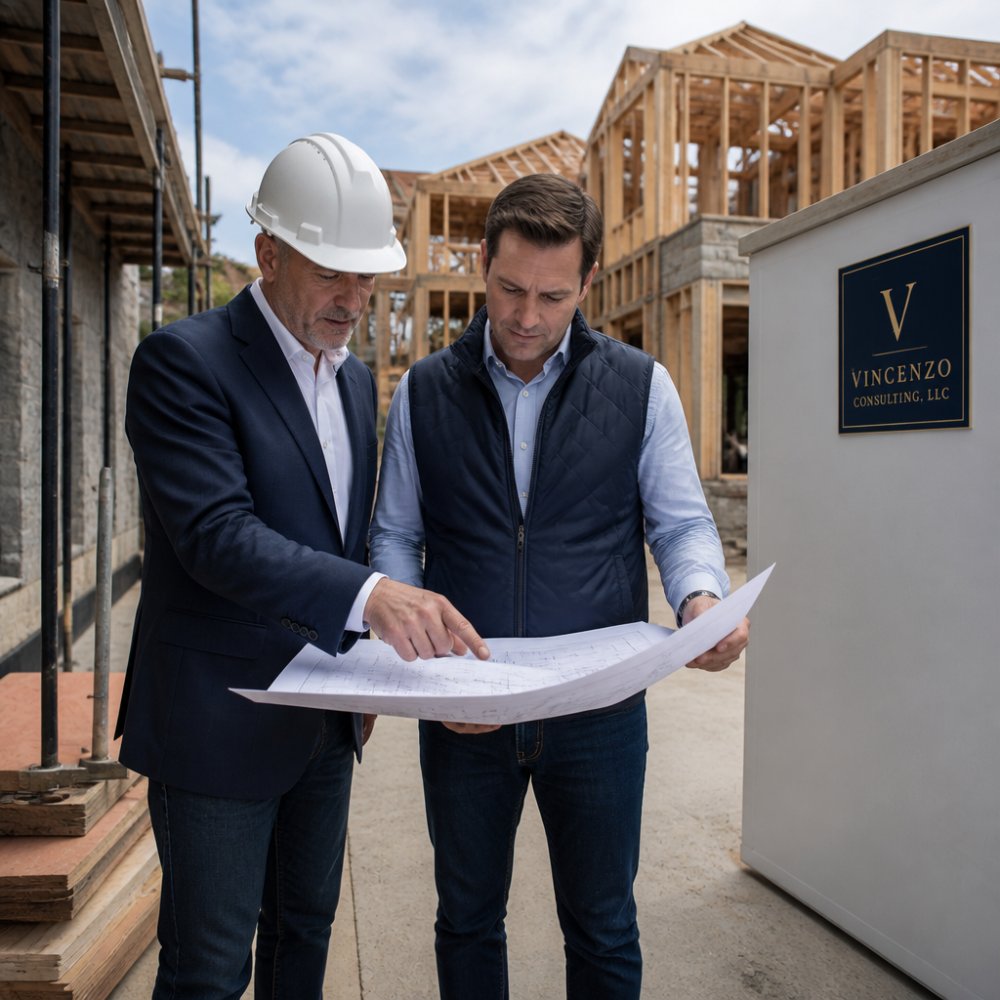
For owners of ultra-luxury homes and complex commercial developments, the choice is clear. Traditional project management coordinates the build; owner's representation protects the investment. The former answers to the schedule, the latter answers to you.
| Oversight Function | What It Prevents | Owner Benefit |
|---|---|---|
| Invoice verification | Overbilling and duplicate charges | Lower effective project cost |
| Change order review | Scope creep and inflated pricing | Budget predictability |
| Site inspections | Defects and substandard workmanship | Higher long-term property value |
| Schedule tracking | Delay disputes and slippage | On-time project delivery |
| Documentation | Contractor disputes and litigation | Stronger legal position |
The most successful owners treat oversight as a non-negotiable part of the project budget, not an optional extra. The cost of independent representation is a fraction of the risk it mitigates. Working with a firm like Vincenzo Consulting, LLC, led by Paul V. Facchina Jr. with over 35 years of executive leadership, gives owners the financial discipline and strategic oversight needed to align scope, budget, and schedule with their objectives. The firm's white-glove approach ensures discreet, rigorous accountability across the entire project lifecycle.
The challenge of any significant construction project is protecting your vision and your capital through months of complexity. Independent oversight is the mechanism that makes that protection possible. Vincenzo Consulting, LLC provides the executive-level advocacy, financial discipline, and quality assurance that discerning owners rely on, with expertise spanning luxury residential, commercial, and infrastructure projects. Get started with Vincenzo Consulting, LLC and bring disciplined accountability to your next build.
Vincenzo Consulting, LLC | www.vincenzoconsulting.com | Contact us for a confidential consultation
Frequently Asked Questions
What is the primary role of construction project oversight?
The primary role is to act as the owner's independent advocate throughout the project lifecycle. This involves monitoring budget control, schedule adherence, and quality assurance on behalf of the property owner. Unlike a general contractor who manages daily build activities, an oversight professional verifies that work meets technical requirements and building standards. This independent review protects your financial investment and ensures the final delivery matches your vision without conflicts of interest.
How does professional oversight impact construction budget control?
Professional oversight directly protects your budget by reviewing change orders, verifying invoices against completed work, and flagging potential cost overruns before they compound. An oversight engineer or consultant typically reviews contractor payment applications and compares them to actual site progress. This financial discipline catches discrepancies early and provides the documentation needed to resolve disputes. The result is better budget control throughout the project and fewer surprise costs at the end.
What is the difference between construction management and owner's representation services?
A construction manager typically works for the contractor or is hired to manage the build process itself. Owner's representation services place a dedicated advocate on your side of the table. The owner's rep does not manage daily trades; they oversee the project management team, verify compliance with safety protocols, and ensure your scope, budget, and schedule are aligned. This distinction matters because an owner's rep has no incentive to favor the contractor when disputes arise.
What are the risks of proceeding with a construction project without independent oversight?
Without independent oversight, owners face higher risks of cost overruns, schedule slippage, and undetected defects. Contractors manage their own quality control, which creates an inherent conflict of interest. Rework from poor workmanship often surfaces only after occupancy and can be expensive to correct. Independent oversight provides site inspections, performance monitoring, and accountability throughout the project lifecycle, reducing the likelihood of disputes and protecting long-term property value.