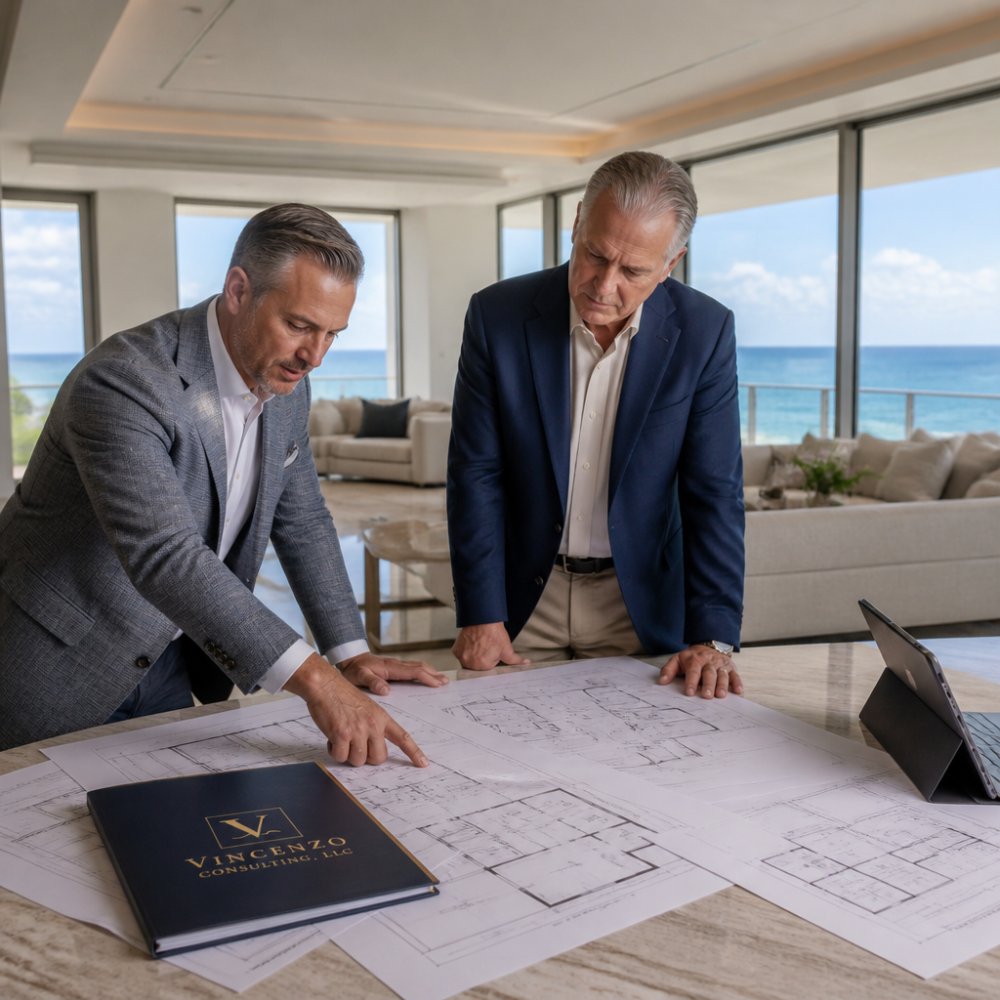
 comparison
Bespoke Property Management Alternatives
Table of Contents
- Why Bespoke Property Management Alternatives Matter for High-Net-Worth Owners
- Owner's Representation for Luxury Residential: Full-Cycle Advocacy
- Construction Oversight Services: Discipline, Accountability, and Cost Control
- High-Net-Worth Estate Management: Beyond Operational Maintenance
- Hybrid Management Models: Combining Software and White-Glove Oversight
- Implementation Costs and Migration Planning
- Portfolio-Specific ROI: Measuring Value Beyond Monthly Fees
- Frequently Asked Questions
Last Updated: September 1, 2026
Why Bespoke Property Management Alternatives Matter for High-Net-Worth Owners
High-net-worth property owners face a critical choice: delegate management to traditional software platforms or engage a bespoke property management alternative that provides white-glove oversight. At Vincenzo Consulting, LLC, we've worked with discerning owners across ultra-luxury residential estates, complex commercial developments, and infrastructure projects. The difference between generic management and tailored representation is substantial. A bespoke property management alternative delivers strategic advocacy, financial discipline, and preservation of your vision across the entire project lifecycle.
Standard property management software treats every portfolio the same way. Rental platforms automate tenant communication and lease tracking. Construction management tools log schedules and budgets. Neither addresses the nuanced reality of high-net-worth estates: protecting your capital, ensuring disciplined execution, managing vendor relationships with discretion, and maintaining accountability when stakes are measured in millions.
This guide explores why a bespoke property management alternative, combining white-glove oversight with strategic representation, outperforms software-only solutions for owners managing luxury residential properties, complex commercial ventures, and high-value estates.
Owner's Representation for Luxury Residential: Full-Cycle Advocacy
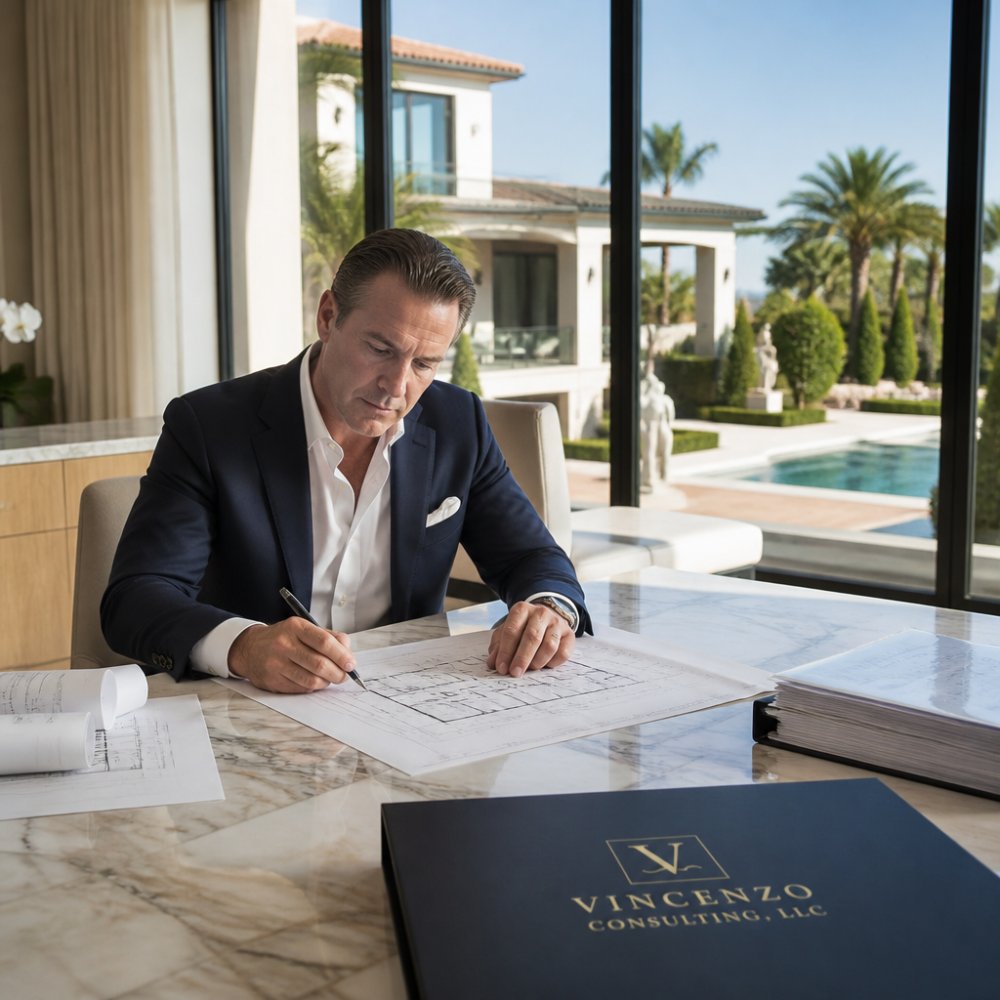
Owner's representation for luxury residential means acting solely in your interest from concept through completion and beyond. This is fundamentally different from construction management, which serves the general contractor or developer. A dedicated representative protects your vision, manages vendor relationships, controls costs, and ensures every decision aligns with your objectives.
When disputes arise, a construction manager employed by the contractor has conflicting loyalties. An owner's representative has one client: you. This changes how problems are handled, how change orders are evaluated, and how quality standards are enforced. For a waterfront estate or complex renovation, this distinction can preserve value in unnecessary costs and protect design integrity throughout construction.
Luxury residential projects demand discretion, expertise in high-end finishes, and relationships with specialized contractors who understand custom work. A bespoke property management alternative coordinates architects, engineers, premium material suppliers, and craftspeople while maintaining confidentiality and ensuring seamless communication. The representative attends site meetings, reviews progress against schedule, validates invoices before payment, and flags potential cost overruns before they compound.
Vincenzo Consulting, LLC brings over 35 years of executive leadership to owner's representation (bbb.org). Our approach ensures alignment of scope, budget, and schedule with your objectives from preconstruction planning through project closeout.
Construction Oversight Services: Discipline, Accountability, and Cost Control
Construction oversight services provide the structure, transparency, and accountability that protect your capital investment. This is active management of schedule, budget, quality, and vendor performance throughout every phase.
Effective construction oversight catches problems before they become expensive. A representative on-site regularly inspects work quality, verifies that materials meet specifications, and ensures contractors follow the agreed timeline. When issues emerge, material delays, subcontractor performance gaps, scope ambiguity, they're addressed immediately rather than compounding into change orders and schedule extensions.

Budget control is the second pillar. Many owners discover mid-project that costs have drifted significantly from the original estimate. Construction oversight prevents this through rigorous cost management: reviewing all invoices before payment, preventing unnecessary change orders, negotiating vendor pricing, and maintaining contingency discipline.
Schedule management ensures the project stays on track. Delays cascade: a missed contractor deadline delays the next trade, which delays inspections and approvals. A dedicated oversight professional manages the critical path, identifies bottlenecks, and coordinates trades to maintain momentum.
Quality assurance ensures materials are as specified, workmanship meets standards, and the final product reflects your investment and vision.
High-Net-Worth Estate Management: Beyond Operational Maintenance
High-net-worth estate management extends beyond the construction phase. Once your custom home or complex property is complete, ongoing management ensures it operates seamlessly, maintains its value, and serves your lifestyle needs.
Estate management addresses the full spectrum of property operations: vendor coordination, maintenance scheduling, systems monitoring, financial tracking, and strategic capital planning. A luxury estate involves specialized systems, smart home integration, wine cellars, theater systems, and grounds that require expert oversight to function properly and maintain long-term value.
The distinction between standard property management and high-net-worth estate management is sophistication and discretion. Standard property managers handle tenant relations and rent collection. Estate management for ultra-luxury properties involves preserving architectural integrity, managing capital improvements, coordinating with architects and specialists, and protecting privacy while maintaining operational excellence.
Estate management coordinates around your schedule, manages staff, maintains systems during periods of non-use, and ensures the property is ready whenever you need it. This requires understanding your priorities, communicating discreetly, and executing flawlessly.
Vincenzo Consulting, LLC provides this level of estate oversight, ensuring your property operates as an extension of your vision and protects your capital investment year-round.
Hybrid Management Models: Combining Software and White-Glove Oversight
The most effective approach for many high-net-worth owners is a hybrid model: using property management software for routine operational tasks while maintaining white-glove oversight for strategic decisions, vendor management, and financial discipline.
How the Split Works in Practice
A hybrid model assigns specific categories of work to each channel:
Software-Managed Tasks (Operational Workflow)
- Lease tracking, rent collection, and payment processing
- Tenant communication portals and automated notices
- Routine maintenance request logging and scheduling
- Financial reporting dashboards and expense categorization
- Document storage and compliance filing
- Calendar management for inspections and renewals
White-Glove Representation (Strategic Oversight)
- Vendor selection, contract negotiation, and relationship management
- Quality assurance and on-site inspections
- Capital improvement planning and ROI analysis
- Budget variance analysis and cost control decisions
- Lease amendment negotiations and tenant disputes
- Strategic property positioning and market analysis
- Discretionary communication on sensitive matters
Software excels at volume, consistency, and routine execution. Human judgment excels at exception handling, relationship leverage, and decisions that affect capital preservation.
Implementation Structure
Successful hybrid models follow this workflow:
-
Data flows into software first. All lease documents, vendor contacts, maintenance records, and financial transactions enter the platform as the single source of truth.
-
Software generates alerts and reports. The system flags lease expirations, maintenance patterns, expense anomalies, and compliance deadlines. Your representative reviews these reports weekly or monthly.
-
Your representative acts on exceptions and strategy. When software flags a vendor cost spike, your representative investigates and negotiates. When a lease approaches renewal, your representative handles negotiation while software tracks the administrative process.
-
Decisions flow back into software. Once your representative approves a vendor contract or authorizes a capital project, those decisions are logged in the system, creating an audit trail.
This structure prevents duplication, ensures accountability, and keeps your representative focused on high-value decisions rather than administrative busywork.
Real-World Trade-Offs
Hybrid models are not cost-neutral. You're paying for both software and representation, which costs more than software alone but typically less than full white-glove management. The trade-off is worth it when your portfolio is large enough that software automation saves meaningful time, your properties have sufficient complexity that strategic decisions occur regularly, and you value documented decision-making and audit trails.
Hybrid models underperform when your portfolio is small and simple, you lack the bandwidth to actively review reports and make strategic decisions, or your properties are so specialized that software cannot capture their nuances.
Coordination and Communication
The hybrid model's success depends on clear communication between your representative and the software platform. This typically requires weekly or bi-weekly reporting cadence, defined escalation triggers, shared platform access, and quarterly strategy reviews.
For owners managing multiple properties or complex portfolios, this hybrid approach scales effectively. Software provides visibility across all properties; your representative focuses on exceptions, opportunities, and strategic decisions.
Implementation Costs and Migration Planning
Moving from one management approach to another involves real costs and operational considerations that extend beyond the monthly service fee.
Direct Implementation Costs
When transitioning to a bespoke property management alternative, budget for data migration and system setup, transition and handoff, and staff training and process documentation. Data migration typically involves export, cleaning, import, system configuration, user setup, and document digitization. Transition requires intensive briefing on existing vendor relationships, lease terms, property conditions, and your specific priorities. Staff training includes software training and operational manual creation.
Hidden Costs Often Overlooked
Operational Disruption During transition, response times to tenant issues, vendor requests, and maintenance emergencies may slow as your new representative learns the portfolio. For active construction projects, transition mid-project introduces significant risk; time the change to project milestones when possible.
Vendor Renegotiation Your new representative may identify better pricing or terms with existing vendors, but renegotiating contracts takes time and may involve termination fees. Some vendors may resist change; budget for potential service disruptions while transitioning.
Compliance and Audit Gaps If your previous system lacked documentation, your new representative may need to reconstruct lease files, vendor contracts, or maintenance records.
Phased Transition Timeline
Most successful transitions follow this sequence:
Weeks 1-2: Discovery and Planning Your new representative conducts a full portfolio audit: property condition assessments, lease review, vendor evaluation, and financial reconciliation. Outcome: a transition plan, risk assessment, and 90-day priority list.
Weeks 3-6: Parallel Operations Your new representative shadows current management, attends vendor meetings, and reviews active projects. Both old and new representation are active; decisions are made collaboratively.
Weeks 7-10: Gradual Handoff Routine decisions shift to your new representative; your current manager remains available for questions. Your new representative begins implementing improvements identified during discovery.
Week 11+: Full Transition Your new representative manages all decisions and operations independently.
For Properties Under Active Construction or Renovation
Migration timing is especially critical. Bringing in a new oversight representative mid-project introduces risk if continuity is lost. Engage the new representative at least 4 weeks before the transition date, conduct a detailed site walkthrough, establish a 2-week overlap where both representatives attend site meetings, and ensure the new representative has direct relationships with the general contractor, architect, and key subcontractors.
Calculating True Cost of Ownership
When evaluating the financial impact of migration, compare total cost of ownership, not just monthly fees. For most high-net-worth owners, the one-time implementation cost is recovered through disciplined cost management and avoided problems.
Portfolio-Specific ROI: Measuring Value Beyond Monthly Fees
Evaluating a bespoke property management alternative requires looking beyond monthly service costs to portfolio-specific returns. The value of disciplined oversight is measured in capital preservation, avoided costs, and strategic gains.
Without rigorous oversight, cost overruns are common on large developments. Disciplined construction oversight delivers substantial savings. For a waterfront estate, quality issues discovered after completion cost exponentially more to remedy than prevention during construction (peer-reviewed research). A vendor dispute over materials or workmanship, unresolved during construction, becomes a litigation liability afterward (aia.org). Disciplined oversight prevents these downstream costs.
Portfolio-specific ROI also includes opportunity gains. A representative who understands your objectives can identify cost optimization opportunities, negotiate better terms with vendors, and recommend strategic improvements that enhance long-term value. These opportunities often exceed the cost of representation.
The mistake many owners make is comparing the monthly fee of a property management alternative to their current costs without accounting for what they're actually paying through inefficiency, deferred maintenance, and compromised quality. A transparent analysis comparing total cost of ownership including risk, quality, and strategic value typically shows that bespoke oversight delivers measurable returns.
Protect your vision and preserve your capital.
Vincenzo Consulting, LLC delivers white-glove owner's representation and construction oversight for ultra-luxury residential estates, complex commercial projects, and infrastructure developments. With over 35 years of executive leadership, we provide disciplined project execution, financial accountability, and strategic advocacy aligned with your objectives.
Learn how we protect high-net-worth owners and investors:
Vincenzo Consulting, LLC
Website: vincenzoconsultingllc.com
Email: Contact Vincenzo Consulting
Frequently Asked Questions
Q: What is the difference between property management software and owner's representation?
A: Property management software automates routine tasks like rent collection, maintenance requests, and financial reporting across multiple units or properties. Owner's representation, by contrast, provides strategic executive-level advocacy and disciplined oversight for high-value projects or estates. Software scales efficiently across large rental portfolios; owner's representation focuses on protecting your vision, preserving long-term value, and ensuring alignment of scope, budget, and schedule, particularly critical for ultra-luxury or complex developments where personalized judgment matters more than automation.
Q: When should a high-net-worth individual hire construction oversight services instead of relying on a general contractor?
A: Construction oversight services become essential when your project involves significant capital, multiple stakeholders, complex timelines, or specialized requirements. A general contractor manages day-to-day construction; an owner's representative independently monitors costs, enforces quality standards, and protects your interests. For luxury residential estates, complex commercial developments, or infrastructure projects, dedicated oversight ensures financial discipline, prevents cost overruns, catches quality issues before they escalate, and provides you with transparent, unbiased reporting rather than relying solely on the contractor's own assessments.
Q: How does white-glove owner's representation protect long-term property value?
A: White-glove owner's representation protects value through rigorous financial discipline, vendor management, and quality assurance at every phase. By monitoring budgets tightly, preventing unnecessary change orders, ensuring adherence to specifications, and maintaining transparent documentation, these services prevent the cost overruns and quality shortcuts that erode asset value. Additionally, experienced representation identifies long-term operational implications during design and construction, ensuring systems, materials, and workflows support efficient management and preserve the property's luxury positioning and functionality for decades.
Q: What are the limitations of automated property management systems for ultra-luxury homes?
A: Automated systems excel at scaling routine operations across many units but falter with ultra-luxury properties. They cannot make nuanced decisions about vendor selection, cannot advocate on your behalf in contractor disputes, and lack the judgment to balance cost savings against quality preservation. Luxury estates require personalized attention to detail, discretion, and strategic decision-making that software cannot provide. Additionally, automated systems focus on maximizing rental yield or minimizing operational costs, not on protecting your vision or preserving the exclusive character and long-term value that define ultra-luxury real estate.
Q: How do you ensure financial discipline in complex infrastructure developments?
A: Financial discipline in infrastructure projects requires independent oversight of all contracts, change orders, and invoicing. Dedicated construction oversight services review monthly payments against budgets, prevent unauthorized scope changes, negotiate vendor agreements to align incentives with your objectives, and maintain transparent cost reporting. This independent verification, separate from the general contractor's own accounting, catches cost drift early, prevents budget surprises, and ensures every dollar spent delivers intended value. For large-scale infrastructure with government permitting and environmental compliance, this oversight also tracks regulatory and compliance costs separately to prevent hidden overruns.
This article was written using GrandRanker