 listicle
Choosing Owner Representation for Estates: 2026 Guide
Table of Contents
- What Owner Representation for Estates Actually Involves
- The Benefits of Hiring an Owner's Representative
- Owner's Representative Interview Questions That Reveal Real Capability
- Construction Oversight for Luxury Homes: What White-Glove Service Looks Like
- Professional Fiduciary vs. Family Member: Weighing the Options
- How to Structure the Engagement and Fee Agreement
- Frequently Asked Questions
Last Updated: September 14, 2026
What Owner Representation for Estates Actually Involves
Choosing owner representation for estates means hiring an independent advocate who manages your construction project's budget, schedule, and contractors on your behalf. At Vincenzo Consulting, LLC, we've spent more than 35 years watching owners lose control because nobody was watching the people doing the work.
An owner's representative is a fiduciary for the owner, not the builder.
Owner's Rep vs. General Contractor vs. Architect
- General contractor: builds the project and controls the means and methods. Paid from construction cost, so scope growth can serve their margin.
- Architect: designs the project and observes construction for design intent. Typically not contractually empowered to manage your money.
- Owner's representative: represents you alone, with authority over budget, schedule, and contractor performance.
The American Institute of Architects contract documents draw the line between design observation and construction oversight. An owner's rep sits on your side of that line.
The Benefits of Hiring an Owner's Representative
The clearest benefit is financial discipline: an owner's rep reviews every change order, pay application, and contractor claim before your money moves, exposing markup most owners never see.
A rep also protects your vision by holding architects and contractors to what you approved.
The Cost of Incompetence: What Goes Wrong Without Oversight
Without independent oversight, projects fail predictably: change orders get approved by whoever answers the phone, schedule slips become the contractor's excuse, and scope creeps until the finished estate resembles nothing you drew.
The cost of incompetence isn't one bad invoice, it's a hundred small approvals nobody checked.
Owner's Representative Interview Questions That Reveal Real Capability
Most interview questions let candidates recite credentials. Better questions force them to describe decisions.
Use this checklist when you interview candidates:
- Walk me through a change order you rejected. What was the contractor's argument, and how did you respond?
- How do you handle a general contractor who stops returning calls mid-project?
- Describe a time you caught a defect before it was covered up. What did you do next?
- What authority do you expect in the contract, and what do you refuse to be responsible for?
- How do you report to an owner who is out of state for months at a time?
The answers reveal whether a candidate has sat in the trailer during a dispute or only managed from a spreadsheet.
Evaluating Succession Planning and Cross-State Capability
Ask what happens if your representative becomes unavailable. A serious firm has a succession plan: a named principal, documented project files, and a transition protocol. If the answer is "we'd figure it out," that's your answer.
Cross-state capability matters for estates in more than one jurisdiction. Building codes, licensing requirements, and lien laws vary by state, so confirm your candidate has worked under the specific regulatory regime governing your site. A rep who knows only one state's rules will miss deadlines with real legal consequences.
Construction Oversight for Luxury Homes: What White-Glove Service Looks Like
White-glove oversight means your representative is on site, not reviewing reports from an office. Luxury estates fail on details: a mismatched stone vein, a millwork reveal off by a fraction, a mechanical system installed in the wrong sequence.
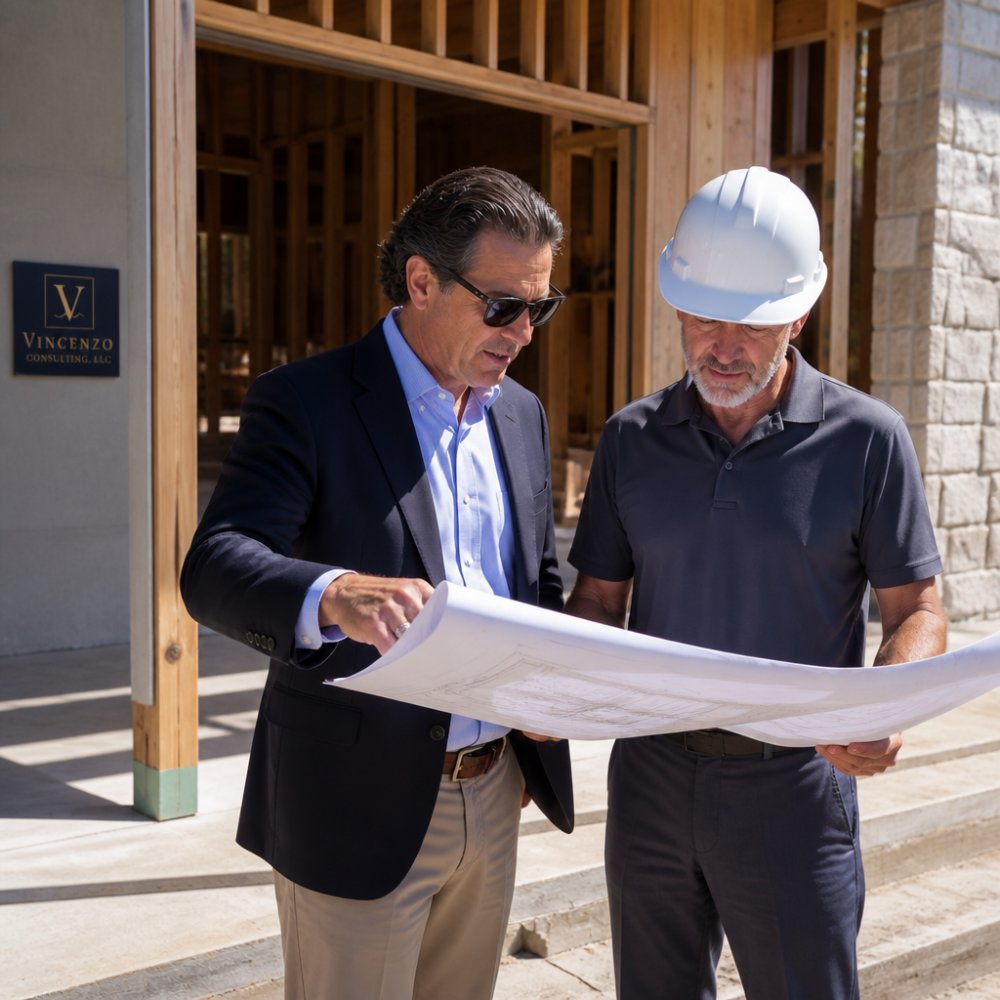
The reps who catch these problems walk the site weekly, photograph progress, and compare installed work against the approved drawings. Remote tools help, but the Occupational Safety and Health Administration construction standards still require on-site judgment for safety and quality.
Professional Fiduciary vs. Family Member: Weighing the Options
Appointing a family member as your representative feels natural and costs nothing up front. It also creates the conditions for conflict, and, in an estate context, for legal exposure a purely construction-focused guide will never mention.
A family member brings trust and knowledge of your wishes, but rarely construction literacy, contract authority, or the willingness to tell a contractor no. When money runs short or a sibling disagrees, the family relationship absorbs the damage. Worse, if that family member also serves as personal representative, every construction decision becomes a fiduciary act subject to probate court scrutiny.
A professional fiduciary brings documented process, legal liability, and neutrality. The trade-off is cost and a stranger's learning curve.
The Fiduciary Standard That Actually Applies
Most states hold a personal representative to the "prudent investor" or "prudent person" standard, the care a careful person would use in managing their own affairs (prudent investor rule | Wex | US Law). When the estate owns real property under construction, that standard extends to construction decisions: approving a change order without review, paying an invoice for unverified work, or letting a contractor self-certify completion can all be characterized as a breach of fiduciary duty. Beneficiaries have standing to challenge those decisions in probate court, and the personal representative's own assets can be in scope if the estate's errors-and-omissions coverage is thin.
A professional owner's representative who is not also the personal representative does not eliminate that exposure, but it creates a documented, defensible record of independent review, often the difference between a beneficiary complaint that gets dismissed and one that gets litigated.
Co-Fiduciary Conflicts Nobody Warns You About
When two or more people serve as co-representatives, common when siblings inherit together, the law generally requires unanimous action on major decisions unless the will or court order says otherwise. In construction, a single co-representative can stall a change order, a draw request, or a contractor termination. A professional representative operating under a defined scope of authority can act without waiting for family consensus, which is why estates with multiple heirs often hire one.
Comparison at a Glance
| Option | Strength | Weakness | Best For |
|---|---|---|---|
| Family member (also serving as personal representative) | Trust, knowledge of wishes, no added fee | No construction expertise, fiduciary exposure, conflict risk | Simple projects, single heir, tight budgets |
| Professional fiduciary (independent owner's rep) | Expertise, neutrality, documented process, liability insurance | Cost, onboarding time, must be granted real authority | Complex estates, multiple heirs, contested or high-value property |
| Hybrid arrangement | Family oversees, professional executes | Requires a clear written authority split or it collapses | Estates with active but non-expert family involvement |
The Successor Question
Most guides stop at "pick someone you trust." The harder question is what happens if that person dies, becomes incapacitated, or resigns before the project is finished. A serious engagement names a successor representative in writing, transfers project files on a defined schedule, and gives the estate, not the departing rep, the right to appoint a replacement. If a candidate cannot describe their succession protocol in specific terms, treat that as a disqualifier.
If heirs are involved, the neutrality of a professional matters more than most owners expect. A rep who answers to the estate rather than to one sibling can absorb disputes that would otherwise fracture the family, and produce the paper trail that keeps those disputes out of court.
How to Structure the Engagement and Fee Agreement
The engagement letter determines whether your representative has real authority or just a title, and, in an estate context, whether the probate court will accept the arrangement without a fight. Get it in writing before work begins.
Estate-Specific Terms to Define
- Source of authority: Is the representative engaged by the personal representative in their fiduciary capacity, by the estate directly, or by the heirs? The answer affects who can terminate the contract and who is liable for breach.
- Scope of authority: what the rep can approve unilaterally, and what requires sign-off from the personal representative or the court. Many wills and court orders require prior approval for expenditures above a threshold.
- Fee structure: hourly, retainer, or percentage of construction cost, with the basis stated plainly. Confirm whether the fee is payable from estate assets and whether court approval is required.
- Reporting cadence: how often the personal representative receives written budget and schedule updates, and in what form, because those reports may need to be filed with the court.
- Insurance and indemnification: professional liability (errors and omissions) coverage, general liability, and whether the estate is named as an additional insured.
- Conflict provisions: what happens if the rep and contractor disagree, and who breaks the tie.
- Termination and succession: how either party exits, and who steps in if the rep becomes unavailable.
Cross-State and Multi-Jurisdiction Engagements
Estates frequently hold property in more than one state, a primary residence, a vacation property, a rental, or a business interest. Each state has its own licensing requirements, lien laws (mechanics' liens are state-specific and deadline-driven), and probate procedures for ancillary administration. A representative who has only worked in one state may miss a lien filing deadline or a licensing requirement that voids a contract.
Ask any candidate to describe a project they managed outside their home state, and how they handled the ancillary probate filing if one was required. A vague answer is a warning sign.
Succession Planning for the Representative
Most guides ignore what happens if the chosen representative dies, becomes incapacitated, or resigns mid-project. In an estate context, that risk is amplified: the personal representative may also be aging, ill, or subject to removal by the court. A serious engagement names a successor representative, documents the transition protocol, and requires the outgoing rep to deliver project files, contracts, change orders, pay applications, inspection reports, correspondence, to the successor within a defined window.
If a candidate cannot describe their succession protocol in specific terms, treat that as a disqualifier. "We'd figure it out" is not a plan.
A Note on Fee Comparisons
Fee structures vary widely by project complexity, market, and scope of authority. Comparing headline numbers is misleading because the basis differs, an hourly rep who reviews every pay application is not comparable to a percentage-of-cost rep who only attends monthly meetings. Ask each candidate to explain their basis, what it includes, and what triggers additional fees. Vincenzo Consulting, LLC structures engagements around the specific scope, budget, and schedule of each project, and can work within the authority granted by the estate's governing documents.
Vincenzo Consulting, LLC Vincenzoconsultingllc.com
Frequently Asked Questions
What is the primary role of an owner's representative in estate construction?
An owner's representative acts as your advocate throughout the project, managing scope, budget, and schedule while holding contractors accountable. They review invoices, monitor progress, coordinate between architects and builders, and flag problems before they become expensive. Unlike a general contractor who builds, the owner's rep works exclusively for you, ensuring your vision and financial interests stay protected from design through final walkthrough.
What qualifications should you look for in a luxury estate owner's representative?
Look for demonstrated experience on projects of similar scale and complexity, a track record of keeping costs within budget, and familiarity with the specific challenges of high-end residential or commercial construction. Ask about their approach to financial reporting, how they handle contractor disputes, and whether they carry any required licensing or bond. Strong candidates also show they can work with your legal counsel and understand fiduciary duty.
How does owner representation differ from a general contractor or architect?
A general contractor builds and manages trades; an architect designs. An owner's representative neither designs nor builds. Instead, they oversee both, ensuring the contractor delivers what was promised and the architect's vision stays intact without unnecessary change orders. This independent oversight prevents conflicts of interest, since the owner's rep has no financial stake in construction costs or design fees.
When should you hire an owner's representative for a complex development?
Bring one on before construction begins, ideally during pre-design or early schematic phases. Early involvement lets them validate budgets, review contracts, and establish reporting systems before problems take root. For projects with multiple stakeholders or government permitting, independent oversight can help avoid overruns and schedule delays.