 how-to
Managing Multiple Stakeholders in Construction
Table of Contents
- Introduction
- Managing Multiple Stakeholders in Construction: A Step-by-Step Framework
- Building a Stakeholder Communication Plan for Construction Projects
- Construction Project Accountability Strategies That Work
- Managing Conflicting Interests in Construction Projects
- Digital Collaboration Tools for Stakeholder Engagement
- Crisis Communication Protocols and Post-Project Handover
- Conclusion
- Frequently Asked Questions
Last Updated: September 16, 2026
Introduction
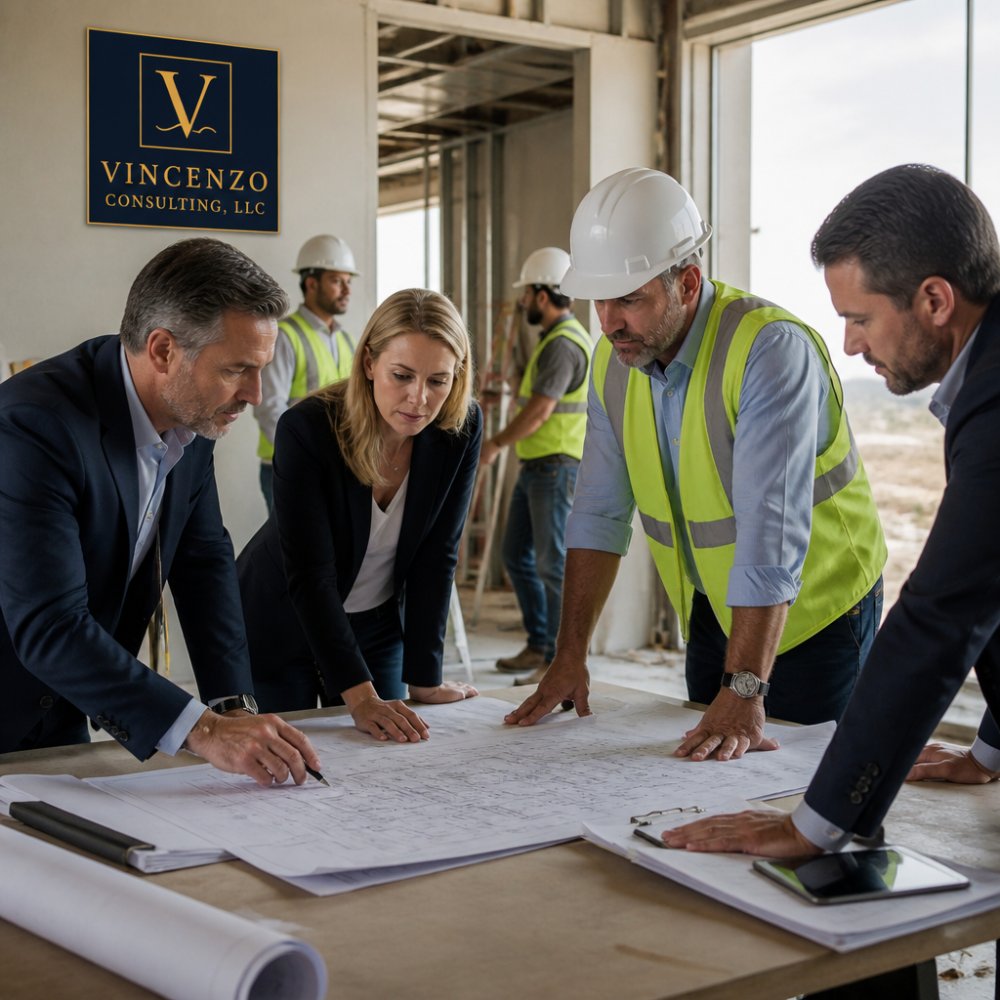
Managing multiple stakeholders in construction is the discipline that separates projects that finish on budget from those that dissolve into disputes. At Vincenzo Consulting, LLC, we've spent more than 35 years watching owner's representation succeed or fail on exactly this skill. This guide breaks down a step-by-step framework for identifying, prioritizing, and aligning every party with a claim on your project.
Every large build carries a hidden org chart. The owner, the general contractor, the architect, the lender, the permitting authority, and the surrounding community all hold different definitions of success. When those definitions collide, schedules slip and budgets bleed. The framework below gives you a repeatable way to map that org chart, communicate across it, and hold each party accountable without becoming the bottleneck yourself.
Project Management Institute guidance on stakeholder engagement
Managing Multiple Stakeholders in Construction: A Step-by-Step Framework
Managing multiple stakeholders in construction means identifying every party with influence over or interest in the project, ranking them by power and impact, and building communication and accountability structures around that ranking. The framework has two starting steps: map the players, then categorize what they actually want.
Step 1: Identify and Map Every Stakeholder
Start by listing everyone who can influence the project's scope, budget, schedule, or public perception. A common mistake is stopping at the obvious names: owner, architect, contractor. The parties that cause the most damage are usually the ones nobody wrote down.
Build your list across these categories:
- Internal: ownership group, family office representatives, asset managers
- Delivery: general contractor, subcontractors, specialty trades, suppliers
- Design: architect, structural and MEP engineers, interior designers, landscape architects
- Regulatory: building department, environmental review agencies, utility providers
- Financial: lenders, insurers, bonding companies
- External: adjacent property owners, community groups, preservation boards
Once the list exists, place each name on a power-interest matrix. High power and high interest parties get the most attention; low-power, low-interest parties get monitoring only.
Step 2: Categorize Interests and Assess Influence
Two stakeholders can both be "high priority" and still want opposite things. Categorizing interests prevents that trap.
Group each stakeholder's core interest into one of four buckets: financial return, design intent, regulatory compliance, or schedule certainty. Then rate their influence on a simple scale, from advisory to decision-making authority. A preservation board with advisory status but strong public relations reach may outrank a lender on certain design questions. The matrix tells you who to consult, who to inform, and who merely needs a status update.
Building a Stakeholder Communication Plan for Construction Projects
A stakeholder communication plan for construction projects is a written schedule that defines who receives what information, in what format, and how often. Without it, updates happen reactively, and reactive updates are how rumors start.
Structure the plan around three tiers:
| Tier | Stakeholders | Frequency | Format |
|---|---|---|---|
| Executive | Owner, lender, family office | Biweekly | Dashboard and call |
| Operational | GC, architect, key trades | Weekly | Site meeting and minutes |
| Informational | Community, adjacent owners | Monthly | Written update |
Document every decision in a single shared log with a named owner and a due date. Transparency here isn't a courtesy; it's a risk assessment tool. When a dispute later arises, the log becomes your evidence trail.
Feedback mechanisms matter as much as outbound updates. Give each tier a defined channel to raise concerns, and close the loop on every item raised. Unanswered concerns migrate into conflict.
Occupational Safety and Health Administration construction standards
Construction Project Accountability Strategies That Work
Effective construction project accountability strategies rest on three pillars: clear ownership of every deliverable, measurable key performance indicators, and consequences written into contracts before work begins. Accountability fails when it lives only in conversation.
One name per deliverable. Assign a single accountable person to every project deliverable, not a committee. Shared ownership is unowned. On a typical build, that means one name against the permit set, one against the structural package, one against the MEP coordination model, one against the closeout binder. If two people could sign off, neither will.
KPIs the owner can actually measure. Pair each deliverable with a metric that updates on a fixed cadence, not a subjective status color:
- Schedule variance against the baseline, reviewed at every phase gate
- Change-order frequency and dollar value per trade
- First-pass inspection rate by jurisdiction
- Cost-to-complete accuracy versus the original budget
- RFI response time by responsible party
Contract levers that give accountability teeth. Accountability without a contractual consequence is a suggestion. The instruments that actually move behavior on most projects are retainage, milestone payments tied to inspection sign-off, liquidated damages for schedule overruns, and performance benchmarks written into subcontracts. Review performance against KPIs at every phase gate, design completion, permit issuance, foundation, topping out, and closeout, not just at the end, so problems surface while they are still cheap to fix.
A decision-rights matrix. Write down who decides what before the first dispute. Design changes above a defined threshold go to the owner. Means-and-methods questions go to the general contractor. Code interpretation goes to the authority having jurisdiction. When the matrix is silent, the default becomes escalation, and escalation becomes delay.
Close the loop publicly. Post the KPI dashboard where every tier of the stakeholder map can see it. Accountability that only the owner's team can observe is accountability that only the owner's team feels.
Managing Conflicting Interests in Construction Projects
Managing conflicting interests in construction projects requires separating the positions parties argue for from the underlying interests they actually need. Most conflicts are not about the stated issue; they're about money, control, or risk exposure.
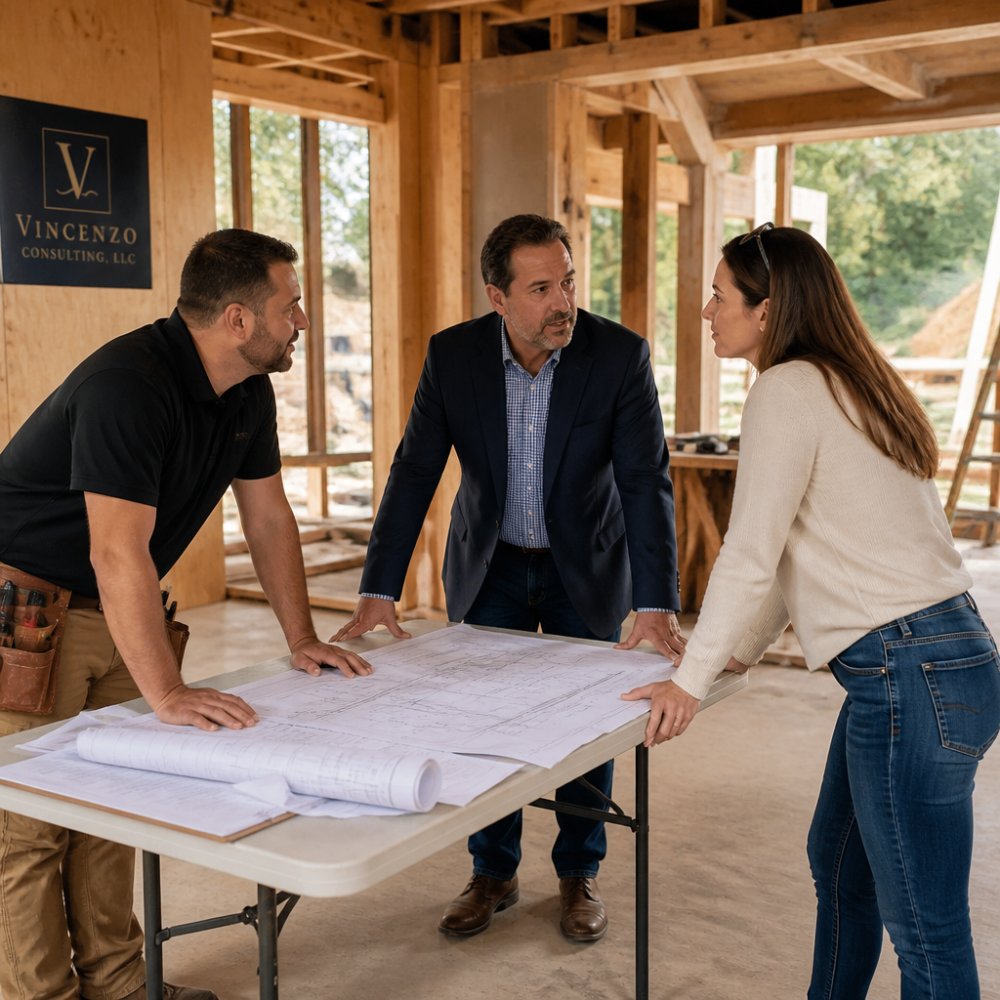
Take a classic dispute: the owner wants a design change, the contractor wants a change order, and the architect wants design integrity preserved. The positions conflict. The interests may not. A structured negotiation that addresses cost, schedule impact, and design intent separately often produces a solution all three accept.
Run the interest-separation sequence.
- Convene a joint session with all affected parties before positions harden.
- Restate each party's interest back to them until they confirm you've got it right.
- Separate the technical question from the relationship question.
- Document the resolution and the rationale, not just the outcome.
Build an escalation ladder before you need it. Most projects stall because nobody wrote down who breaks a tie.
Match the tool to the conflict type.
- Scope and cost disputes: change-order negotiation with a documented cost and schedule impact analysis.
- Design intent disputes: design-assist or peer review with the architect of record.
- Schedule disputes: critical-path analysis with float ownership defined in the contract.
- Regulatory disputes: pre-application meetings with the authority having jurisdiction before formal submittal.
- Community disputes: a standing liaison and a published construction-impact schedule.
Debrief every resolved conflict. After closeout of a dispute, capture what triggered it, what resolved it, and what contract language would have prevented it. That debrief is the cheapest risk-mitigation tool on the next project.
Digital Collaboration Tools for Stakeholder Engagement
Digital collaboration platforms have changed how interdisciplinary teams share project documentation, but the tool matters less than the discipline around it. A shared platform only helps if every stakeholder actually uses it.
Crisis Communication Protocols and Post-Project Handover
Two phases get neglected in most stakeholder plans: the crisis and the handover. Both determine whether a project's reputation survives contact with reality.
U.S. Environmental Protection Agency construction and environmental compliance resources
Conclusion
Managing multiple stakeholders in construction comes down to structure: map the players, categorize their interests, communicate on a fixed schedule, and hold every party to written accountability. The projects that go smoothly aren't the ones with fewer stakeholders; they're the ones where the owner's team built the framework before the first conflict appeared. Get the mapping and communication architecture right early, and the harder conversations later become manageable rather than existential.
Frequently Asked Questions
What are the 7 C's of stakeholder management in construction?
The 7 C's are: Communication, Consistency, Clarity, Commitment, Collaboration, Conflict resolution, and Continuous improvement. In construction, these principles guide how you engage trade partners, regulatory bodies, and owners throughout the project lifecycle. For example, consistent weekly reports build trust, while clear escalation paths resolve disputes before they delay the schedule. Applying all seven keeps managing multiple stakeholders from becoming reactive.
How do you resolve conflicting priorities among construction stakeholders?
Start by mapping each stakeholder's interests against project objectives using a power-interest matrix. Then facilitate a negotiation session where trade-offs are explicit: if the owner wants a faster schedule, the contractor may need overtime budget. Document agreements in a decision log and tie them to project success criteria. When managing conflicting interests in construction projects, a neutral owner's representative often speeds consensus because they advocate for the project, not a single party.
How do you maintain project accountability with multiple stakeholders?
Use construction project accountability strategies such as a responsibility assignment matrix (RACI), weekly progress audits, and a shared issue log with clear owners and deadlines. Define key performance indicators for cost, schedule, and quality, then review them in every stakeholder meeting. Transparency about who owes what by when reduces finger-pointing. An owner's representative can enforce accountability by tying payments to verified milestones and documented deliverables.
What is the role of an owner's representative in stakeholder management?
An owner's representative acts as the owner's advocate, managing communication among the design team, general contractor, regulatory bodies, and community groups. They translate technical updates into decision-ready information, monitor budget and schedule, and step in when disputes arise. For complex projects, this role prevents the owner from being overwhelmed by daily coordination. Firms like Vincenzo Consulting, LLC provide this white-glove oversight, ensuring alignment with the owner's vision and long-term property value.