 how-to
Navigating Complex Government Permitting: A Step-by-Step Guide
Table of Contents
- Understanding the Permit Lifecycle
- Mastering Permitting Process Timeline Management
- Managing Government Agency Stakeholders Effectively
- Navigating Federal vs. Local Regulatory Frameworks
- Construction Project Accountability Strategies Throughout Permitting
- Common Pitfalls in Permit Applications and How to Avoid Them
- Managing Permit Denial and Appeal Processes
- Conclusion
- Frequently Asked Questions
Last Updated: September 19, 2026
Navigating Complex Government Permitting: A Step-by-Step Guide
Navigating complex government permitting involves multiple agencies, overlapping regulations, unclear timelines, and costly delays. Understanding the process prevents months of stalled projects.
The difference between smooth projects and stalled ones comes down to understanding permitting process timeline management and stakeholder coordination from day one.
Understanding the Permit Lifecycle
The permit lifecycle is a series of interconnected phases, each with its own requirements, timelines, and decision points. Most projects fail by treating permitting as a compliance checkbox rather than a strategic process.
Here's what actually happens:
Pre-Application Phase: Identify agencies with jurisdiction, understand their requirements, and conduct informal conversations. A pre-application meeting can save months.
Application Submission: File formal applications with complete documentation. Incomplete submissions trigger resubmissions that add weeks.
Agency Review: Agencies review for completeness and substantive compliance, often requiring public notices, environmental assessments, or inter-agency coordination.
Approval or Conditional Approval: Most permits include conditions, requirements you must satisfy before construction starts.
Post-Approval Compliance: Maintain compliance throughout construction via inspections, reporting, and documentation.
Understanding this structure tells you where delays happen and where you can prevent them.
Mastering Permitting Process Timeline Management
Agency timelines are not linear. A stated "30-day" review assumes complete submission and no additional information requests. The clock stops and restarts based on completeness and inter-agency coordination.
Build a realistic timeline by working backwards from your construction start date. Don't assume linear progress.
- Identify all required permits, zoning, building, environmental, utility, health, safety. Each one has its own review cycle.
- Map agency dependencies, some permits can't start until others are approved. Know the sequence.
- Add buffer time, plan for one round of requested revisions minimum. Most applications require at least one resubmission.
- Track decision points, know when agencies make decisions and what triggers the next phase.
Add 30-60 days to stated review periods for clarifications, resubmissions, and inter-agency coordination.
Pre-application conversations with agency staff prevent months of delays. Most agencies offer pre-application processes for this purpose.
| Phase | Typical Duration | What Triggers It | Common Delays |
|---|---|---|---|
| Pre-Application | 2-4 weeks | Project definition | Incomplete project scope |
| Application Prep | 4-8 weeks | Pre-app feedback | Missing documentation |
| Agency Review | 6-12 weeks | Submission | Requests for information |
| Revisions | 2-6 weeks | Agency feedback | Scope conflicts |
| Approval | 1-2 weeks | Final compliance | Conditions negotiation |
Managing Government Agency Stakeholders Effectively
Most projects break down here. Multiple agencies with different priorities and timelines don't coordinate automatically, you must facilitate coordination.
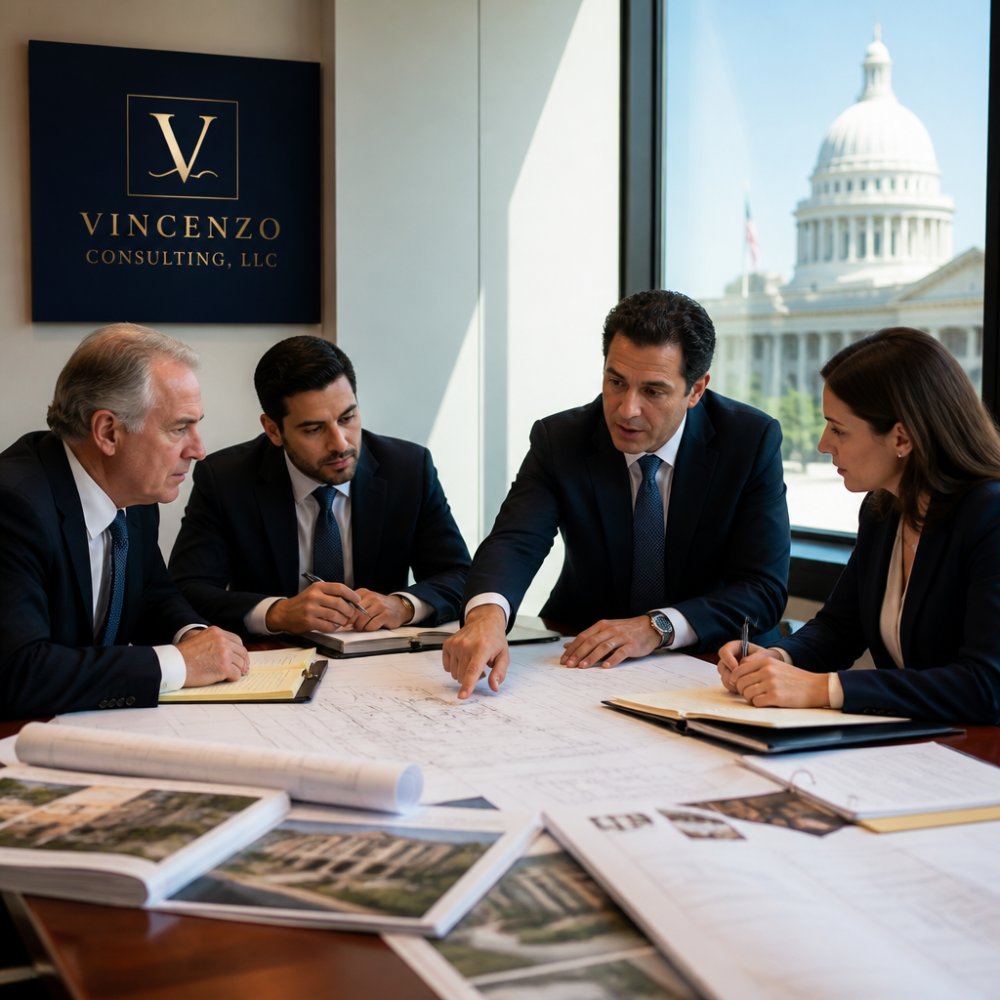
Identify every stakeholder early. Not just the primary permitting agency. Environmental review, traffic, utilities, historic preservation, public works, each one is a stakeholder.
Assign a single point of contact at each agency. Don't rotate who talks to them. Build a relationship with one person who understands your project and can advocate for you internally.
Communicate proactively. Don't wait for agencies to request information. Submit complete packages upfront. Follow up on timelines without being aggressive. Show that you're organized and responsive.
Understand their constraints. Agencies move slowly due to backlogs, staffing limits, and legal requirements. Understanding their reality helps you work within it.
Escalate strategically. Know when and to whom to escalate stalled timelines or decisions.
Agencies want certainty. Demonstrating a well-planned project, complete documentation, and responsiveness accelerates approval.
Navigating Federal vs. Local Regulatory Frameworks
Complex projects operate under federal, state, and local frameworks that don't always align. Understanding which rules apply and how to resolve conflicts prevents costly redesigns and delays.
The Regulatory Hierarchy
Federal law sets the floor. State law can be stricter than federal. Local law can be stricter than both but cannot be weaker.
Federal requirements are mandatory. State requirements can exceed federal standards. Local rules are often strictest and frequently exceed federal and state minimums.
When rules conflict, the strictest rule applies. A waterfront project may need federal wetland standards, state water quality standards, and local stormwater standards, all three must be satisfied.
Common Federal Triggers and Their Requirements
National Environmental Policy Act (NEPA) Review: NEPA applies when a federal agency issues a permit, provides funding, or approves a project on federal land. It requires an Environmental Assessment (EA, 6-12 months) or Environmental Impact Statement (EIS, 12-24+ months).
Clean Water Act Section 404 Permit (Army Corps of Engineers): Required for projects affecting wetlands or waters of the U.S. Nationwide Permits (minor impacts, 30 days) or Individual Permits (major impacts, 6-12 months). The Corps can deny if impacts are unjustified or less damaging alternatives exist.
Endangered Species Act Consultation: Required if your project affects threatened or endangered species. Informal consultation: 30-90 days; formal consultation: 6-12 months.
Clean Air Act Conformity: In nonattainment areas, projects must demonstrate conformity with state air quality plans via modeling and mitigation (3-6 months).
Historic Preservation (Section 106): Required if your project involves federal permits, funding, or federal land and affects historic properties. Requires SHPO and tribal consultation (30-60 days for simple cases; 6-12 months for complex).
Common Local Regulatory Requirements
Zoning Compliance: Your project must comply with permitted uses, setbacks, height limits, lot coverage, and parking ratios. Non-compliance requires a variance, conditional use permit, or zoning amendment.
Local Environmental Review: Many jurisdictions require local environmental review (e.g., CEQA) in addition to federal NEPA review, often with stricter mitigation requirements.
Design Review: Many jurisdictions require design review evaluating community character, architectural standards, and neighborhood context. This discretionary process can require significant modifications.
Neighborhood Notification and Public Hearing: Many jurisdictions require public notice and hearings. Neighbor objections can delay approval or trigger conditions.
Stormwater Management: Local ordinances often exceed federal and state requirements, requiring on-site runoff management, water quality protection, and peak flow controls.
Identifying Which Rules Apply to Your Project
Identify applicable frameworks by answering: (1) Does your project involve federal permits or funding? (2) Does it affect wetlands, waters, or endangered species? (3) Is it in an air quality nonattainment area? (4) Does it involve historic properties? (5) What is your zoning and is the use permitted? (6) What local environmental review applies? (7) Does design review apply?
Resolving Conflicts Between Federal and Local Rules
When federal and local rules conflict, you must comply with both. Federal approval does not override local denial. You must redesign to satisfy local rules or seek a local variance/amendment.
Strategy for Multi-Framework Compliance
- Identify all applicable frameworks early via environmental and land-use consultants.
- Sequence reviews strategically. Start federal review early; run local reviews in parallel.
- Design to the strictest standard to avoid conflicts and speed approval.
- Engage agencies early via pre-application meetings.
- Document compliance with each framework explicitly in your application.
- Plan for mitigation (habitat restoration, stormwater treatment, traffic improvements) and budget accordingly.
Real-World Example: Waterfront Development
A waterfront project may trigger federal (Section 404, NEPA, ESA, Section 401), state (environmental review, wetland protection, coastal zone management), and local (zoning, environmental review, design review, stormwater, parking) permits. Each framework has different timelines and decision-makers. Federal approval does not mean local approval. Waterfront projects often take 18-36 months because multiple frameworks apply and each requires thorough review.
Managing Timeline Expectations
Some reviews run in parallel; others are sequential. Work with consultants to map which reviews are parallel and which are sequential. Build buffer time for each framework. Understanding upfront which rules apply and how they interact prevents surprises and keeps projects moving.
Construction Project Accountability Strategies Throughout Permitting
Establish clear decision rights, document every decision, track changes formally, monitor agency timelines, report status regularly, and escalate problems early. Agencies respect organized projects that meet deadlines and provide complete information, those projects move faster.
Common Pitfalls in Permit Applications and How to Avoid Them
Common pitfalls: (1) Incomplete submissions, create a comprehensive checklist and have someone uninvolved review the package. (2) Misunderstanding requirements, hold a pre-application meeting and get requirements in writing. (3) Underestimating environmental review, do early screening with an environmental consultant. (4) Poor inter-agency coordination, identify all agencies upfront and involve them early. (5) Weak documentation, invest in professional reports and thorough analysis upfront.
Managing Permit Denial and Appeal Processes
Permit denials are often reversible if you address the underlying reason. Understanding the appeal mechanism for your permit type and jurisdiction is critical.
Understanding the Denial Letter
The denial letter must state the specific code section or regulation. Vague denials are harder to appeal than specific ones.
Appeal Pathways and Timelines
Strategic Decision: Appeal vs. Redesign vs. Withdraw
Building Your Appeal
Managing the Appeal Timeline
When to Escalate Beyond the Permitting Agency
Conclusion
Navigating complex government permitting is fundamentally about understanding the system, planning strategically, and executing disciplined. The permit lifecycle has predictable phases. The timelines have real drivers. The agencies have legitimate requirements.
Vincenzo Consulting, LLC
Website: [vincenzoconsulting.com]
Email: [contact@vincenzoconsulting.com]
Frequently Asked Questions
What are the most common delays in government permitting?
Incomplete submissions, unclear zoning compliance, and inter-agency coordination gaps cause the majority of delays. Environmental impact assessments, utility conflicts, and missing technical documentation also extend timelines significantly. Addressing these upfront, through pre-submission agency meetings and thorough compliance reviews, reduces delays by weeks or months. Many projects stall because applicants underestimate the pre-development phase and fail to engage all relevant agencies before formal submission.
How can project owners improve predictability in the navigating complex government permitting process?
Establish a detailed permit lifecycle roadmap with realistic milestones for each agency review stage. Schedule pre-application meetings with all relevant departments to identify requirements early. Document every communication and submission in a centralized tracking system. Assign a dedicated point person for agency coordination and maintain transparent stakeholder engagement throughout. This approach transforms permitting from reactive crisis management into a disciplined, predictable workflow aligned with your project schedule and budget.
What should I budget for if permitting delays occur?
Delays compound costs across labor, financing, and carrying expenses. Delays can significantly increase costs across labor, financing, and carrying expenses. Build a contingency reserve into your project budget specifically for permitting risk. Work with your owner's representative to model delay scenarios and establish decision protocols, knowing in advance how you'll respond to delays prevents panic decisions that cost far more.
How does an owner's representative help navigate complex government permitting?
An experienced owner's representative acts as the disciplined intermediary between your project team and government agencies. They manage submission schedules, coordinate between architects, engineers, and agencies, track compliance requirements across jurisdictions, and escalate issues before they become critical delays. This role prevents miscommunication, ensures accountability at every stage, and protects your vision through rigorous financial and schedule discipline, turning regulatory complexity into a manageable, predictable process.