 how-to
How Do You Manage Construction Project Risks Through Oversight?
Last Updated: October 26, 2026
Quick Summary
Construction project risks oversight is the systematic process of identifying threats, assessing their likelihood and impact, documenting them, and monitoring responses as work progresses. When you're managing construction project risks through oversight, you catch problems when they're small and fixable, not after they've cascaded into disasters.
- Risk identification must cover the entire project lifecycle: design, active construction, and closeout phases.
- Assess each risk using a 1-to-5 scale for likelihood and impact, then multiply to prioritize which threats demand immediate action.
- Document risks in a checklist with description, scores, mitigation strategy, responsible party, and status updated monthly.
- Mitigation responses fall into four categories: avoid, reduce, transfer, or accept the risk.
- Monitor budget and schedule risks weekly by requiring written change orders, tracking cumulative changes, and comparing actual progress to baseline schedules.
Table of Contents
- Why Construction Project Risks Require Active Oversight
- Step 1: Identify Risks Across All Project Phases
- Step 2: Assess Risk Likelihood and Impact
- Step 3: Document Risks in a Construction Oversight Checklist for Owners
- Step 4: Define Owner's Representative Construction Duties and Accountability
- Step 5: Monitor Risks and Implement Mitigation Responses
- Managing Construction Budget and Schedule Risks Through Disciplined Oversight
- Establish Your Risk Oversight Strategy with Vincenzo Consulting, LLC
- Frequently Asked Questions
Why Construction Project Risks Require Active Oversight
Construction projects face constant threats: budget overruns, schedule delays, design conflicts, safety incidents, and quality failures happen without construction project risks oversight. The difference between a project that stays on track and one that spirals into chaos often comes down to who's actively managing construction project risks through oversight.
At Vincenzo Consulting, LLC, disciplined oversight supports accountability and helps align scope, budget, and schedule with the owner's objectives.
Active oversight isn't bureaucracy. It's the systematic process of identifying threats, assessing their likelihood and impact, documenting them, and monitoring responses as work progresses, the owner's early warning system. When you're managing construction project risks through oversight, you catch problems when they're small and fixable, not after they've cascaded into disasters.
The stakes are high for ultra-luxury residential projects, complex commercial developments, and infrastructure work. That's why we built this step-by-step guide: to show you exactly how to establish the oversight discipline that protects your vision and your investment.
Step 1: Identify Risks Across All Project Phases
Risk identification is where everything starts, you can't manage what you don't see. Learn how construction oversight differs from project management to better identify risks across your project. The goal is to surface every plausible threat before it becomes a problem, from design errors and permitting delays to supply chain disruptions and contractor disputes.
Risks hide in every phase, and each has its own hazards. Your identification process needs to cover the whole lifecycle, not just construction.
Design and Preconstruction Phase
Design errors are among the most expensive risks to fix. A wall in the wrong place, a mechanical system that doesn't fit, or a structural detail that violates code, these become catastrophic change orders once construction starts. According to Federal Highway Administration case studies on risk management, structured risk identification during design prevents costly mid-project conflicts.
Watch out: designers and architects often work in silos, so electrical runs into HVAC and plumbing conflicts with structural elements. These collisions are predictable, catch them before construction.
Key risks to identify in this phase:
- Design omissions or conflicts between disciplines
- Permitting delays or regulatory approval gaps
- Site conditions that differ from surveys or geotechnical reports
- Unrealistic budgets or schedules set before full scope definition
- Contractor or supplier availability for critical long-lead items
Establish a design review process. Require coordination drawings. Verify permits are actually in hand, not just promised. Check that the general contractor has reviewed the plans and flagged constructability concerns.
Active Construction Phase
Once construction starts, new risks emerge constantly. Site conditions reveal surprises. Weather delays work. Subcontractors miss schedules. Quality issues appear in rough inspections. Material prices spike. Crews get injured.
This is where projects can face money and time pressures.
Common construction-phase risks include:
- Hidden conditions (soil, utilities, structural damage) discovered during excavation
- Subcontractor performance failures or crew turnover
- Material shortages, price increases, or delivery delays
- Quality defects in concrete, framing, finishes, or systems
- Safety incidents or OSHA violations
- Change orders that expand scope without clear authorization
- Progress delays that compress later phases
Track these weekly. Require site reports. Attend progress meetings. Compare actual progress to the baseline schedule. Document every deviation, every material substitution, every scope question. These become your risk register.
Closeout and Handover Phase
The final phase brings its own risks. Punch list items linger. Warranty documentation goes missing. Final inspections reveal code violations. Contractors disappear before defects are fixed. The owner takes possession of a property with hidden problems.
Closeout risks to watch:
- Incomplete punch list items or deferred work
- Missing warranties, operation manuals, or maintenance records
- Code violations discovered during final inspection
- Contractor insolvency or unavailability for warranty claims
- Defects that surface after occupancy
Require a complete punch list. Verify inspections. Document and resolve outstanding items.
Step 2: Assess Risk Likelihood and Impact
Identification alone isn't enough. You need to rank risks so you know which demand immediate action and which you can tolerate.
Assessment means answering two questions for each risk: How likely is it to happen? If it does happen, how badly will it hurt?
Use a simple 1-to-5 scale: rate likelihood (1 is almost impossible, 5 is almost certain) and impact (1 is minor inconvenience, 5 is project-ending disaster).
Then multiply them. A risk with likelihood 4 and impact 5 scores 20. That's your priority. A risk with likelihood 1 and impact 2 scores 2.
This isn't complex math, it's discipline. It forces you to think clearly about which threats matter most and stops you from obsessing over unlikely scenarios while ignoring real dangers.
Document your assessment in writing and share it with your general contractor and key consultants.
Revisit your assessment every month. As the project progresses, some risks disappear. Others become more likely. A risk that was theoretical in design becomes real once you hit the site.
Step 3: Document Risks in a Construction Oversight Checklist for Owners
A construction oversight checklist for owners can help organize project information.
Your checklist should include:
- Risk description (what could go wrong)
- Likelihood and impact score
- Mitigation strategy (what you'll do to prevent or reduce it)
- Owner or contractor responsibility (who owns this risk)
- Status (open, in progress, resolved, or escalated)
- Notes from site inspections, meetings, or document reviews
This isn't a one-time exercise. Update it monthly. Add new risks as they surface. Mark risks as resolved when the threat has passed. Escalate risks that are trending worse.
Use it in your project meetings. Walk through the top 10 risks every month. Ask the general contractor what they're doing to manage each one. Listen for excuses. Excuses mean the risk is being ignored.
| Risk | Likelihood | Impact | Score | Mitigation | Status |
|---|---|---|---|---|---|
| Design coordination conflicts | 4 | 4 | 16 | Weekly design review meetings | In Progress |
| Permit delays | 3 | 3 | 9 | Pre-application meetings with agencies | Open |
| Subcontractor performance | 3 | 4 | 12 | Bonding and insurance verification | Open |
| Hidden site conditions | 3 | 5 | 15 | Expanded geotechnical investigation | In Progress |
| Material price increases | 4 | 3 | 12 | Early procurement and price locks | In Progress |
A construction oversight checklist for owners can help clarify project risks and responses.
Step 4: Define Owner's Representative Construction Duties and Accountability
Someone has to own each risk. If no one is accountable, nothing gets done.
Owner's representative construction duties start with clarity about who decides what. Write it down.
Then define what "responsible" means: what reports they submit and how often, what decisions they can make alone versus which require owner approval, and the escalation path when something goes wrong.
Federal Highway Administration case studies show that projects with clear accountability structures maintain budget and schedule adherence better than those without. Owners need to know who they can call when a problem surfaces.
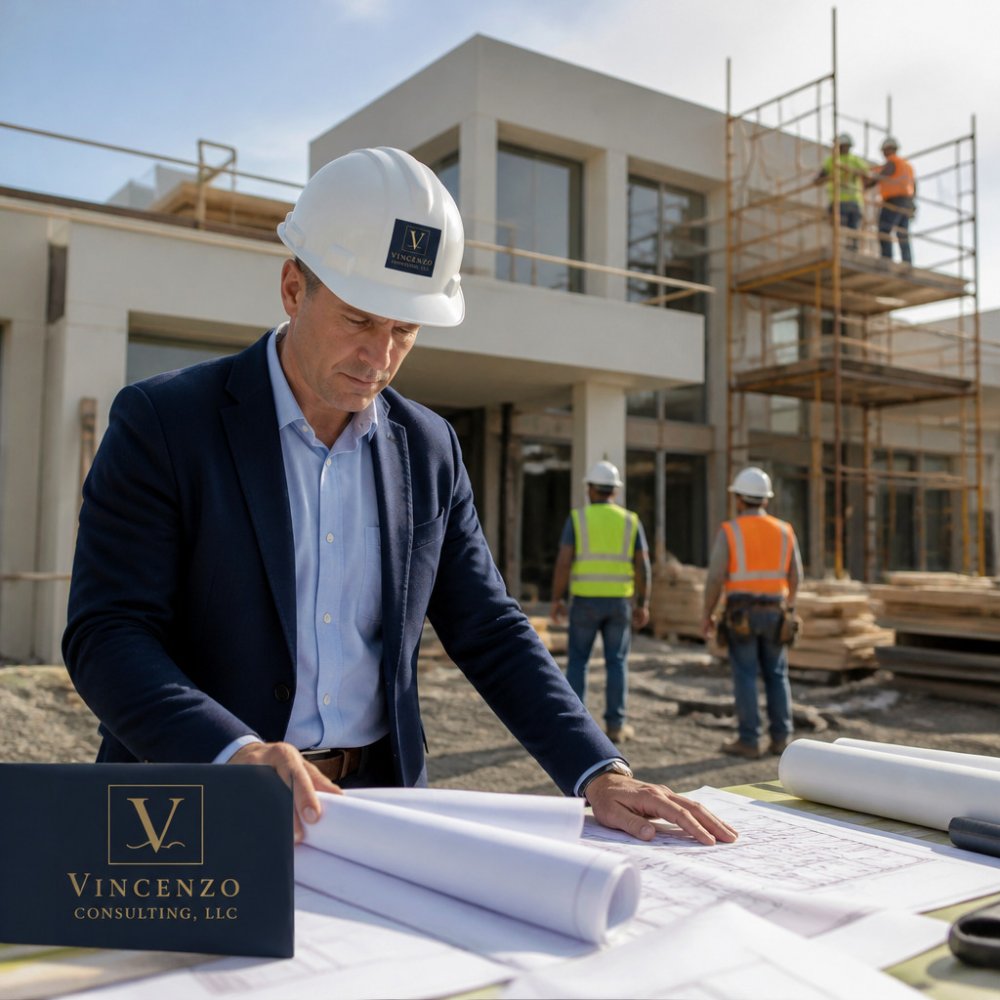
Define these roles explicitly:
- **
- **
- **
- **
Set up a status meeting where participants report on risks and their responses.
Step 5: Monitor Risks and Implement Mitigation Responses
Monitoring is the discipline of staying engaged week after week, after identification and planning are done.
Your monitoring system should answer these questions every week:
- Is each risk trending better or worse?
- Is the mitigation plan actually being executed?
- Are new risks emerging?
- Do any risks need escalation?
Set up a simple tracking process for risks, current status, recent developments, planned actions, and decisions needed.
Review it before your Monday meeting and come prepared with questions. Don't accept vague answers, "we're working on it" tells you nothing. You need specifics: What exactly are you doing? When will you know if it's working? What happens if it doesn't?
Mitigation responses fall into four categories:
- Avoid: Eliminate the risk entirely (redesign to remove the hazard, switch contractors, change the approach).
- Reduce: Lower the likelihood or impact (add inspections, require bonding, use proven methods instead of experimental ones).
- Transfer: Shift the risk to someone else (insurance, contractor warranty, vendor guarantee).
- Accept: Live with it if it happens (set aside contingency budget, plan for schedule slack).
For your top risks, you should have a written mitigation plan for each one. Not vague intentions. Specific actions. Responsible party. Timeline. Success criteria.
Learn more about how to mitigate risks in commercial construction to develop strategies tailored to your project's unique threats.
Managing Construction Budget and Schedule Risks Through Disciplined Oversight
Budget and schedule risks are the ones that hurt most. They're also the ones most owners can control through active oversight.
Budget overruns happen because no one is watching change orders. A contractor submits a request for an extra $50,000 to handle a site condition. You approve it without asking whether the general contractor already absorbed some of that cost in their contingency. You don't compare the actual cost to similar work elsewhere. You don't require three quotes. You just pay it.
Schedule delays accumulate the same way. A subcontractor is two weeks late. You don't escalate it because you think it won't matter. Then the next trade is delayed waiting for them. Then weather hits. Then material doesn't arrive. Suddenly you're three months behind, and no one can point to a single decision that caused it.
Disciplined oversight can help address these risks. Here's how:
For budget:
- Require all change orders in writing before work starts
- Get three quotes for any change exceeding 5% of the line item budget
- Compare proposed costs to the original estimate and similar projects
- Track cumulative changes. When they exceed 10% of the total budget, require owner approval for any new changes
- Hold contingency in reserve. Don't spend it on the first problem. Use it only after mitigation has failed
For schedule:
- Establish a baseline schedule with clear milestones
- Track actual progress weekly against the baseline
- When a task slips more than 5%, require a recovery plan from the general contractor
- Identify critical path items early. Focus your oversight there
- When delays accumulate, require an updated schedule showing how the contractor will recover lost time
Construction project risks through oversight means you're not just reacting to problems. You're monitoring trends.
Establish Your Risk Oversight Strategy with Vincenzo Consulting, LLC
Effective risk oversight requires discipline and structure. Owners of complex projects, ultra-luxury estates, major commercial developments, and infrastructure work may engage oversight professionals. Learn what owner's representation entails for managing construction project risks.
Vincenzo Consulting, LLC, led by Paul V. Facchina Jr., brings more than 35 years of executive leadership to construction project oversight for ultra-luxury residential homes, complex commercial projects, and infrastructure developments.
Our approach is grounded in financial discipline and strategic oversight, aligning scope, budget, and schedule with your objectives.
The goal isn't to add another layer of bureaucracy. It's to protect your vision and your investment by ensuring that scope, budget, and schedule stay aligned with your objectives throughout the project lifecycle.
Frequently Asked Questions
What is the role of an owner's representative in construction risk management?
An owner's representative serves as your advocate throughout the project, providing construction oversight and strategic oversight to align scope, budget, and schedule with your objectives. This oversight supports the protection of your vision and the preservation of long-term property value.
How does independent oversight reduce financial risk in commercial developments?
Financial discipline and strategic oversight support alignment of project scope, budget, and schedule with the owner's objectives. Oversight can help owners monitor project financial considerations and make informed decisions.
What are the most common risks in luxury residential construction?
Construction projects can involve risks related to design, site conditions, permitting, quality, scope, supply chains, schedules, and coordination. Vincenzo Consulting, LLC provides construction oversight for ultra-luxury residential homes, supporting the protection of the owner's vision.
How does rigorous financial discipline prevent construction budget overruns?
Rigorous financial discipline and strategic oversight support alignment of scope, budget, and schedule with the owner's objectives. This approach is intended to protect the owner's vision and preserve long-term property value.