 blog
Construction Oversight vs Project Management: Key Differences
Table of Contents
- Construction Oversight vs Project Management: Understanding the Core Distinction
- Owner's Representative vs Project Manager: Authority and Accountability
- Construction Project Oversight Responsibilities: What Actually Gets Monitored
- Construction Project Manager Roles and Responsibilities: Day-to-Day Execution
- How Oversight and Management Work Together Across the Project Lifecycle
- Owner's Representative Construction Checklist: Protecting Your Vision
- When to Hire Independent Construction Oversight
- Frequently Asked Questions
Last Updated: October 21, 2026
Construction Oversight vs Project Management: Understanding the Core Distinction
Understanding construction oversight vs project management is fundamental to protecting your investment. One monitors from above. The other executes from within. Yet many owners treat them as the same role, which creates blind spots.
At Vincenzo Consulting, LLC, we've managed complex construction projects for over 35 years. We see this confusion repeatedly: owners hire a project manager, assume they're protected, then discover gaps in accountability when problems emerge. The reality is sharper. Construction oversight is strategic monitoring of scope, budget, and schedule alignment with the owner's objectives. Project management is the day-to-day execution that makes those objectives real. They work together, but they are not interchangeable.
This distinction matters most on large, complex projects, where stakes are highest and stakeholders are numerous. According to the Project Management Institute's 2026 construction industry analysis, misalignment between oversight and execution accounts for a significant portion of cost and schedule overruns on commercial and residential developments.
The owner needs both functions working in parallel, each checking the other. Here's how to tell them apart, and why it changes how you protect your vision.
Owner's Representative vs Project Manager: Authority and Accountability
An owner's representative works for you. A project manager typically works for the general contractor.
This difference in authority shapes everything. The owner's representative has no stake in keeping costs down by cutting corners or pushing schedules. The project manager does. Neither is dishonest, it's structural. Their incentive is to complete the work profitably. Your incentive is to complete it correctly.
The owner's representative reports to you and advocates for your interests. They have authority to make decisions that protect your vision. They can halt work, demand corrections, or escalate disputes without needing permission from the contractor.
The project manager reports to the general contractor and manages the trades, equipment, materials, and crews. They coordinate schedules, track progress, and solve daily execution problems. They're accountable to the contractor's profitability, not your long-term property value.
In practice: if a subcontractor cuts corners on finishes, the project manager may not flag it because it doesn't affect the schedule or budget line. The owner's representative will. They're watching for quality, not just completion.
For complex commercial projects or luxury residential builds, this separation of authority prevents conflicts of interest. You get independent eyes on scope, deliverables, and compliance.
Construction Project Oversight Responsibilities: What Actually Gets Monitored
Oversight is about seeing the whole picture. It's not about managing daily operations, it's about ensuring those operations stay aligned with what you paid for.
An effective oversight function monitors four core areas:
Scope Protection. Does the work match the contract documents? Has the scope shifted without your approval? Are change orders justified or are they scope creep disguised as necessary additions? Oversight catches scope drift early, before it compounds into budget overruns.
Budget Accountability. Are costs tracking to the estimate? Are change orders priced fairly? Is cash flow being managed to your timeline? Oversight tracks financial discipline across the entire project lifecycle, not just individual invoices.
Schedule Alignment. Is the project progressing on time? Are delays caused by contractor performance or external factors? Are recovery plans realistic? Oversight monitors whether the project stays on track for your business objectives, not just the contractor's next milestone.
Quality and Compliance. Are materials, methods, and finished work meeting specifications? Are permits, inspections, and regulatory requirements being managed? Oversight ensures the finished asset meets your standards and legal requirements, protecting long-term property value.
These aren't day-to-day tasks. They're high-level monitoring functions that require independent judgment. The owner's representative conducts site inspections, reviews submittals and change orders, tracks financial performance, and escalates issues before they become crises.
This is where many owners make a mistake: they assume the general contractor's project manager is doing this. Often, the contractor's focus is on execution speed and cost containment, not on protecting the owner's vision.
Construction Project Manager Roles and Responsibilities: Day-to-Day Execution
The project manager is the operational engine. They make the project happen on the ground.
A project manager's daily work includes:
- Scheduling and coordinating trades and subcontractors
- Managing equipment, materials, and site logistics
- Tracking labor productivity and crew performance
- Solving problems on the fly, weather delays, material shortages, rework
- Conducting daily stand-ups and progress meetings
- Processing submittals, RFIs, and change orders
- Coordinating inspections and permit compliance
- Managing site safety and security
The project manager is accountable for getting the work done on time and within the contractor's budget. They're skilled at logistics, problem-solving, and keeping crews moving.
But they're not accountable to you. They're accountable to the general contractor. That means their decisions are filtered through the contractor's profit margin and risk tolerance, not your priorities.
On a $12M waterfront estate or a complex commercial development, the project manager is essential. But they cannot serve two masters. If you want independent protection of your interests, you need someone whose only loyalty is to you.
How Oversight and Management Work Together Across the Project Lifecycle
The best projects have clear separation of duties between oversight and execution, with regular communication and documented handoffs.
Planning and pre-construction. Oversight establishes the baseline: what is in scope, what the budget is, what the schedule should be, and which risks need mitigation. The project manager uses that baseline to build the execution plan, procurement schedule, and site logistics.
Procurement and buyout. The project manager runs bid packages, subcontractor scopes, and long-lead material orders. Oversight reviews bid leveling, confirms subcontractor scopes do not create gaps or overlaps, and checks that allowances and unit prices are fair.
Construction. The project manager executes: coordinating trades, managing equipment and materials, running daily stand-ups, processing submittals and RFIs, and solving field problems.
Commissioning and closeout. The project manager coordinates inspections, punch list work, and systems testing. Oversight verifies deliverables match the contract, confirms the final invoice aligns with the estimate, ensures warranties and guarantees are in place, and signs off before final payment.
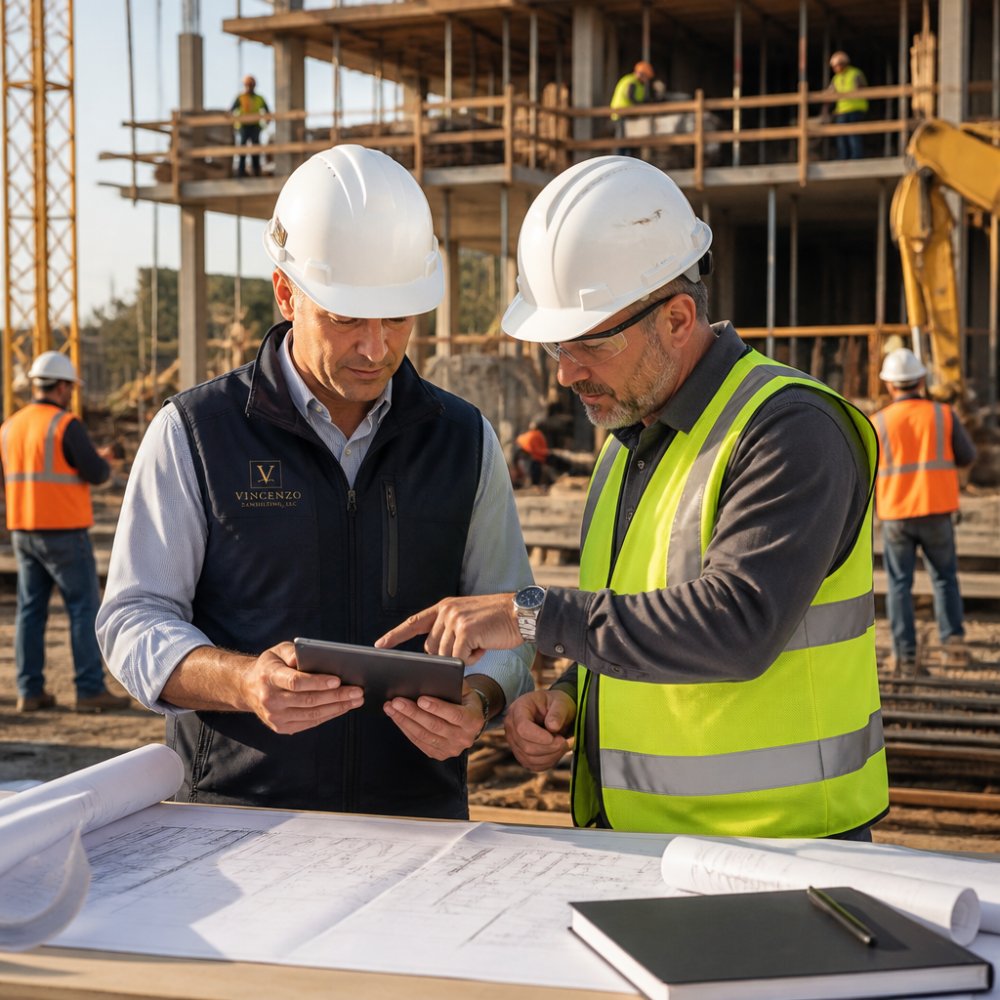
This parallel structure prevents blind spots. The contractor's project manager is incentivized to keep costs down. Your representative is incentivized to keep quality and scope intact. Tension between them is healthy, it is what prevents one party from dominating the decision.
Owner's Representative Construction Checklist: Protecting Your Vision
Before you hire an owner's representative, know what to expect from them. Here's what disciplined oversight looks like:
Pre-Construction Phase:
- Review and validate the contract documents against your objectives
- Establish the baseline budget and schedule
- Confirm scope is clear and complete
- Identify risks and mitigation strategies
- Approve the contractor's project management plan
During Construction:
- Conduct regular site inspections (frequency depends on project complexity)
- Review all change orders before approval
- Track budget performance against the estimate
- Monitor schedule progress and identify delays early
- Review submittals for compliance with specifications
- Attend coordination meetings and stakeholder updates
- Escalate issues that threaten scope, budget, or schedule
Quality and Compliance:
- Verify that materials and methods match the specifications
- Confirm that inspections are scheduled and passed
- Ensure permits and regulatory requirements are managed
- Document deficiencies and track corrections
- Conduct final inspections before substantial completion
Closeout:
- Verify that all deliverables are complete and correct
- Confirm that the final invoice matches the contract
- Ensure all warranties and guarantees are in place
- Conduct a final walk-through with you and the contractor
- Confirm your satisfaction before final payment
This checklist isn't bureaucracy. It's the difference between a project that delivers your vision and one that delivers the contractor's interpretation of it.
When to Hire Independent Construction Oversight
Not every project needs independent oversight. Small renovations managed by a trusted contractor often do not. But certain projects demand it, and the decision is easier when you match the role to the project's size, risk, and your internal capacity.
Hire independent construction oversight when:
- The project is large or complex. Multi-million-dollar developments, infrastructure projects, or builds with multiple phases and stakeholders benefit from dedicated oversight.
- You are new to construction. First-time builders of luxury estates or commercial properties need protection. You do not know what you do not know.
- Stakeholders are numerous. When you have investors, lenders, or family offices involved, independent oversight protects everyone's interests.
- The contractor is new to you. If you have not worked with this general contractor before, oversight provides accountability while you build trust.
- Scope is complex or evolving. Projects with regulatory requirements, environmental considerations, or evolving scope need someone watching for scope creep and budget impact.
- Budget or schedule risk is high. If cost overruns or delays would damage your business or timeline, oversight is insurance.
Practical selection criteria. Use these questions to decide which role you need:
- Do you have internal staff who can review change orders, submittals, and pay applications? If not, you need an owner's representative for oversight.
- Is the contractor providing a project manager as part of the contract? If yes, you still need independent oversight to check that manager's work against your interests.
- Does the project require delegated authority for approvals? If decisions must be made quickly on site, define in the contract who can approve change orders up to what threshold, and who must escalate.
- Is professional liability a concern? An owner's representative and a construction manager carry different liability profiles. Clarify in the contract who is responsible for design coordination, means and methods, and site safety.
Owner's representative vs construction manager vs project manager. An owner's representative works only for you and has no stake in the contractor's profit. A construction manager may work for the owner or the contractor depending on the delivery method, and often holds contractual authority over trades.
Contractual authority and liability. The distinction between oversight and management becomes real in the contract. Change-order approval authority, delegated decision limits, reporting obligations, and professional liability should be written down.
Measurable oversight KPIs. Disciplined oversight tracks a small set of indicators: schedule variance against the baseline, cost variance against the estimate, change-order rate and dollar value, safety incidents, rework and defect rates, and issue-resolution time.
The cost of independent oversight is typically a fraction of what scope creep or quality issues would cost. Vincenzo Consulting, LLC has helped owners protect projects, including custom estates and mixed-use developments. The discipline is the same: clear authority, independent judgment, and accountability to the owner.
When you have someone whose only job is to protect your vision, not to complete the work or profit from it, blind spots close. Decisions get made faster because authority is clear. Problems surface early because oversight is constant. Your asset gets built the way you intended.
Frequently Asked Questions
What is the difference between construction oversight and project management?
Construction oversight monitors high-level project alignment, budget, schedule, and quality from the owner's perspective, while project management handles day-to-day execution, trades coordination, and site operations. Oversight provides strategic governance; management executes the work. An owner's representative ensures your interests are protected throughout the project lifecycle, whereas a project manager works for the contractor or developer to deliver the scope on time and within budget.
Can construction oversight and project management be performed by the same person?
Technically yes, but it creates a conflict of interest. A project manager employed by the contractor has financial incentives that may not align with the owner's priorities. Independent construction oversight from an owner's representative provides unbiased monitoring of budget, quality, and schedule. For complex or high-value projects, separating these roles protects your investment and ensures accountability.
What does an owner's representative do during construction?
An owner's representative monitors project progress, verifies compliance with plans and specifications, tracks budget and schedule performance, manages change orders, coordinates stakeholder communication, and escalates issues before they become costly problems. They act as your advocate on-site, ensuring the contractor meets contractual obligations and your vision is preserved. This role is essential for ultra-luxury and complex commercial projects where attention to detail and financial discipline are critical.
When should an owner hire independent construction oversight?
Hire independent oversight for projects with significant capital investment, multiple stakeholders, complex scopes, tight deadlines, or when the contractor's project manager cannot provide unbiased monitoring. High-value residential estates, mixed-use developments, and infrastructure projects benefit from dedicated owner's representation. First-time builders and investors managing large capital ventures especially need this protection to prevent scope creep, budget overruns, and quality issues.