 ultimate-guide
Discreet Construction Oversight for Property Investors
Table of Contents
- What Discreet Construction Oversight Means for Property Investors
- Real Estate Investment Due Diligence and Property Inspections
- Contractor Management Best Practices and Selection
- Construction Progress Reporting for Investors
- Quality Control, Defect Identification, and Regulatory Compliance
- Confidentiality, Privacy, and Information Security in Oversight
- Building a Repeatable Oversight Cadence and Reporting Framework
- Frequently Asked Questions
Last Updated: October 10, 2026
What Discreet Construction Oversight Means for Property Investors
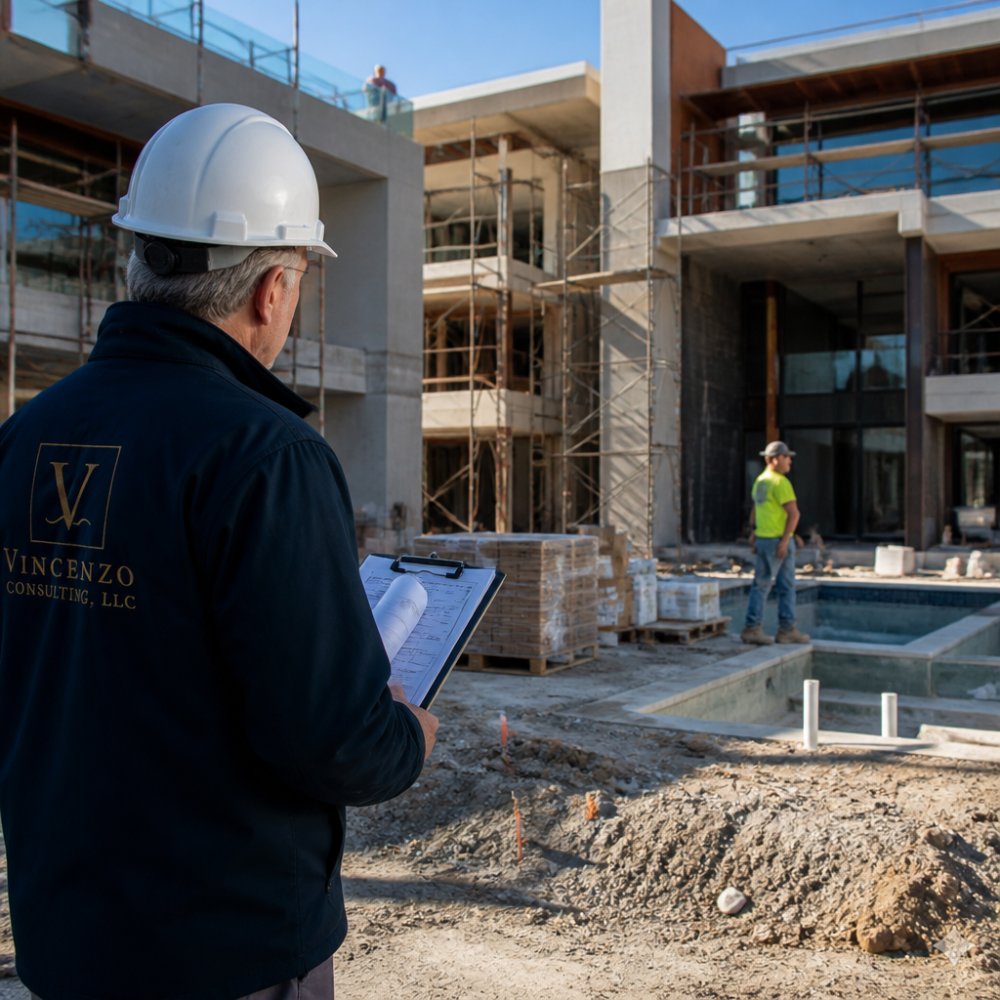
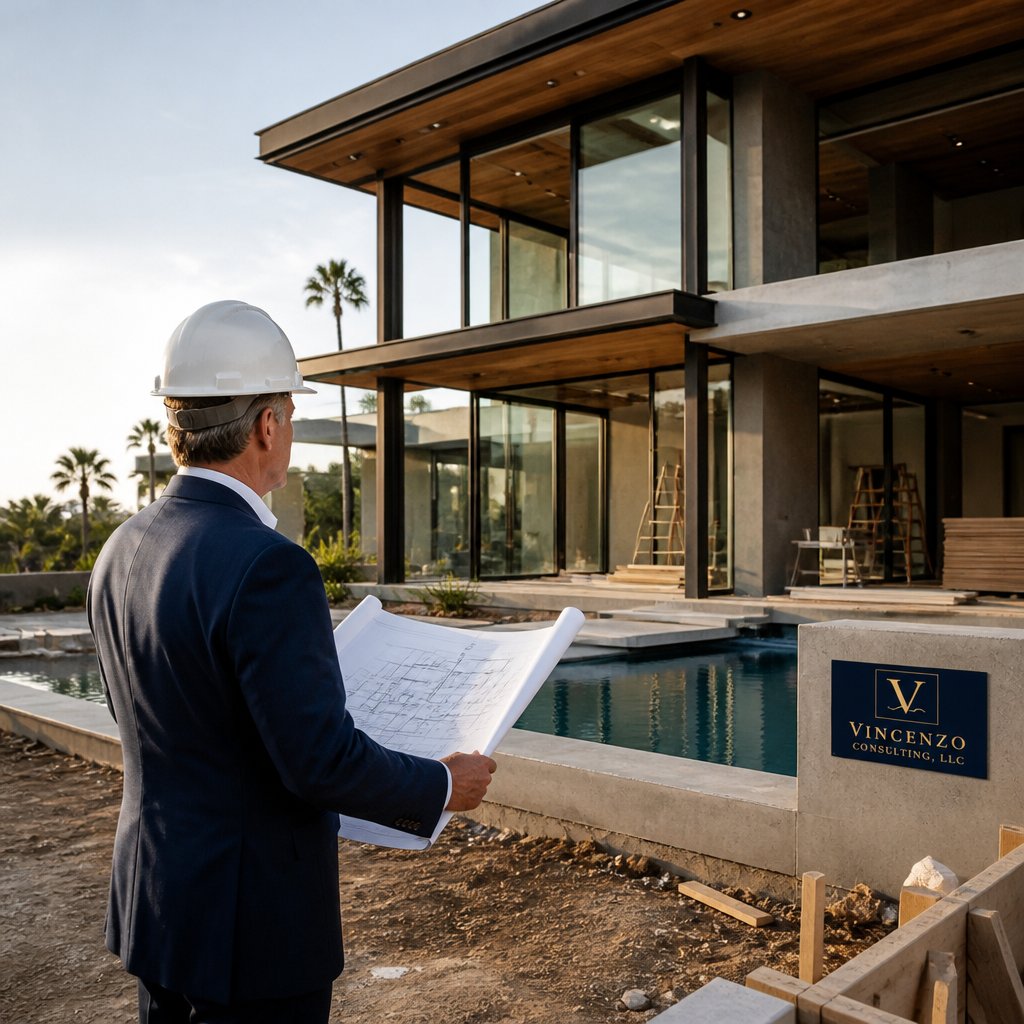
Discreet construction oversight is independent, confidential monitoring of construction projects on behalf of the property owner, serving construction oversight investors who require representation that protects their vision, preserves asset value, and maintains confidentiality throughout the build process. At Vincenzo Consulting, LLC, we recognize that high-net-worth individuals and investment firms need representation that protects their vision, preserves asset value, and maintains confidentiality throughout the build process.
Your representative becomes your eyes and ears on-site, catching problems early, verifying contractor performance, and ensuring scope, budget, and schedule align with your objectives. This approach is critical for luxury estates, complex commercial developments, and infrastructure projects where accountability and disciplined execution directly impact property value.

Discreet construction oversight rests on independent verification. Your oversight partner maintains confidentiality agreements while conducting site inspections, reviewing financial records, tracking schedule adherence, and documenting quality standards, serving as both advocate and objective observer.
Real Estate Investment Due Diligence and Property Inspections
Real estate investment due diligence begins before construction starts with thorough property inspections, design review, and document verification that establish a baseline for success.
Pre-Construction Assessment and Design Review
Pre-construction assessment examines site conditions, soil quality, environmental factors, and regulatory requirements. Design review ensures plans align with your vision, comply with building codes, and account for site constraints. This phase prevents problems rather than discovering them mid-project.
Request complete design documentation including structural drawings, MEP plans, and specifications. Review against your project brief to confirm scope alignment. Design ambiguity and vague specifications create room for contractor interpretation and change orders that inflate budgets.
Construction Monitoring Services During Build Phases
Construction monitoring tracks progress against the approved schedule and specifications. Your oversight partner conducts regular site inspections, frequency depends on project complexity, documenting work completion, material quality, and contractor compliance.
Effective monitoring includes photographic documentation, verification that subcontractors are licensed and insured, and confirmation that materials meet standards. Early detection of quality issues, schedule slippage, or budget variance allows corrective action before problems compound.
Contractor Management Best Practices and Selection
Selecting the right general contractor is foundational, but equally important is selecting the independent owner's representative who will oversee that contractor, a critical decision for construction oversight investors seeking to protect their interests. The quality of your oversight depends entirely on the competence, independence, and integrity of the person or firm you hire to represent your interests.
Evaluating and Vetting the General Contractor
Evaluate contractors based on relevant project experience, financial stability, insurance coverage, and references. Request detailed cost breakdowns and schedules before signing. A contractor unfamiliar with your project type or lacking financial reserves creates risk.
Establish clear expectations: define what "completion" means for each phase, specify quality standards, outline change order procedures, and set communication cadence. Specific contract language prevents disputes.
Verify that the contractor carries adequate general liability insurance, workers' compensation coverage, and builder's risk insurance. Request certificates of insurance naming you as an additional insured. Confirm that subcontractors are properly licensed and bonded in your state.
Selecting an Independent Owner's Representative
Your owner's representative is your advocate, inspector, and financial gatekeeper. This person must be independent of the contractor, financially stable, properly insured, and free from conflicts of interest.
Independence and Conflict of Interest
Your representative must have no financial interest in the contractor's success beyond project completion. Avoid representatives who receive referral fees from contractors, have prior relationships, or depend on contractor referrals.
The representative reports to you, not to the contractor or lender, and maintains full authority to inspect without contractor interference.
Credentials and Relevant Experience
Look for representatives with credentials appropriate to your project type: CCS or CPC for residential, RA or PE for commercial or complex projects. For smaller projects, an experienced construction supervisor with a track record on similar work is acceptable; verify experience with past clients.
Request references from at least three prior projects of similar scope. Ask whether the representative caught problems early, communicated clearly, and was responsive. Experience matters more than credentials alone.
Insurance and Liability Protection
Your representative should carry errors and omissions (E&O) insurance, also called professional liability insurance. Verify that E&O coverage is active and adequate for your project budget. Request a certificate of insurance and confirm policy limits.
Scope and Authority
Define your representative's authority in writing. Most should have authority to stop unsafe work immediately but require your approval for financial decisions. Clarify whether they represent you exclusively or work for multiple clients simultaneously.
Establish a fee structure upfront: hourly rate, fixed monthly retainer, or per-visit fee. Avoid percentage-of-cost arrangements, which create incentive to approve cost increases.
Construction Progress Reporting for Investors
Construction progress reporting translates on-site activity into investor-ready intelligence. Your oversight partner delivers regular reports that address schedule performance, budget status, quality observations, and any issues requiring your decision.
Schedule Tracking and Milestone Verification
Schedule tracking confirms work is progressing on timeline. Your oversight representative verifies completion of milestones, foundation, framing, MEP rough-in, drywall, finish, against the contracted schedule. Delays compound quickly.
Establish clear milestone definitions in the construction contract. Your oversight partner documents progress with photos and written notes, creating an objective record of accomplishment and timing.
Budget Control and Cost Overrun Prevention
Budget control begins with a detailed cost estimate broken into line items. Your oversight partner tracks invoices against the estimate, flags cost variance early, and verifies that change orders reflect genuine scope changes.
A common mistake is approving change orders without understanding their root cause. Your oversight partner distinguishes between contractor underbidding and legitimate design changes, negotiating fair pricing for genuine changes.
Quality Control, Defect Identification, and Regulatory Compliance
Quality control is continuous verification that work meets specification standards. Your oversight partner inspects finished work, identifies defects before they're concealed, and ensures corrective action is completed.
Building code compliance is non-negotiable. Your oversight representative confirms that inspections are scheduled, passed, and documented. Defect identification during construction is far cheaper than post-occupancy remediation.
Payment Verification and Fraud Prevention
Payment is the moment of maximum leverage in construction. Discreet oversight includes rigorous payment verification and fraud prevention controls that protect your capital.
Invoice Reconciliation and Lien Waivers
Before releasing any payment, your oversight partner must reconcile the contractor's invoice against the contract budget and documented progress. A schedule of values breaks the total contract price into line items.
For example, if the contract schedule allocates $200,000 for framing and the contractor invoices for 50% of that amount, your representative must confirm that framing is genuinely 50% complete.
Require unconditional lien waivers before releasing payment.
Request lien waivers from all subcontractors and material suppliers, not just the general contractor.
Change Order Discipline and Cost Control
Change orders are the primary vehicle for cost overruns. A disciplined change order process requires that every change be documented, priced, and approved before work begins.
Common fraud patterns include:
-
Scope creep disguised as change orders: The contractor claims the original scope was ambiguous and now requests payment for work they should have included in the original bid. Your oversight partner reviews the original contract documents to confirm whether the work was clearly excluded or ambiguous.
-
Inflated change order pricing: The contractor prices a change order at 30% above the original contract rate, claiming complexity or market conditions. Your representative should request a detailed cost breakdown and compare it against the original estimate and current market rates for similar work.
-
Unauthorized changes: Subcontractors or suppliers perform work not authorized by the contractor or owner, then claim payment. Your oversight partner maintains a log of all authorized changes and flags any invoiced work not on that list.
Establish a change order threshold: changes under $5,000 (or another amount appropriate to your project) may be approved verbally and documented retroactively, while larger changes require written approval before work begins.
Contractor Financial Distress and Payment Holdback
A contractor in financial distress may use your payments to cover prior project losses or other obligations, leaving subcontractors unpaid and creating lien risk for you.
Retain a percentage of each payment, typically 5% to 10%, as a holdback until final completion and all lien waivers are received.
If a subcontractor files a lien or claims non-payment, your oversight partner should investigate immediately. Require the contractor to provide proof of payment to the subcontractor or resolve the dispute before releasing further payments.
Confidentiality, Privacy, and Information Security in Oversight
Discreet oversight requires ironclad confidentiality protocols. Your oversight partner signs non-disclosure agreements, maintains secure document handling, and limits information sharing to authorized parties only.
Information security matters because construction documents reveal design details, security features, material costs, and timeline, information competitors or bad actors could exploit. Your oversight partner maintains encrypted communications, secure file storage, and restricted access to sensitive project data. Site inspection reports, financial records, and correspondence should never be shared beyond your authorized team.
Building a Repeatable Oversight Cadence and Reporting Framework
A repeatable oversight cadence establishes predictable rhythms for site inspections, progress reporting, and stakeholder communication. Consistency prevents gaps in monitoring and creates reliable documentation.
Establish inspection frequency based on project phase and risk profile. Foundation and structural work warrant weekly or bi-weekly inspections. Finish work may require less frequent oversight. Define what each inspection covers, structural integrity, material quality, schedule adherence, safety compliance, and document findings in a standardized format.
Progress reporting should follow a consistent schedule: monthly for most projects, bi-weekly for complex or high-risk work. Reports should address schedule status, budget variance, quality observations, and any issues requiring owner decision. This framework creates a paper trail that protects your interests and provides accountability throughout the project lifecycle.
Discreet construction oversight protects what matters most: your vision, your capital, and your property's long-term value. The difference between a project that delivers as promised and one that devolves into cost overruns, schedule delays, and quality compromise often comes down to independent, disciplined oversight from someone whose only allegiance is to you.
Vincenzo Consulting, LLC
Led by Paul V. Facchina Jr. with over 35 years of executive leadership
Visit Vincenzo Consulting, LLC
Email: [contact@vinzencoconsulting.com]
Frequently Asked Questions
What is the difference between construction monitoring and project management?
Construction monitoring focuses on protecting the investor's interests through independent site oversight, quality verification, and cost control. Project management typically manages day-to-day operations and contractor coordination on behalf of the developer. For private investors, discreet construction oversight acts as a neutral verification system, ensuring scope, budget, and schedule alignment without directing the contractor's work.
How does an owner's representative protect a property investor?
An owner's representative provides independent oversight of construction progress, budget compliance, quality standards, and regulatory adherence. They verify contractor performance against the scope of work, identify cost overruns and schedule delays early, document defects before final payment, and ensure your vision is protected throughout the project lifecycle. This third-party accountability reduces risk and preserves long-term property value.
What should a construction oversight report include?
Effective oversight reports document site inspection findings, progress against the project schedule, budget variance analysis, quality observations, contractor performance notes, and any scope deviations or change orders. Reports should include photographic evidence of completed work, compliance verification, and clear action items. Frequency and detail depend on project complexity, but investors typically receive monthly summaries with escalation alerts for material issues.
How often should investors receive construction progress updates?
Update frequency depends on project scope and complexity. Large commercial or mixed-use developments typically warrant weekly or bi-weekly site reports, while residential custom builds may use monthly summaries with on-demand escalation alerts. Real-time access to inspection findings and schedule tracking allows investors to identify delays and budget risks early, enabling faster corrective action before minor issues compound.
What questions should a private investor ask before hiring an owner's representative?
Ask about their experience with projects of similar scale and complexity, their track record on budget control and schedule adherence, how they handle confidentiality and privacy for sensitive projects, their authority to escalate issues and make recommendations, and how they structure reporting and communication. Verify their independence from contractors and developers, and confirm their approach to multi-property or remote oversight if applicable.
How can investors identify construction delays and budget risks early?
Structured oversight uses milestone tracking against the project schedule, monthly cost variance analysis comparing actuals to budget, regular site inspections to catch work quality or sequencing issues, and documented change order review before authorization. Early-warning indicators include schedule float erosion, repeated contractor delays, material cost increases, and scope creep in change orders. Discreet oversight systems flag these signals before they escalate into major overruns.