 ultimate-guide
How to Prevent Luxury Construction Delays: 2026 Guide
Table of Contents
- The Importance of Pre-Construction Planning
- Custom Home Construction Contract Best Practices
- Mitigating Supply Chain Delays in Luxury Builds
- How Owner's Representation for Custom Homes Prevents Delays
- Managing Trade Partners and Subcontractor Management
- The Financial Impact of Luxury Construction Delays
- Post-Delay Recovery Strategies
- Conclusion
- Frequently Asked Questions
Last Updated: October 1, 2026
The Importance of Pre-Construction Planning
Pre-construction planning is the disciplined process of finalizing design, securing permits, and locking a realistic schedule before a single shovel hits the ground. For luxury builds, this phase decides whether your project finishes on time or drifts into months of expensive rework. At Vincenzo Consulting, LLC, we've seen how the best-intentioned owners lose control of their timelines here.
Design Finalization and Architectural Alignment
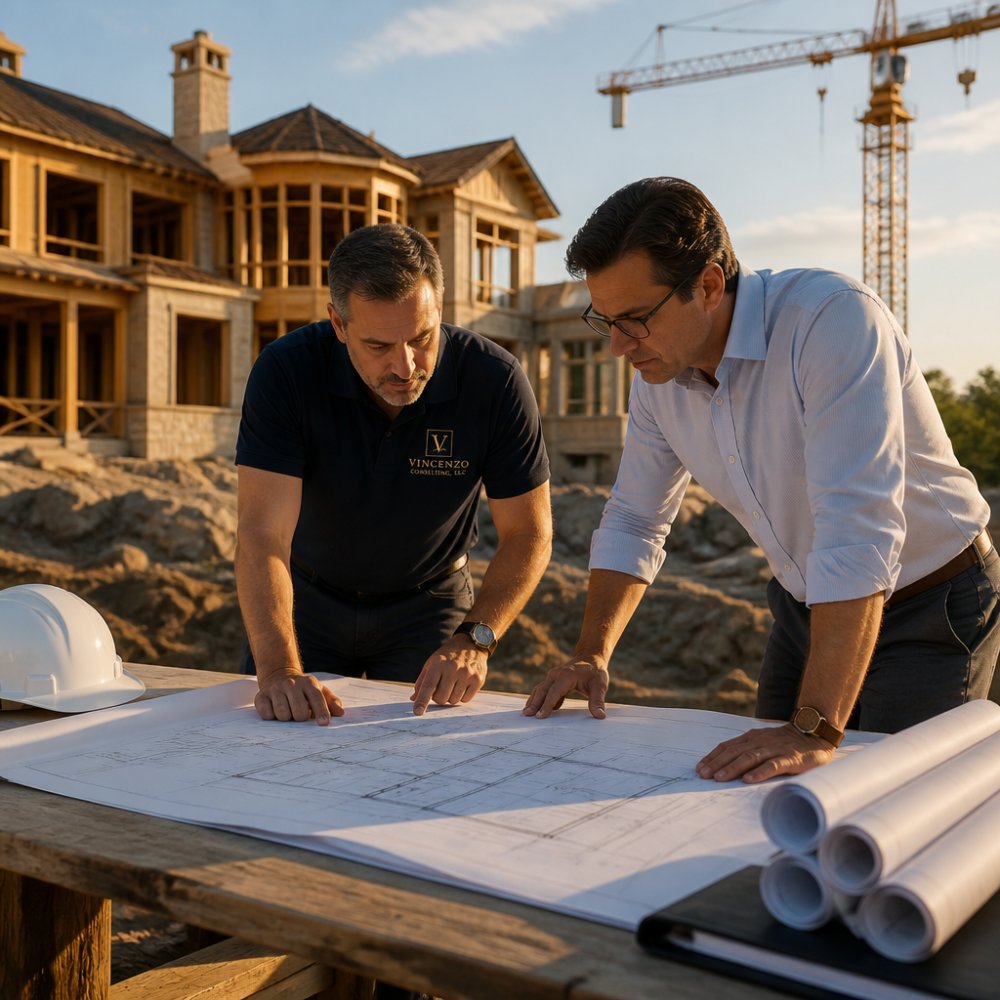
Architectural alignment means the owner, architect, interior designer, and builder all sign off on the same documents before construction begins. Misalignment here is the single largest driver of change orders on custom estates: when structural drawings, finishes schedule, and lighting plan disagree, the field crew stops and waits.
Permitting and Inspection Timelines
Permit acquisition is a fixed clock you cannot compress, only start earlier. Local jurisdictions review structural, environmental, and coastal approvals on their own schedules, and incomplete submissions go to the back of the line. Build a permitting calendar mapping every submission, review window, and inspection milestone before you break ground.
Custom Home Construction Contract Best Practices
A custom home construction contract determines who pays when the schedule slips. Weak contracts push every delay onto the owner by default; strong ones define responsibility, notice periods, and remedies up front.
- Schedule and milestone definitions with specific dates, not vague ranges
- Notice requirements so delays are documented in real time
- Liquidated damages or delay remedies that create accountability
Delay Clauses and Contractual Protections
Delay clauses assign responsibility for time lost to weather, permitting, owner decisions, or contractor performance. Without them, disputes become negotiations, and negotiations cost time. Include a clear process for time extensions tied to documented events, not verbal claims.
Mitigating Supply Chain Delays in Luxury Builds
Supply chain delays in luxury construction stem from a simple reality: the most distinctive materials are the least available. Imported stone, custom millwork, specialty glazing, and artisan fixtures carry lead times measured in months, not weeks.
Material Procurement and Lead Times
Treat procurement as a parallel track running alongside construction, not behind it. Build a procurement matrix listing every long-lead item, its supplier, its quoted lead time, and the date it must be ordered to hit the install milestone.
| Risk Level | Material Type | Typical Lead Time | Action |
|---|---|---|---|
| High | Imported stone, custom glazing | Several months | Order at design freeze |
| Medium | Specialty fixtures, millwork | Weeks to months | Order before framing |
| Low | Standard hardware, paint | Days to weeks | Order during rough-in |
How Owner's Representation for Custom Homes Prevents Delays
Owner's representation for custom homes puts an experienced advocate on your side of the table, managing the builder, schedule, and budget on your behalf. This is the role Vincenzo Consulting, LLC fills for owners who cannot be on site daily but refuse to lose control.
Managing Trade Partners and Subcontractor Management
Subcontractor management determines whether your trades show up when scheduled and perform to standard. On luxury projects, the best trades are in demand and prioritize builders who treat them well and pay on time. The client-side gap most guides ignore is visibility: on a custom estate, the owner is usually the last to learn a trade has slipped.
- Vet financial stability, not just craftsmanship
- Require schedules and manpower commitments in writing
- Pay promptly and correctly to keep your project prioritized
- Document performance issues as they occur
How Clients Can Track Trade Performance in Real Time
Most guides stop at "hire good subs." The harder problem is verifying performance week to week without living on site. A practical client-side system has four parts:
- A weekly look-ahead schedule, a rolling two-to-four-week view of which trade is in which zone, issued every Friday. If the same trade appears in the same zone three weeks running, that is a slip you can see before it hits the finish date.
- Daily photo logs tied to schedule line items, not a camera roll, but images tagged to the specific activity they document. This is where digital project management tools for clients earn their keep: platforms built for owner visibility let you filter by trade, zone, or milestone instead of scrolling a shared drive.
- A manpower count against commitment, if a sub promised eight workers and sent three, that is a documented variance, not a vague complaint.
- A written escalation path, the owner's rep issues a cure notice with a deadline; the general contractor responds in writing. Verbal warnings leave no trail for a delay claim.
Contractual Levers That Keep Trades Accountable
Beyond selection, the contract is where trade accountability lives. Three provisions do most of the work:
- Milestone-based payment tied to inspected completion, not calendar dates
- Manpower and sequencing commitments written into the scope, so a short crew is a breach, not a surprise
- Back-charge language that lets the builder recover costs when one trade's delay pushes another's start
Vincenzo Consulting, LLC | vincenzoconsultingllc.com | info@vincenzoconsultingllc.com
The Financial Impact of Luxury Construction Delays
The financial impact of construction delays goes well beyond idle crews. Carrying costs, extended insurance, material storage, and lost rental or use value all compound while the project sits unfinished.
Post-Delay Recovery Strategies
Post-delay recovery is the structured push to reclaim lost schedule without sacrificing quality. Once a delay occurs, the goal shifts from prevention to controlled recovery; rushing blindly creates defects that cost more than the delay itself. Most guides stop at "compress the schedule," but recovery is a sequenced process, skip a step and you pay for it twice.
The First 14 Days: A Damage-Control Sequence
When a delay is confirmed, the first two weeks determine whether you recover weeks or lose months. Work the steps in order:
- Freeze the schedule and re-baseline. Do not patch the old schedule. Issue a new baseline with realistic dates and get every stakeholder to acknowledge it in writing. A schedule nobody has signed off on is a schedule nobody owns.
- Run a critical path review. Identify which activities genuinely drive the finish date and which can run in parallel. Most luxury projects have more float than owners assume, but only on non-critical paths.
- Quantify the delay by cause. Separate owner-decision delays, design delays, permitting delays, supplier delays, and weather. Each has a different remedy and a different contractual treatment. Mixing them into one lump destroys your ability to claim time or cost.
- Issue formal notice. Most contracts require written notice within a defined window, often days, not weeks. Missing that window can waive your claim entirely, regardless of fault.
- Choose a compression strategy. Add crews to critical tasks, resequence non-critical work into the gap, or negotiate supplier expediting where the cost is justified. Do not do all three at once; each adds coordination load.
Compression Trade-Offs: What Each Recovery Move Actually Costs
| Recovery Move | Speed Gained | Hidden Cost |
|---|---|---|
| Add crews to critical path | Days to weeks | Coordination load, quality risk, premium labor rates |
| Resequence non-critical work | Days | Rework if sequencing assumptions are wrong |
| Supplier expediting | Days to weeks | Premium freight, sometimes partial shipments |
| Overtime on key trades | Days | Fatigue-driven defects, punch-list growth |
| Parallel inspections | Days | Failed inspections that reset the clock |
What to Do If the Delay Is Already Months Long
When a delay stretches past a few weeks, recovery shifts from compression to renegotiation. Three moves matter:
-
Re-baseline with the lender and insurer. Extended construction loans and builder's risk policies have their own clocks. Notify both in writing and confirm what the new completion date does to your carrying costs.
-
Re-sequence the finish trades. If the delay is in one zone, redirect finish crews to a completed zone so their work is not idle. Idle trades leave for other jobs and do not come back on your schedule.
-
Document everything for the claim. Photos, daily logs, meeting minutes, and written notices form the record. A delay claim without a contemporaneous record is a story, not a claim.
-
Re-baseline the schedule with realistic dates
-
Reallocate resources to the critical path
-
Communicate the new timeline to every stakeholder
-
Document the cause to support any contractual claim
Vincenzo Consulting, LLC | vincenzoconsultingllc.com | info@vincenzoconsultingllc.com
Conclusion
Luxury construction delays are rarely caused by one catastrophic event. They build from unfrozen designs, late material orders, weak contracts, and unmanaged trades, each preventable with disciplined pre-construction planning and continuous oversight. Vincenzo Consulting, LLC brings more than 35 years of executive leadership to owner's representation, protecting your vision, budget, and schedule from first drawing to final walkthrough.
Frequently Asked Questions
What are the most common causes of delays in luxury home construction?
Luxury home construction delays often stem from incomplete design finalization, slow permitting and inspections, material lead times for custom finishes, and misaligned trade partners. Unlike standard builds, luxury projects involve intricate architectural details and imported materials that require early procurement. Weather-related setbacks and frequent change orders also contribute. To prevent luxury construction delays, address these factors during pre-construction planning and maintain a detailed project schedule with clear milestones.
How does an owner's representative help prevent construction delays?
An owner's representative acts as your advocate, overseeing the project schedule, budget, and quality control. They coordinate trade partners, track material procurement, and ensure contractual obligations are met. By providing site supervision and stakeholder communication, they catch issues early and mitigate risks before they escalate. For custom homes, owner's representation ensures your vision is protected while keeping the project on track, reducing the likelihood of cost overruns and inspection delays.
What legal protections should be included in a luxury construction contract to prevent delays?
Your construction contract should include clear delay clauses, liquidated damages for missed milestones, and provisions for change orders. Specify material procurement responsibilities and lead times. Include a budget contingency and define the critical path method for scheduling. Custom home construction contract best practices also involve requiring proof of subcontractor management and insurance. These protections give you recourse if delays occur and encourage accountability from all parties.
How can you mitigate supply chain risks in high-end residential projects?
Mitigating supply chain delays in luxury builds starts with early material procurement and identifying long-lead items during pre-construction planning. Diversify suppliers and consider domestic alternatives for custom finishes. Maintain a buffer in your project schedule for shipping and fabrication. Use construction management software to track orders and communicate with vendors. A supply chain contingency plan that includes backup sources and flexible design options can keep your project moving despite disruptions.