 ultimate-guide
Owner's Representative for Real Estate Development
Table of Contents
- What Is an Owner's Representative in Real Estate Development
- Owner's Representative Responsibilities Throughout the Project Lifecycle
- Owner's Rep vs. Project Manager: Understanding the Distinction
- Why Hire an Owner's Representative
- Owner's Representative Selection Criteria and How to Find the Right Fit
- Owner's Representative Project Examples and Measurable Outcomes
- Conclusion
- Frequently Asked Questions
Last Updated: October 13, 2026
What Is an Owner's Representative in Real Estate Development
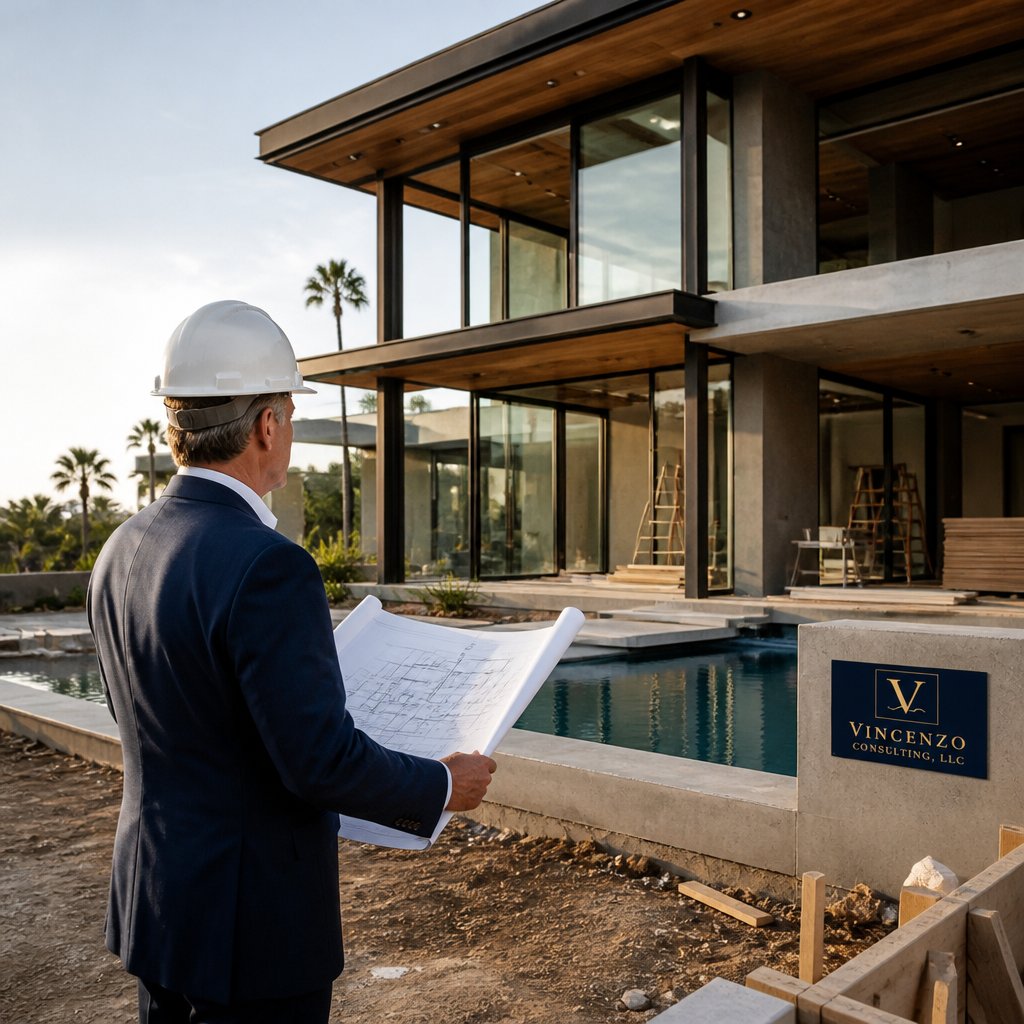
An owner's representative is an independent, third-party professional hired by a property owner to advocate for their interests throughout a real estate development project.
At Vincenzo Consulting, LLC, we've managed projects ranging from ultra-luxury residential estates to complex commercial developments.
Owner's Representative Responsibilities Throughout the Project Lifecycle
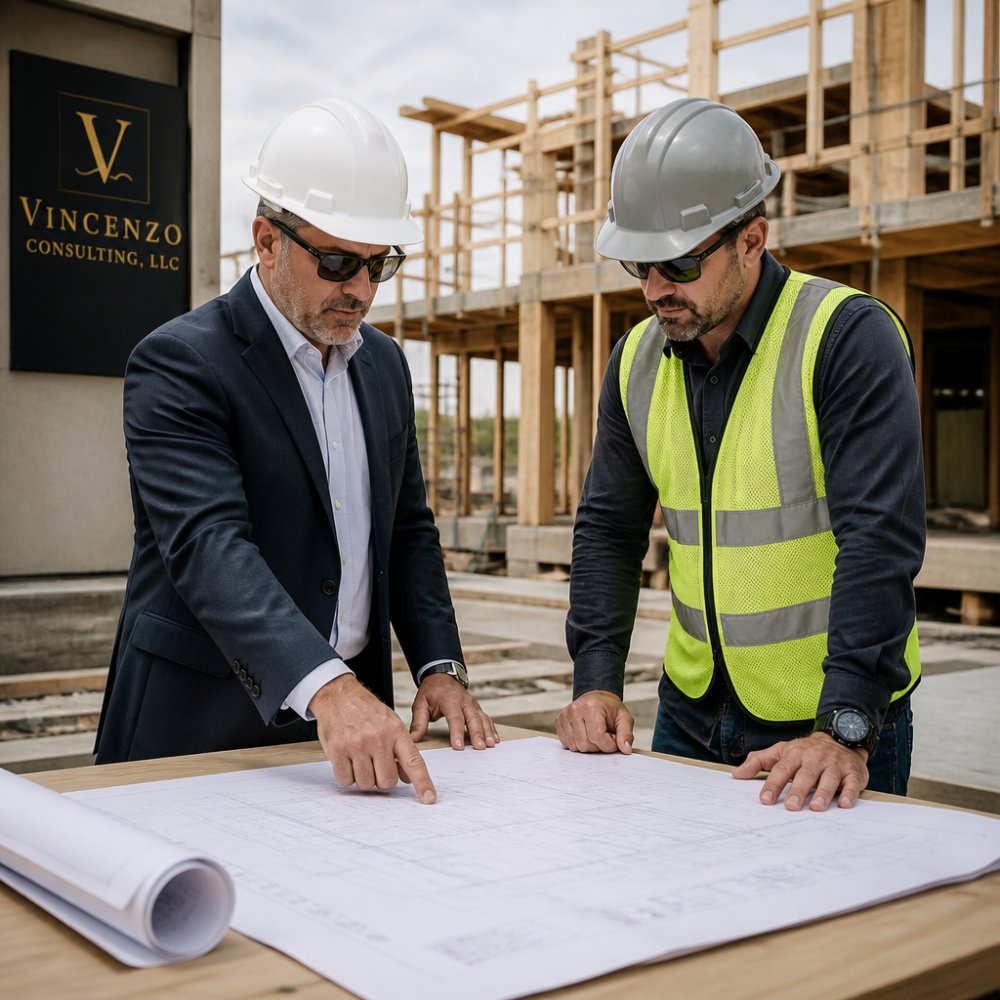
The owner's representative manages oversight across every phase of development, from feasibility studies through final delivery, distinguishing the role from narrower project management functions focused only on construction execution.
Design Phase Oversight
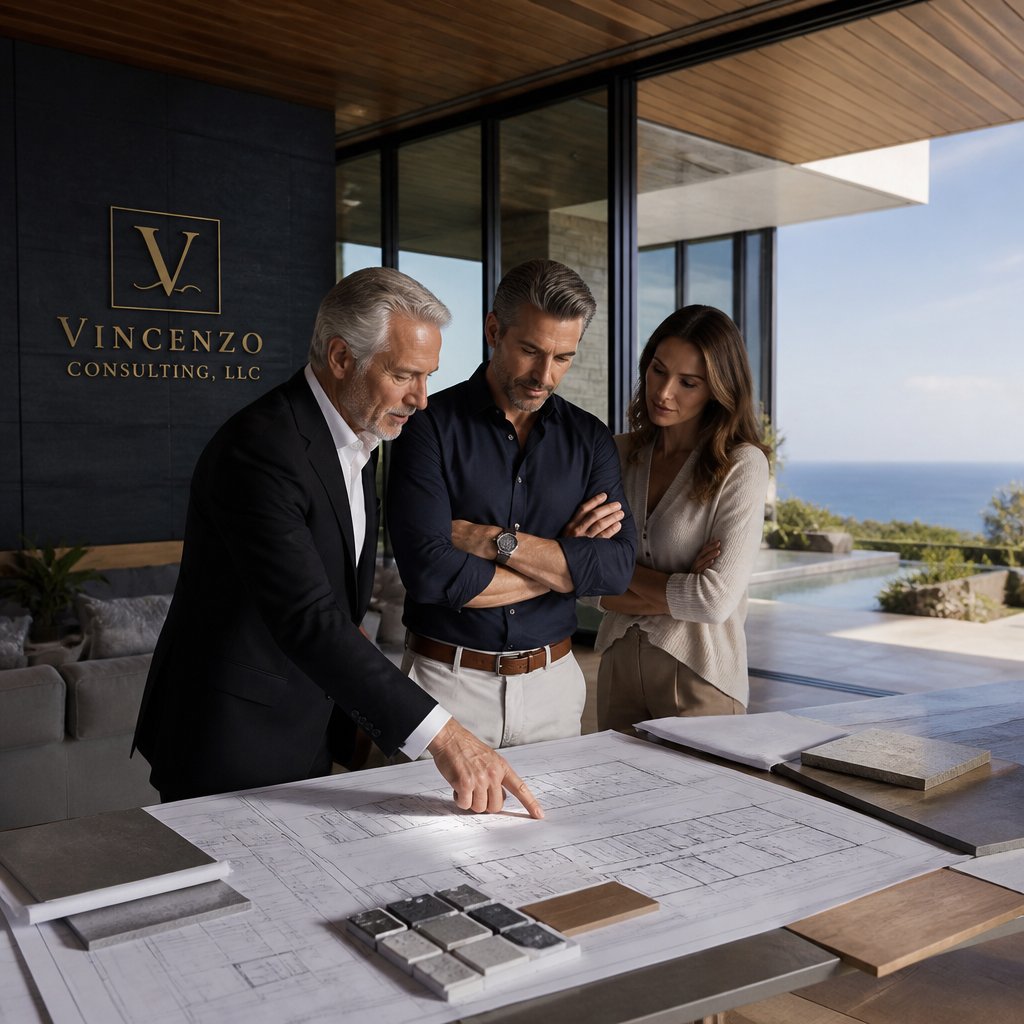
During design development, the owner's rep ensures the architect's vision aligns with your budget and operational requirements. They review preliminary designs against your scope of services, flag scope creep before it becomes expensive, and coordinate early input from consultants, engineers, and environmental reviewers who influence final costs.
They also translate technical drawings into practical implications, identify conflicts between systems, catch overlooked requirements, and ensure the design supports your intended use. Catching misalignments here costs thousands, not millions.
Construction Phase Management
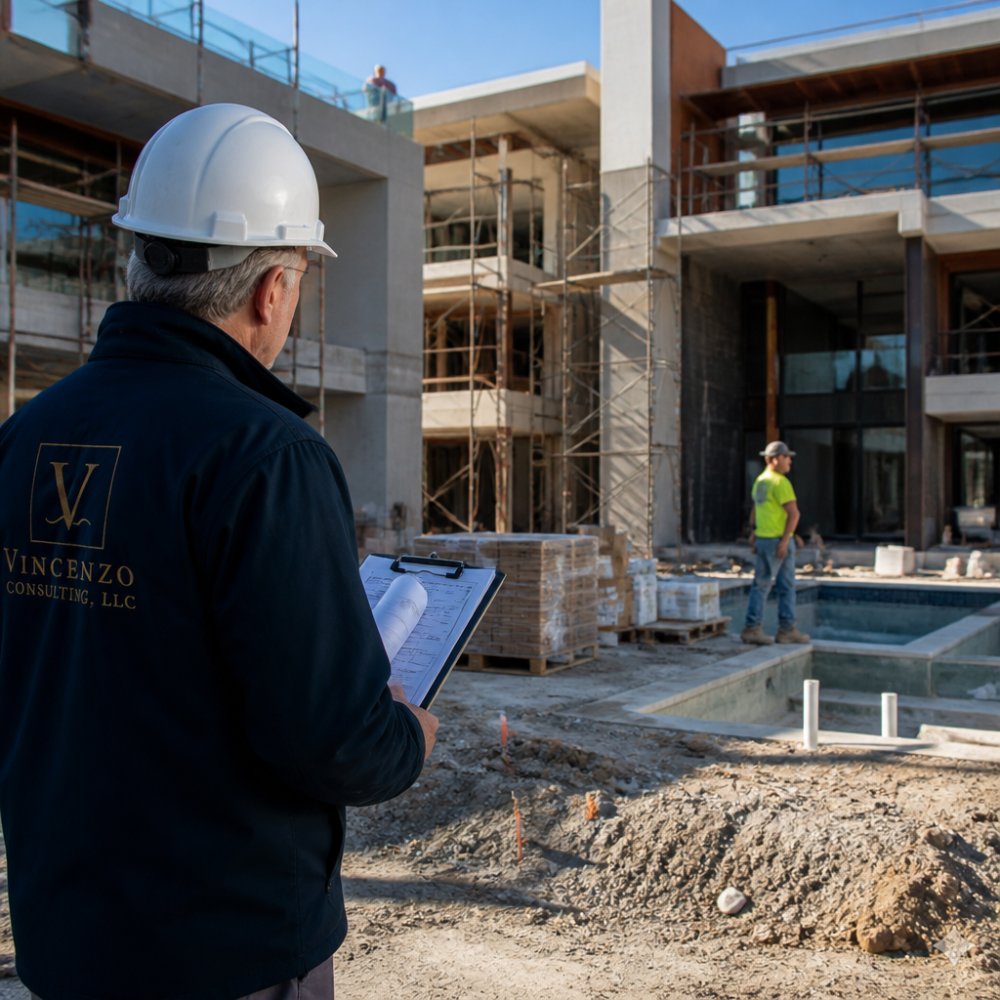
Once construction begins, the owner's representative conducts regular site inspections, reviews contractor invoices and change order requests, verifies work meets contract specifications, and tracks schedule adherence against agreed milestones, escalating delays that threaten completion dates.
They also coordinate subcontractors, material suppliers, and specialty consultants on sequencing and requirements, serving as the central point of contact for issue resolution.
Owner's Rep vs. Project Manager: Understanding the Distinction
The terms owner's representative and project manager are often used interchangeably, but they reflect fundamentally different allegiances and scopes.
A project manager typically works for the general contractor or development team.
An owner's representative, by contrast, works exclusively for you. Their incentive is your project success, not contractor profitability, and they have no financial stake in cutting corners or accelerating timelines at the expense of quality.
Why Hire an Owner's Representative
The case for owner's representation rests on three core functions: protecting your capital investment, ensuring stakeholder alignment, and managing execution risks.
Budget Protection and Cost Control
Construction projects face relentless cost pressures. Material prices fluctuate, unforeseen site conditions trigger change orders, and contractors submit invoices for work beyond the scope (Managing the contingency allowance).
The owner's representative reviews every invoice and change order request before payment, verifying charges correspond to authorized work, pricing aligns with contract terms, and alternatives exist if costs exceed projections.
Stakeholder Coordination and Communication
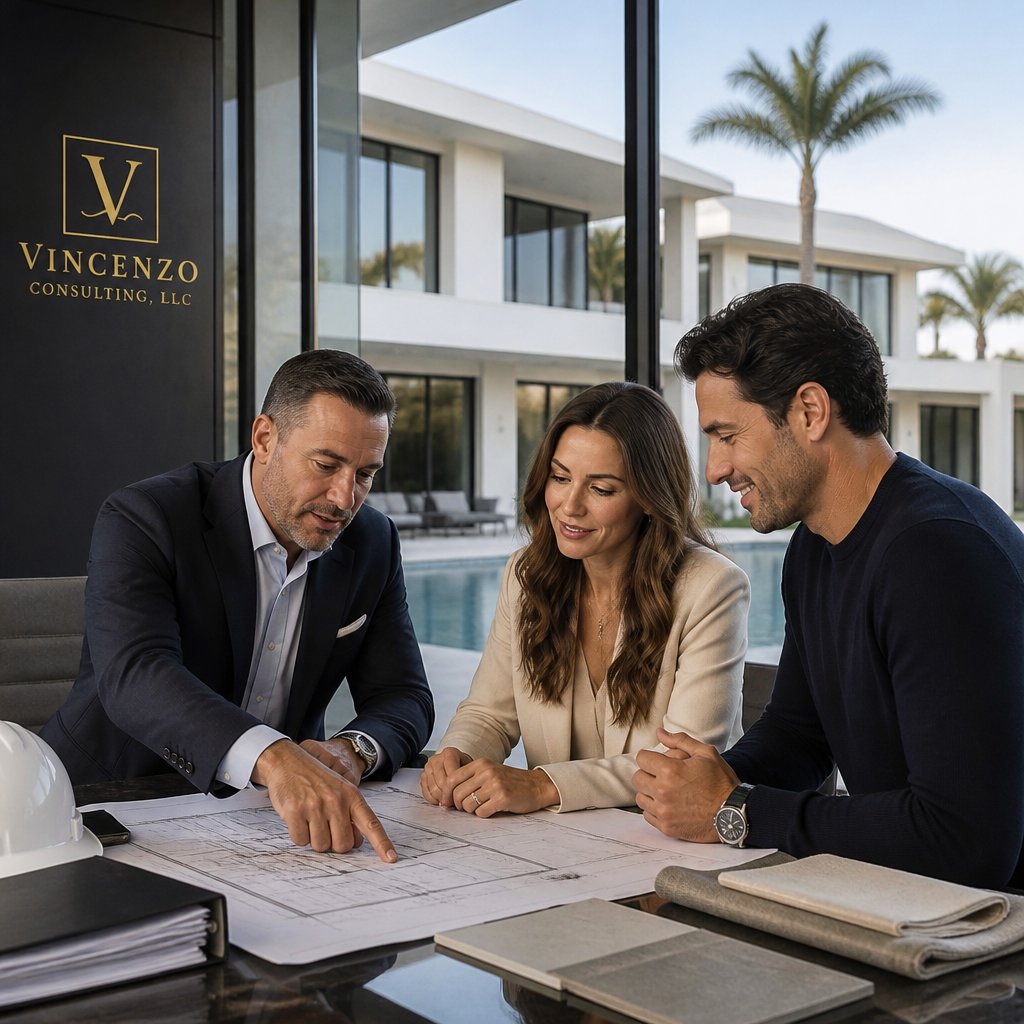
Complex developments involve dozens of participants: architects, engineers, contractors, subcontractors, suppliers, regulatory agencies, tenants, lenders, and investors. Coordination failures among them create delays, rework, and disputes.
The owner's representative becomes the central communication hub, ensuring architects understand contractor constraints, contractors know what engineers require, and regulatory requirements inform design decisions.
Risk Management and Issue Resolution
Projects encounter unexpected conditions: subsurface soil issues, regulatory interpretations, contractor performance problems, design conflicts during construction. How these are managed determines whether they become minor adjustments or project-threatening crises.
The owner's representative identifies risks early, develops mitigation strategies before they materialize, maintains contingency reserves for foreseeable uncertainties, and escalates emerging issues before they compound.
This proactive risk management requires experience and judgment.
Owner's Representative Selection Criteria and How to Find the Right Fit
Most owners approach this hire like any consultant: compare resumes, check references, negotiate a rate. That underperforms because the owner's representative role is closer to a fiduciary engagement than a vendor relationship. The scope, authority, and reporting obligations you define up front determine whether the engagement protects you or simply adds another layer of coordination.
Define the Scope of Services Before You Interview
A written scope of services is the single most useful document in the selection process. Without it, every candidate prices a different job and you cannot compare proposals. A development-specific scope typically addresses:
- Pre-development: feasibility review, pro forma validation, entitlement strategy, consultant selection, and design team procurement.
- Design phase: design schedule oversight, scope-creep control, constructability review, value engineering, and permitting coordination.
- Construction phase: site inspections, pay application review, change-order review and negotiation, schedule monitoring, quality verification, and safety compliance coordination.
Decide which of these you want the representative to own versus advise on. 'Own' means authority to act; 'advise' means they recommend and you decide. Ambiguity here is where most engagements fail.
Interview Questions That Reveal Capability
Resume review tells you what someone has been near. Interview questions tell you how they think. Questions that separate strong candidates from polished ones include:
- Walk me through a project where the contractor's change-order request was larger than you expected. What did you do in the first 48 hours?
- Describe a time you recommended terminating a contractor or consultant. What triggered the recommendation, and how did you manage the transition?
- How do you validate a general contractor's schedule update? What specifically do you check?
- Tell me about a project where you disagreed with the architect. How was it resolved?
- What does your weekly owner report contain, and what does it deliberately leave out?
- How do you handle a lender's draw request review when the contractor's billing does not match completed work?
- Give an example of a risk you flagged early that never materialized. What did you do, and how did you know it worked?
Listen for specifics: names of trades, dollar ranges, schedule durations, and the decision logic behind each action. Candidates who answer in generalities have not actually run the situations they describe.
Contract Considerations
A few contract terms carry outsized weight:
- Standard of care. The representative should owe the owner a fiduciary duty, not merely a professional standard of care. This distinction matters when interests diverge.
- Authority limits. Specify the dollar threshold above which the representative must obtain owner approval before directing a change. Common thresholds range from a few thousand dollars for field-level decisions to larger amounts for scope changes.
- Indemnification and insurance. Confirm professional liability (errors and omissions) coverage, general liability limits, and whether the representative carries builder's risk or relies on the owner's policy.
Performance Measures
Set expectations for how the engagement will be evaluated. Useful measures include:
- Budget variance against the approved pro forma at each phase gate.
- Schedule variance against the baseline, measured in days, not adjectives.
- Change-order volume and value as a percentage of original contract value.
Review these measures at least quarterly. If the representative is not producing the reporting you need to evaluate them, that itself is a finding.
Reference Checks That Actually Test the Claim
Standard reference calls produce standard praise. Instead, ask each reference:
- What was the project's original budget and final cost, and what drove the difference?
- What did this person do when the schedule slipped?
- Did they ever tell you something you did not want to hear? What was it?
A reference who cannot recall specific numbers or incidents is not useful. Two or three detailed conversations beat ten polite ones.
At Vincenzo Consulting, LLC, we structure every engagement around a written scope, defined authority thresholds, and a reporting format the owner can actually use. Facchina Jr. brings over 35 years of executive leadership in real estate development and construction oversight to each engagement.
Owner's Representative Project Examples and Measurable Outcomes
Outcomes in owner's representation are the arithmetic of decisions made early. The examples below illustrate the mechanisms that produce measurable results; names and details are generalized, but the mechanics and categories of savings are typical of development-stage engagements.
Example 1: Mixed-Use Development, Entitlement Through Construction
A mid-rise mixed-use project entered design with a pro forma assuming a fixed construction cost per square foot. During design development, the owner's representative's constructability review identified that the architect's structural system assumed a foundation condition inconsistent with the geotechnical report.
Mechanism: Early coordination between the geotechnical engineer, structural engineer, and architect, driven by the owner's representative, surfaced the conflict at schematic design rather than after foundation work began.
Measurable outcome categories:
- Avoided redesign and re-permitting costs.
- Avoided schedule delay tied to foundation rework.
- Preserved the pro forma's contingency for genuine unknowns rather than design errors.
Example 2: Luxury Residential Estate, Budget Discipline
A custom estate with a fixed construction budget and a design emphasizing bespoke finishes. The owner's representative tracked scope against budget at each design milestone rather than waiting for contractor pricing. When finish selections began to exceed the allowance, the representative presented written alternatives at three price tiers before selections were finalized.
Mechanism: Milestone-based budget reconciliation, with written alternatives presented before decisions were locked.
Measurable outcome categories:
- Finish package delivered within the original allowance.
- No post-selection change orders driven by budget surprises.
- Design intent preserved on the elements the owner prioritized.
Example 3: Commercial Repositioning, Schedule Recovery
A commercial property repositioning fell behind when the mechanical contractor's submittals lagged. The owner's representative identified the lag during a weekly submittal log review, escalated to the general contractor's project executive, and coordinated a recovery plan resequencing work in unaffected areas while submittals caught up.
Mechanism: Weekly submittal log review with escalation thresholds defined in the owner's representative's scope.
Measurable outcome categories:
- Schedule recovery measured in weeks, not months.
- No acceleration costs charged to the owner.
- Tenant delivery dates preserved.
The Metrics That Matter at Each Phase
Different phases produce different measurable outcomes. A representative who reports the same metrics throughout the project is not reporting what matters.
| Phase | Primary Metrics |
|---|---|
| Feasibility and pre-development | Pro forma variance, entitlement milestones met, consultant selection timeline |
| Design | Design schedule variance, scope-creep value, value-engineering savings identified |
| Construction | Budget-to-actual variance, schedule variance in days, change-order value as % of contract, RFI and submittal turnaround |
| Closeout and turnover | Punch list closeout days, lien waiver completeness, warranty documentation delivery, lease-up or occupancy milestones |
What 'Measurable' Actually Means
A claim that a project 'stayed on budget' is not measurable unless you know the baseline, the final cost, and the drivers of any variance. A claim that a project 'finished on time' is not measurable unless you know the baseline schedule and the days of variance. Owners should insist on:
- Original approved budget and final cost, with variance explained by category.
- Baseline schedule and actual completion, with variance explained by cause.
- Change-order log showing count, value, and reason code for each.
Applying These Examples to Your Project
Your project will not match these examples exactly, but the mechanisms transfer. Ask any candidate owner's representative to describe, in writing, how they would apply milestone budget reconciliation, submittal log review, and risk register maintenance to your development.
Vincenzo Consulting, LLC provides discreet, white-glove owner's representation and construction oversight for ultra-luxury residential homes, complex commercial projects, and infrastructure developments. Paul V.
Conclusion
Selecting the right owner's representative requires evaluating relevant experience, industry expertise, and working style.
Vincenzo Consulting, LLC
Led by Paul V. Facchina Jr. with over 35 years of executive leadership in real estate development and construction oversight.
Website: vincenzoconsulting.com
Email: contact@vincenzoconsulting.com
We provide discreet, white-glove owner's representation and construction oversight for ultra-luxury residential homes, complex commercial projects, and infrastructure developments.
Frequently Asked Questions
What does an owner's representative do in construction?
An owner's representative acts as an independent advocate for the project owner throughout design and construction. They oversee scope alignment, budget management, schedule tracking, and quality control. They coordinate communication between the owner, contractors, architects, and consultants, identify risks early, manage change orders, and ensure decisions protect the owner's interests and vision. On-site presence allows them to catch issues before they become costly problems.
What is the difference between an owner's representative and a project manager?
An owner's representative works exclusively for the owner and provides independent oversight of the entire project delivery process, including design and construction phases. A project manager typically works for the general contractor or is hired directly by the owner but may focus narrowly on construction execution. The owner's rep maintains no conflict of interest and advocates solely for the owner's financial and strategic objectives, whereas a project manager's allegiance may be divided.
How should you select an owner's representative?
Evaluate candidates on three key criteria: relevant experience with your project type (luxury residential, commercial, infrastructure, etc.), a track record of keeping projects on budget and schedule, and a commitment to on-site presence. Interview references from comparable projects. Confirm their scope of services aligns with your needs, from feasibility analysis through occupancy. Verify their independence and that they have no conflicts of interest with your contractors or design team.
When should a developer hire an owner's representative?
Hire an owner's representative early, ideally during the feasibility and conceptual design phases. Early engagement allows them to influence scope definition, cost estimates, and scheduling before major commitments are made. For complex projects involving multiple stakeholders, tight timelines, or high capital at risk, engaging an owner's rep from the start reduces the cost of late changes and protects your vision throughout the entire project lifecycle.