 ultimate-guide
Luxury Home Construction Management: A 2026 Guide
Table of Contents
- What Luxury Home Construction Management Delivers
- Owner's Representation for Residential Construction: The Foundation of Project Control
- Luxury Home Build Budget Management: Protecting Your Investment
- Construction Quality Assurance for High-End Homes
- Project Management Systems and Real-Time Reporting
- Permitting, Compliance, and Risk Mitigation
- Post-Construction Handover and Long-Term Property Value
- Frequently Asked Questions
Last Updated: September 23, 2026
What Luxury Home Construction Management Delivers
Luxury home construction management represents a fundamental shift in how high-net-worth individuals protect their vision and capital during complex residential builds. Unlike standard project oversight, this discipline combines rigorous financial control, real-time site supervision, and strategic stakeholder management to ensure scope, budget, and timeline alignment from groundbreaking to final walkthrough.
The stakes are different at this level. A $12M waterfront estate or a complex multi-phase renovation isn't just another job site, it's a significant capital deployment that requires institutional-grade discipline. At Vincenzo Consulting, LLC, we've overseen projects where the difference between reactive management and proactive oversight meant the separation between a significant cost overrun and a project delivered within budget objectives.
What luxury home construction management actually does is straightforward: it protects the owner's interests by maintaining constant alignment between what was promised, what's being built, and what it's costing. This happens through three interconnected mechanisms: owner's representation that advocates exclusively for the client, real-time financial discipline that catches scope creep before it compounds, and quality assurance protocols that catch defects during construction rather than at final inspection.
The complexity emerges when you layer in the variables unique to luxury construction: custom materials with long lead times, multiple specialized trades requiring coordination, high-end finishes demanding exacting standards, and regulatory compliance across multiple jurisdictions. A standard project manager handles scheduling. Luxury home construction management handles all of that plus the strategic decisions that determine whether a project succeeds or becomes a cautionary tale.
Owner's Representation for Residential Construction: The Foundation of Project Control
An owner's representative functions as your exclusive advocate on the job site, someone whose sole obligation is protecting your interests, not the general contractor's timeline or the subcontractors' profit margins. This is fundamentally different from hiring a project manager employed by the builder or relying on your architect to oversee construction.
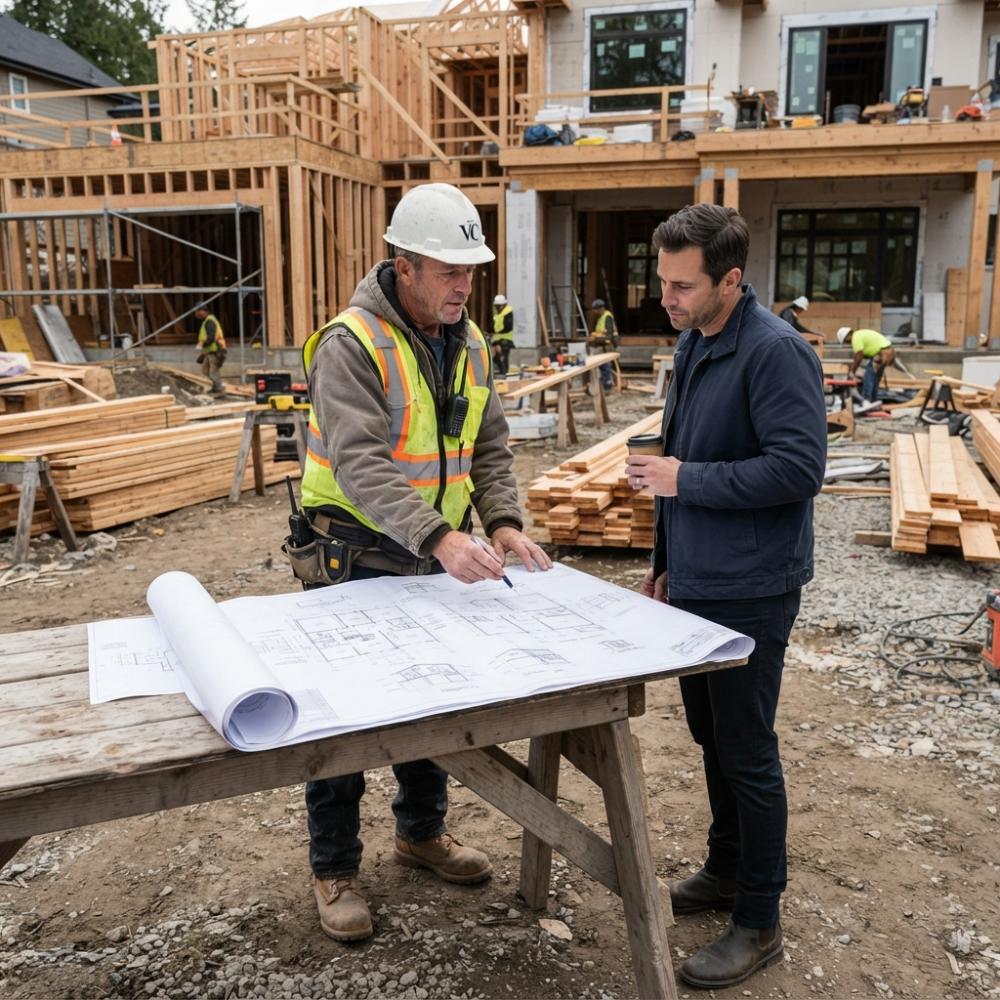
The role begins before the first shovel touches ground. During pre-construction, the owner's representative reviews the budget, identifies cost drivers, and flags unrealistic timelines. They conduct a feasibility study that stress-tests assumptions about material availability, labor capacity, and site conditions. This early intervention often prevents months of delays and budget hemorrhaging later.
Once construction begins, the owner's representative maintains constant presence on-site. They attend daily stand-ups with the general contractor, review submittals for material selections and specifications, and verify that the work matches the construction documents. When a subcontractor proposes a change order, the representative evaluates whether it's legitimate or a cost-shifting tactic. When the framing doesn't align with the architectural intent, they catch it before drywall covers the mistake.
The authority question matters enormously. An effective owner's representative has decision-making power delegated by the owner. They can approve payment applications, authorize change orders within pre-set limits, and halt work if safety or quality standards aren't met.
For first-time luxury builders, this role is non-negotiable. You don't have the experience to know what questions to ask or which decisions carry downstream consequences. For repeat developers, an owner's representative still adds value by freeing you from day-to-day site management so you can focus on strategic decisions and capital deployment across multiple projects.
Luxury Home Build Budget Management: Protecting Your Investment
Budget control in luxury construction isn't about squeezing pennies. It's about maintaining financial discipline so that intentional spending choices drive the final product, not surprise cost overruns that force value engineering at the end.
The mechanism starts with a detailed, line-item budget that accounts for every material, labor category, and contingency. This budget gets locked in before construction begins. As the project progresses, every change order is evaluated against this baseline. If the homeowner wants to upgrade from marble to a rare stone, that's a conscious choice with a known cost impact. If a subcontractor discovers unexpected site conditions and requests additional payment, the owner's representative negotiates the legitimacy and scope of that claim.
Many owners believe that a fixed-price contract protects them. It doesn't, not in luxury construction. A contractor who quotes a fixed price for a $12M custom estate is either padding the budget significantly or will find creative ways to minimize scope when unexpected conditions emerge. Instead, effective budget management uses a transparent cost-plus model where the owner sees the actual costs and the contractor's fee, with change orders documented and approved in real time.
Contingency allocation matters more than most owners realize. Luxury residential construction, particularly custom estates or major renovations, should reserve an appropriate percentage for unknowns. This isn't pessimism, it's realism. Custom materials have longer lead times and higher variability. Site conditions on older properties often reveal surprises. Specialized trades have less predictable labor costs.
Real-time financial reporting prevents the end-of-project shock. Monthly cost reports should show actual spending against budget, committed costs (change orders already approved but not yet paid), and projected final cost. This visibility allows the owner to make informed decisions about scope adjustments while there's still time to implement them, rather than discovering a $500K overrun at substantial completion.
Construction Quality Assurance for High-End Homes
Quality assurance in luxury construction operates at a different standard than typical residential work. The finishing details, the alignment of marble veining, the precision of millwork, the seamless integration of smart home systems, require constant inspection and documentation.
Quality assurance begins with clear standards. The construction documents should specify not just what materials will be used, but how they'll be installed, finished, and inspected. For an estate with custom cabinetry, this means detailed specifications for wood species, stain color, hardware alignment, and door operation. Vague specifications invite disputes and rework.
Site supervision happens daily. An owner's representative or quality inspector walks the job site, photographs progress, and documents any deviations from the specifications. When the tile setter begins installing marble in a pattern that doesn't match the approved layout, it's caught immediately, not discovered during final walkthrough when the cost of correction multiplies.
Third-party inspections add credibility and catch what on-site supervision might miss. Structural inspections verify that framing meets code and the architect's intent. MEP (mechanical, electrical, plumbing) inspections confirm that systems are installed to specification before walls close. Final quality inspections document the condition of finishes and identify any punch-list items before the owner takes possession.
The punch list itself becomes a contractual document. Items identified during final inspection are categorized by priority: critical items that affect safety or function must be corrected before occupancy; minor cosmetic items can be scheduled post-occupancy. The owner's representative verifies completion of all punch-list items and confirms that corrective work meets the original quality standard.
Project Management Systems and Real-Time Reporting
Transparency requires systems. Without structured documentation and reporting, project status becomes a conversation, subject to interpretation and memory. In luxury construction, decisions made during construction directly affect the final product and cost, so every decision needs to be recorded.
A strong project management system tracks schedule, budget, change orders, and quality documentation in one platform. A strong project management system tracks schedule, budget, change orders, and quality documentation in one platform. These systems create an audit trail that protects both the owner and the contractor by documenting decisions as they're made.
Schedule management requires more than a Gantt chart.
Permitting, Compliance, and Risk Mitigation
Permitting and regulatory compliance sound administrative, but they're often the constraint that determines project feasibility and timeline. A luxury estate on waterfront property may require permits from the Army Corps of Engineers, state environmental agencies, local building departments, and coastal management authorities. Missing a permit requirement or misunderstanding a regulation can halt a project mid-construction.
Post-Construction Handover and Long-Term Property Value
The transition from construction to occupancy requires as much discipline as the construction phase itself. A thorough final inspection documents the condition of every system, surface, and fixture. The punch list captures any items that don't meet specifications, and the contractor commits to correcting them on a defined schedule.
Frequently Asked Questions
What does a luxury home construction manager do?
A luxury home construction manager oversees every phase of your project, from feasibility studies and permit acquisition through final handover. They protect your vision by managing scope, timeline, and budget; coordinating subcontractors and material procurement; and conducting quality assurance inspections. Their role bridges the gap between your objectives and the general contractor's execution, ensuring alignment and accountability throughout the project lifecycle.
Why is owner's representation necessary for high-end residential projects?
Owner's representation provides independent oversight that protects your interests. A dedicated representative monitors construction quality, enforces contract terms, manages change orders, and ensures financial transparency. Without this layer, cost overruns, schedule delays, and quality issues often go unchecked until they're expensive to fix. For luxury homes where finishing details and structural integrity directly impact long-term property value, having an advocate on-site catches problems early.
How do you manage the budget for a complex luxury home build?
Effective luxury home build budget management starts with a detailed feasibility study and cost estimation, then uses construction documentation and real-time reporting to track spending against the baseline. Change order management processes every scope adjustment before work begins, preventing surprise costs. Regular financial reviews align actual expenses with the budget, and appropriate contingency reserves cover unforeseen conditions. Transparent communication between the owner, builder, and owner's representative keeps everyone accountable.
How does construction oversight protect property value?
Rigorous construction quality assurance for high-end homes ensures structural integrity, proper material selection, and adherence to building codes and design specifications. Site supervision catches defects before they're concealed, and quality inspections verify workmanship at every stage. This discipline prevents costly post-occupancy repairs and preserves the home's resale appeal. Long-term value protection also includes smart home integration planning, sustainable building practices, and proper documentation for future maintenance and insurance.
What is the difference between a general contractor and a construction manager?
A general contractor manages the day-to-day construction work and is responsible for profit. A construction manager (or owner's representative) works for you, not the contractor, and focuses on protecting your interests. The manager oversees the contractor's performance, validates quality, controls costs, and ensures the project aligns with your objectives. For luxury homes, an independent construction manager provides the financial discipline and strategic oversight that a general contractor cannot, since their incentives differ.
What are the benefits of hiring an independent construction consultant?
An independent construction consultant brings no financial stake in the contractor's profit, so their recommendations prioritize your vision and budget. They provide objective quality assessments, negotiate with subcontractors, manage milestone tracking, and offer expert guidance on material selection and finishing details. They also handle the administrative burden of construction documentation, permit coordination, and real-time reporting, freeing you from day-to-day project management while ensuring disciplined project execution and accountability.