 Ultimate guide
Strategic Construction Management for Real Estate Developers
Quick Summary
Strategic construction management for real estate developers treats the build as a financial and schedule commitment from land acquisition through handover. It coordinates design, procurement, contractors, costs and schedule, and sets decision rights and risk allocation before problems become disputes.
- Document scope, budget and schedule baselines before construction starts.
- Evaluate every change against those baselines before approving it.
- Use an owner's representative for oversight at contract signing, change orders and closeout.
- Compare committed cost, not just paid cost, against the budget at every review.
- Review the risk register, change log and long-lead tracker at each owner meeting.
Table of Contents
- Why Real Estate Developers Need Strategic Construction Management
- Owner's Representative for Real Estate Development: Your Advocate on Site
- Building a Construction Management Plan Template That Holds Up
- Construction Cost Management: Keeping Budgets Within Reach
- Construction Project Schedule Management From Preconstruction to Handover
- Risk, Contracts and Delivery Models Developers Should Control
- Choosing Your Next Step: Bringing Owner-Side Oversight Into Your Project
- Frequently Asked Questions
Why Real Estate Developers Need Strategic Construction Management
Last Updated: November 16, 2026
Vincenzo Consulting, LLC works with developers, family offices and owners who need construction managed with the same discipline they apply to capital.
Construction management is the coordination of design, procurement, contractors, costs and schedule so the project delivers the intended product on time and within budget.
Developers face pressure from several directions at once.
Industry research supports the value of disciplined project information flow.
Owner's Representative for Real Estate Development: Your Advocate on Site
An owner's representative is the person or firm that acts for the developer during construction, independent of the contractor being paid to build. Our dedicated owner's representative page for real estate development explains how this role works on development projects.
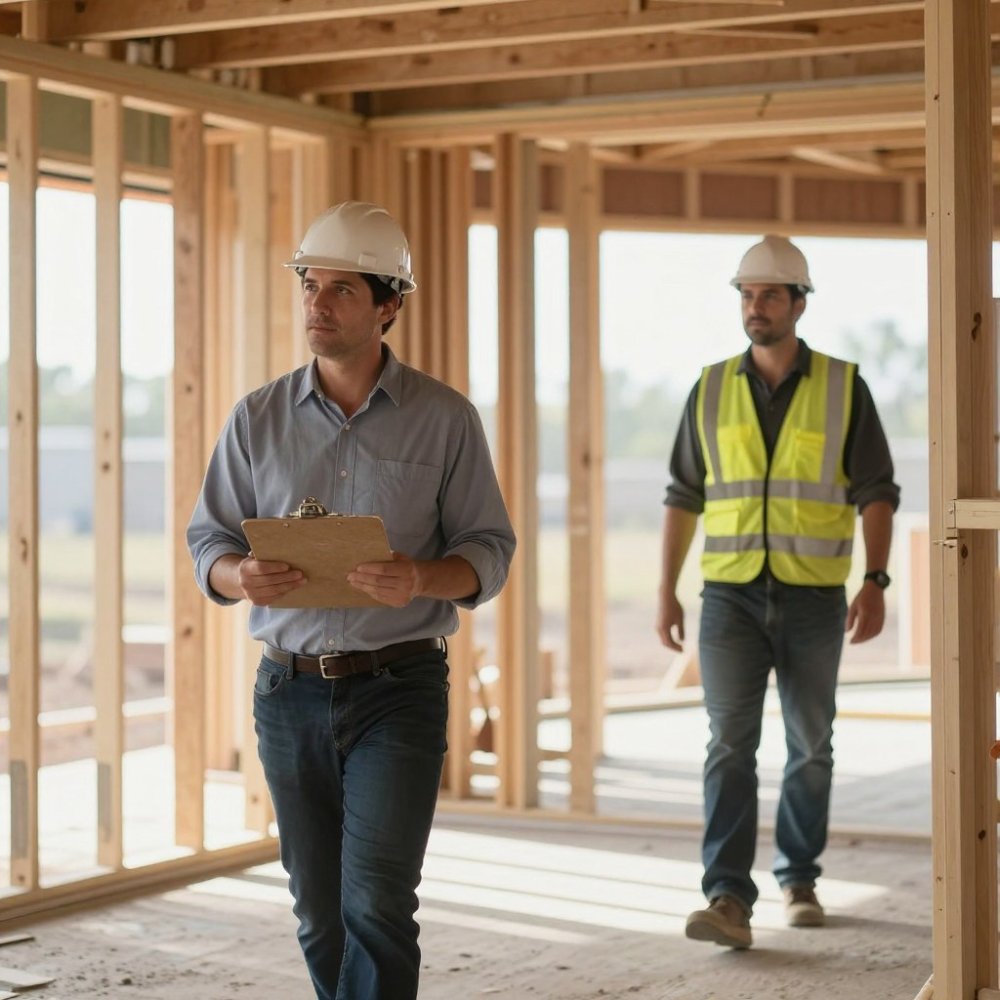
In practice, this means being on site rather than relying only on reports.
For developers, an advocate on site is most valuable at three points: before a contract is signed, when change orders arrive, and at closeout, the moments where undocumented decisions cost the most later.
If you are weighing this role for a development project, our guide on independent construction advocacy for developers explains how the arrangement works in practice.
Building a Construction Management Plan Template That Holds Up
A construction management plan defines how the project will be run, who makes which decisions, and how information moves. A plan that exists only as a binder rarely survives contact with the job, so the template should be short enough to use and specific enough to enforce.
A workable construction management plan template should cover the following sections:
- Project scope and baseline: the approved design set, budget and schedule with dated revision numbers
- Roles and authority: who approves change orders, who signs pay applications and who can stop work
- Reporting cadence: weekly schedule updates, monthly cost reports and the format each must follow
Preconstruction Decisions and Constructability Reviews
The part of the plan most developers underbuild is preconstruction.
- Scope validation. Confirm the program, unit mix, rentable area and amenity set against the pro forma before drawings are frozen.
- Drawing and specification review. Walk the design set for completeness, coordination between disciplines, and gaps that will become requests for information later. A constructability review at this stage asks a simple question: can this actually be built as drawn, in this sequence, on this site?
- Estimate reconciliation. Compare the design-stage estimate to the budget line by line, not as a single lump sum. Flag any division where the estimate exceeds the budget before the package goes out to bid.
- Long-lead item identification. Switchgear, elevators, curtain wall, mechanical equipment and specialty millwork can drive the schedule more than any trade's productivity. Identify them early and tie their order dates to the baseline schedule.
- Site constraint review. Access, laydown area, utility capacity, geotechnical conditions, easements and phasing constraints should be documented before mobilization, because each one becomes a claim if it surfaces later.
- Procurement and bid package strategy. Decide how the work will be packaged and bid, and confirm that the packages align with the schedule and the contract structure.
A constructability review is not a design critique for its own sake.
Watch out: a plan that is reviewed only at kickoff and then filed will not catch drift.
Build the review cadence into the document itself, assign a named owner to each section, and treat every revision as a dated record the owner can audit later.
Construction Cost Management: Keeping Budgets Within Reach
Construction cost management is the continuous process of estimating, tracking and controlling project costs against the approved budget. The critical discipline is comparing committed cost, not just paid cost, against the budget at every review.
Strong cost control starts with a detailed estimate tied to scope, followed by a contingency sized to the project's real uncertainty. Contingency should be set deliberately, reviewed against risks in the register, and reported separately so the owner knows how much remains.
Watch for these patterns in cost reporting:
- Pay applications that show percent complete rising faster than the schedule supports
- Change orders approved before pricing is reviewed against the baseline
- Allowances consumed without a reconciliation to the design intent
Industry forecasters expect continued investment in construction-management tools, which should help teams track these figures more consistently. The Verdantix market forecast projects construction-management software reaching nearly $7.6 billion by 2030, growing at roughly 12% annually from a $3.9 billion base in 2024 (Verdantix construction management software market forecast).
The article's cost-control points can be scanned at a glance:
| Pattern to watch | What it signals | Response |
|---|---|---|
| Percent complete rising faster than schedule | Pay applications outpacing actual progress | Verify work in place before paying |
| Change orders approved before pricing review | Costs added without baseline comparison | Review pricing against baseline first |
| Allowances consumed without reconciliation | Design intent drifting from budget | Reconcile allowances to design intent |
| Cost-to-complete not updated after trade problems | Hidden overrun building up | Update cost-to-complete at each report |
Construction Project Schedule Management From Preconstruction to Handover
Schedule management connects design, procurement and construction into one sequence the owner can measure.
Effective schedule management begins in preconstruction. The baseline schedule should identify long-lead procurement, permitting durations and inspection holds, and tie them to the owner's financing and leasing milestones.
Once construction begins, the schedule should be updated against actual progress every week, with the critical path reviewed explicitly.
Handover is part of the schedule too.
Risk, Contracts and Delivery Models Developers Should Control
Risk allocation is set largely by contract and delivery model, making procurement one of the most consequential decisions an owner makes. For a developer, the choice determines who holds cost risk, who controls schedule, and how much oversight the owner must staff.
Comparing the Delivery Models
- Design-bid-build. The owner completes design, then bids the work to a general contractor on a lump-sum basis. Cost risk shifts to the contractor, but only after the design is complete, which lengthens the schedule and can invite claims when the scope is unclear. It suits developers with a fully defined product and a strong design team.
- Design-build. A single entity holds both design and construction responsibility. This compresses schedule and gives the owner one accountable party, but the owner has less direct control over design detail and must specify performance requirements carefully. It suits developers who value speed and single-point accountability over design control.
- Construction management at risk (CMAR). A construction manager joins during design, provides preconstruction and constructability input, and then holds a guaranteed maximum price for construction. This gives the owner early trade input and a cost ceiling, while preserving more owner involvement than design-build. It suits complex projects where design and cost need to be reconciled before the drawings are frozen.
The delivery model should match the owner's appetite for involvement. An owner who wants to manage trades directly needs staff or a representative to do it. An owner who prefers a single accountable contractor needs strong contract controls to prevent that contractor from holding all the leverage.
Contractual Risk Allocation From the Owner's Side
Developers should control several elements directly rather than inheriting them from a standard form:
- Change order thresholds and approval authority, so small changes do not accumulate unnoticed. Set a dollar threshold above which no change proceeds without written owner approval, and require pricing to be reviewed against the baseline before approval.
- Payment terms and retainage, tied to verified progress rather than submitted percentages. Pay applications should be checked against work actually in place, not just percent complete.
- Schedule milestones with consequences, including liquidated damages where appropriate, and a clear definition of what counts as excusable delay.
- Insurance and bonding requirements that match the project's exposure, including builder's risk, general liability and payment and performance bonds where the contract requires them.
Contingency is part of the risk allocation too. Sized to real uncertainty, reviewed against the risk register, and reported separately, it tells the owner how much remains. A contingency folded into the budget and never tracked is not a control; it is a hope.
Permitting and regulatory compliance add another layer. Requirements vary by jurisdiction and project type, so the owner should confirm applicable approvals early and assign responsibility for each in writing.
Choosing Your Next Step: Bringing Owner-Side Oversight Into Your Project
If your project is at the land, design or early contracting stage, the highest-value move is to define the baseline before construction starts.
If construction is already underway, begin with a candid review of the cost-to-complete, the open change orders and the critical path.
Whichever stage you are at, assess whether owner-side oversight fits the project's size and complexity. Read more about whether owner's representation is right for your build, see why developers hire construction owner representation, or review independent project oversight options for a practical path to these benefits.
Vincenzo Consulting, LLC Email: contact information available on our website Website: vincenzoconsulting.com Logo: Vincenzo Consulting, LLC
Frequently Asked Questions
What is strategic construction management in real estate development?
Strategic construction management is owner-side oversight of a project from planning through handover. It aligns scope, budget and schedule with the owner's objectives, and it checks the contractor's work rather than simply accepting reports. Vincenzo Consulting, LLC provides this kind of owner's representation for ultra-luxury residential, complex commercial and infrastructure projects. Pricing depends on project size, scope and timeline, so contact Vincenzo Consulting, LLC through its website for a quote.
How does construction management differ from real estate development management?
Real estate development management covers the business decisions: site selection, financing, leasing strategy and the overall return. Construction management focuses on how the building is physically delivered: contractor coordination, quality control, cost control and the construction schedule. Strong developers keep the two connected so that design and budget choices support the investment thesis rather than working against it.
When should a real estate developer bring in an owner's representative?
The best time is before design is finalized and before the general contractor is selected. At that stage an owner's representative can review constructability, pressure-test the budget, and help structure contracts that allocate risk clearly. Bringing one in late usually means paying to fix problems that could have been avoided during preconstruction.
How can developers control construction costs and reduce budget overruns?
Control starts with a detailed estimate tied to the design, followed by a contingency sized to the project's risk profile. Developers should require monthly cost reporting that compares committed costs, changes and forecasts against the approved budget. Change orders should be reviewed before work proceeds, not after invoices arrive. Vincenzo Consulting, LLC applies this kind of financial discipline on owner's representation engagements.
What should a construction management plan include?
A construction management plan should define project scope, roles and decision authority, the master schedule and its milestones, the budget structure, procurement strategy, quality standards, communication protocols and the process for handling change orders and disputes. Keeping it as a living document, updated at each phase, prevents the plan from becoming a binder that nobody reads during the build.
How do developers keep a construction project on schedule?
Keeping a project on schedule depends on a baseline schedule agreed before construction begins, a short-interval look-ahead process run weekly with the contractor, and clear tracking of critical-path activities. Delays should be logged with causes and responsibility assigned early, so that recovery options exist while they are still affordable.
What should developers look for when selecting a construction manager or owner's representative?
Look for documented experience on projects of similar size and type, the ability to be on site regularly rather than only reviewing reports, clear authority over decisions, and a fee structure that is transparent. Ask for references from completed projects and confirm how the firm handles conflicts of interest with contractors. Vincenzo Consulting, LLC can discuss its approach and experience directly; reach out through its website.
How can construction oversight protect a property's long-term value?
Long-term value depends on the quality of what is built and how well it was documented. Oversight that enforces specifications, tests systems before handover and maintains accurate as-built records gives the owner a property that performs and can be financed, insured and sold on clear terms. Disciplined oversight during construction is usually far cheaper than correcting defects after occupancy.