 how-to
How to Select an Owner's Representative for Estates
Table of Contents
- Owner's Representative Responsibilities on a Custom Estate Build
- Owner's Representative vs. General Contractor: Who Does What
- Owner's Representative Selection Checklist
- Owner's Representative Interview Questions That Reveal Real Fit
- Fee Structures, Contract Terms, and Conflicts of Interest
- References, Due Diligence, and Performance Verification
- Measurable Success Criteria and Reporting Expectations
- Conclusion
- Frequently Asked Questions
Last Updated: October 14, 2026
Owner's Representative Responsibilities on a Custom Estate Build
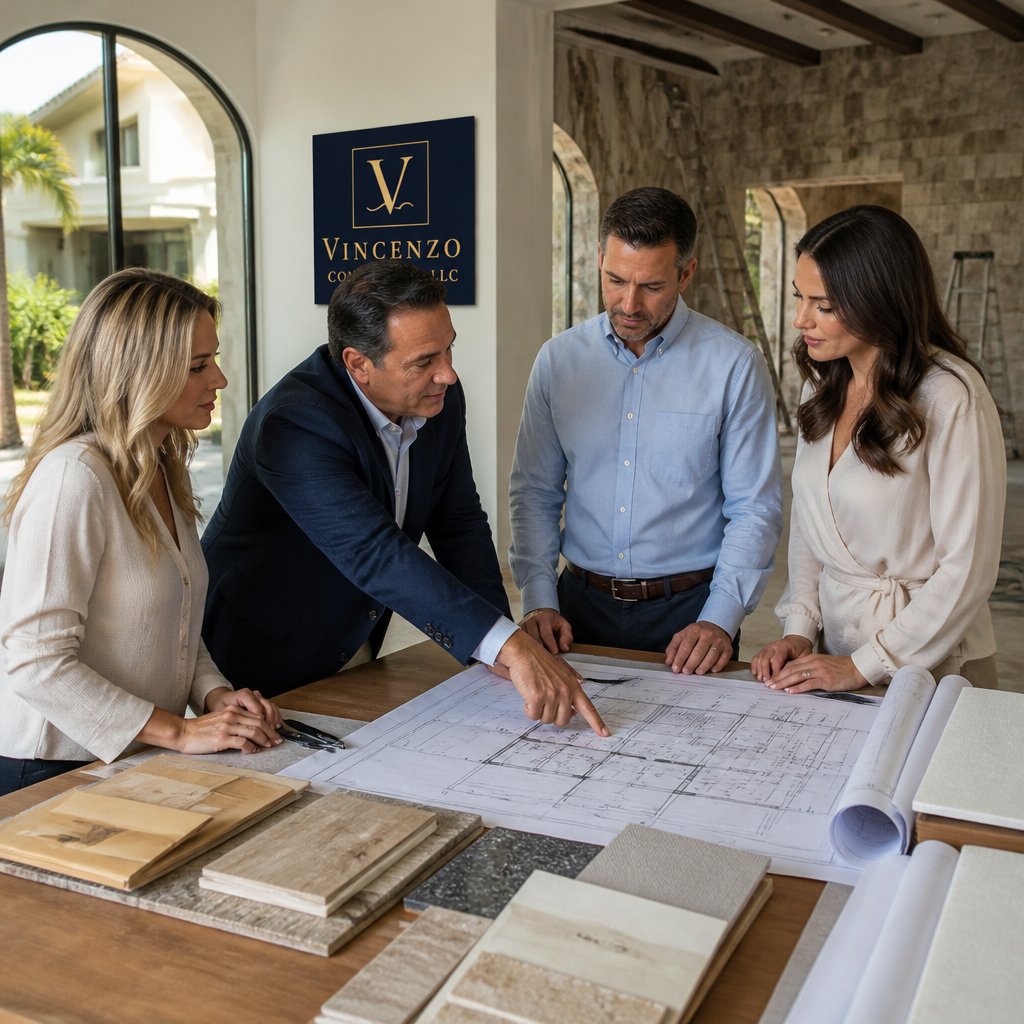
An owner's representative is the professional who acts as your advocate from the first design meeting through final walkthrough, managing budget, schedule, quality, and contractors on your behalf. For a custom estate build, that means one person holds the entire project accountable to you.
This guide from Vincenzo Consulting, LLC breaks down exactly how to select an owner's representative for custom estate builds, from the first interview to the signed contract.
Most owners get this wrong. They hire on personality, not process. Then they spend two years wondering who is actually watching their money.
An owner's representative handles the work most owners assume someone else is doing:
- Budget development and cost control from preconstruction onward
- Schedule management and milestone tracking against real dates
- Contract administration, bid review, and procurement oversight
- Quality assurance and site oversight during construction
- Risk management and issue resolution before problems grow
- Stakeholder communication between you, your architect, and your general contractor
The role is not advisory. A strong owner's rep has defined authority to question change orders, flag scope creep, and pause work when something does not match the drawings.
Owner's Representative vs. General Contractor: Who Does What
The general contractor builds the project. The owner's representative watches the project on your behalf. Those are different jobs with different loyalties.
Your general contractor manages subcontractors, means and methods, and day-to-day site operations. They are paid to deliver the build. Your owner's rep manages the contractor, reviews pay applications, tracks the budget forecast, and reports to you.
Confusing the two is the most expensive mistake in luxury construction. When you rely on the builder to police itself, cost overruns and quality gaps surface late, when they are hardest to fix.
| Role | Primary Loyalty | Core Duties | Reports To |
|---|---|---|---|
| Owner's representative | Owner | Budget, schedule, quality, contract oversight | Owner |
| General contractor | The project contract | Site operations, subcontractors, construction | Owner (via contract) |
| Architect | Design intent | Drawings, specifications, design administration | Owner |
A good rule: if the person giving you cost and schedule updates is the same person whose profit depends on those numbers, you do not have independent oversight.
Owner's Representative Selection Checklist
Use a written checklist so you compare candidates on facts, not charm. Score each one, then discuss the results as a team. The goal is not a perfect score, it is a defensible decision you can explain to your spouse, your attorney, and your lender.
Weighted Scoring Rubric
Assign each criterion a weight based on what matters most for your build, then score every candidate 1-5. Multiply weight by score for a total. A 100-point scale keeps the conversation honest.
| Criterion | Weight | What a 5 Looks Like | What a 1 Looks Like |
|---|---|---|---|
| Custom estate experience at similar scale | 20 | Has delivered multiple residences in your square-footage and finish tier | Only commercial or production-home work |
| Verifiable portfolio and named references | 15 | Three or more owners you can call, with documented outcomes | Portfolio is photos only, no names |
| Defined authority and decision rights | 15 | Written scope naming what they can approve, pause, or reject | "I'll coordinate with everyone" |
| Fee transparency and contract clarity | 15 | Written fee model, scope boundaries, termination terms | Verbal estimates, vague scope |
| Conflict-of-interest disclosure | 10 | Signed disclosure of every financial relationship | Refuses to put it in writing |
| Reporting cadence and format | 10 | Sample weekly report you can review before hiring | "You'll get updates" |
| On-site presence and named point of contact | 10 | Specific days per week, named backup | Unclear who shows up |
| Change-order and dispute process | 5 | Written escalation path with timelines | Handled "as they come up" |
Estate-Specific Qualification Checks
Custom estates fail differently than production homes. Verify the candidate has actually worked on:
- Complex site conditions, steep grades, coastal or floodplain setbacks, tree-preservation requirements, or geotechnical challenges
- High-end finish packages, imported stone, custom millwork, specialty glazing, integrated smart-home and AV systems
- Specialty systems, geothermal, radiant, whole-house generators, wine rooms, elevators, and pool or spa mechanicals
- Multi-stakeholder builds, separate architect, interior designer, landscape architect, and specialty consultants
- Comparable project scale, ask for the square footage, budget tier, and duration of at least three past builds
Quick Pre-Screen Questions
- How many custom estates of similar scale have you delivered in the last five years?
- Can you name three past owners I may call?
- What authority will you have to pause work or reject a change order?
- How is your fee structured, and what is excluded from scope?
- Do you have any financial relationship with builders, architects, or vendors?
- What does your weekly report actually contain?
- Who is my day-to-day contact, and how often are they on site?
- How do you handle a dispute between the architect and the builder?
Vincenzo Consulting, LLC [Logo] [Website] | [Email]
Owner's Representative Interview Questions That Reveal Real Fit
The best interview questions test judgment, not credentials. Anyone can list past projects. Fewer can explain how they protected an owner when a build went sideways.
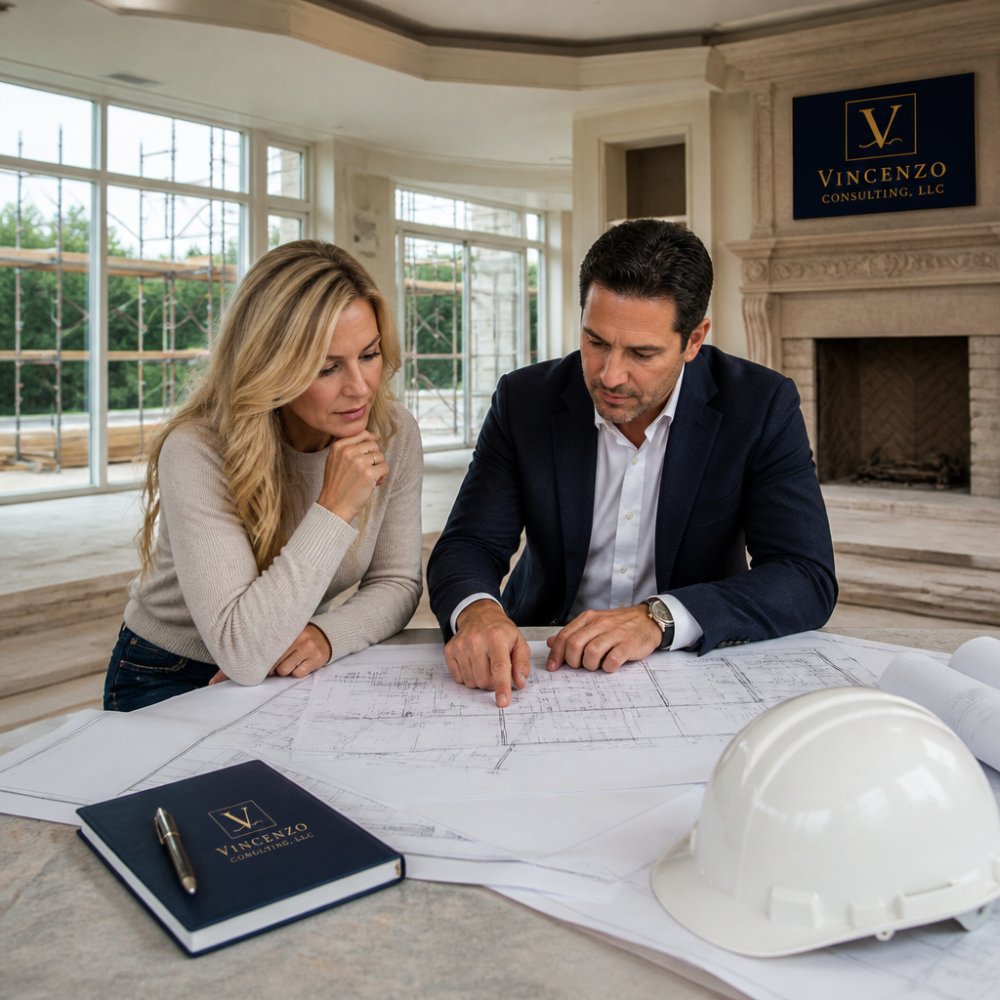
Ask these directly:
- Walk me through a project where the budget forecast shifted mid-build. What did you do?
- How do you handle a contractor dispute when the schedule is already tight?
- What authority will you have to pause work or reject a change order?
- How do you keep the architect, builder, and owner aligned on scope of work?
- What does your weekly progress reporting actually look like?
- How do you catch quality problems before they are covered up?
Listen for specifics. Vague answers about "communication" and "transparency" mean nothing. You want named situations, real numbers, and clear decisions.
Fee Structures, Contract Terms, and Conflicts of Interest
Owner's representative fees are usually structured one of three ways: a flat fee, an hourly rate, or a percentage of construction cost. Each shifts risk differently, and none is universally best. What matters is that the model matches your project's certainty and your tolerance for surprises.
Comparing the Three Fee Models
| Model | Best When | Risk to Owner | Watch For |
|---|---|---|---|
| Flat fee | Scope is well defined and schedule is predictable | Rep may cut corners if the project drags | Exclusions that trigger add-on fees |
| Hourly | Engagement is short, uncertain, or advisory | Total cost is unknown until the end | No cap, no monthly estimate, no reporting of hours |
| Percentage of construction cost | Project is large and scope is stable | Can reward scope growth and change orders | Whether the percentage applies to hard costs only or all costs |
A common pattern is a hybrid: a flat monthly retainer plus a defined hourly rate for work beyond the agreed scope. Ask every candidate to show the model in writing with a worked example on a project of your size.
Contract Terms to Negotiate
Read the contract for scope, term, termination, and authority. Then negotiate the clauses that protect you:
- Scope boundaries, what is included, what is excluded, and how out-of-scope work is authorized and priced
- Term and renewal, start date, end date, and whether renewal is automatic
- Termination, notice period, termination for cause versus convenience, and how final invoices are settled
- Authority limits, the dollar threshold above which the rep must get your written approval
- Indemnification and insurance, general liability, professional liability, and workers' compensation coverage
- Dispute resolution, mediation first, then arbitration or litigation, and which state's law governs
- Confidentiality, protection of your financials, design plans, and personal information
Verifying Independence
Conflicts of interest are the quiet risk in owner's representation. If a candidate also owns a construction firm, earns referral fees from vendors, or holds an ownership stake in a subcontractor, that is a conflict you must know about before you sign.
Ask for a signed conflict-of-interest disclosure that lists:
- Any ownership or financial interest in a builder, architect, or trade contractor
- Any referral fees, commissions, or finder's fees from vendors or suppliers
- Any family or business relationship with anyone bidding on your project
- Any past or current engagement with the architect or builder you are considering
Vincenzo Consulting, LLC [Logo] [Website] | [Email]
References, Due Diligence, and Performance Verification
References are where the real vetting happens. Ask each candidate for three recent owners, then actually call them.
Ask references:
- Did the project finish on the agreed schedule?
- How did the rep handle cost overruns or change orders?
- Was the reporting clear and consistent?
- Would you hire them again for a larger build?
Then verify independently. Check business registration, insurance, and any professional standing. Look for patterns across references, not one glowing review. A single unhappy owner can be noise. Three similar complaints are a signal.
Measurable Success Criteria and Reporting Expectations
Set your success criteria before the build starts, so performance is a fact, not an opinion. Agree on what "on track" means for budget, schedule, and quality, and put it in writing.
Define:
- Budget: variance thresholds that trigger a formal review
- Schedule: milestone dates and how schedule variance gets reported
- Quality: inspection cadence and punch list standards
- Reporting: format, frequency, and who receives it
A strong owner's representative reports on a fixed cadence, flags issues early, and never hides a problem to protect the relationship. That accountability is the whole point of the role.
Conclusion
Selecting an owner's representative comes down to process, not personality. Vet the portfolio, ask hard interview questions, verify references, and demand written terms on fees, authority, and conflicts. Do that, and you enter the build with an advocate whose only job is protecting your interests and your long-term property value. Vincenzo Consulting, LLC brings more than 35 years of executive leadership to discreet, white-glove owner's representation, with financial discipline and strategic oversight that align scope, budget, and schedule with your objectives.
Frequently Asked Questions
What does an owner's representative do on a custom home build?
An owner's representative protects your interests from preconstruction through closeout. That includes reviewing bids and contracts, tracking budget and schedule, coordinating the architect and general contractor, catching quality issues on site, managing change orders, and giving you regular progress reports. The owner's representative works for you, not the builder, so you get independent eyes on every decision.
How is an owner's representative different from a general contractor?
A general contractor is hired to build the home and is paid from the construction budget. An owner's representative is hired by you to oversee that work and report to you alone. The owner's representative reviews the contractor's schedule, invoices, and quality, while the general contractor manages trades, procurement, and daily site work. Keeping those roles separate preserves independent accountability.
What qualifications should an owner's representative have for a custom estate?
Look for direct experience on custom estate or luxury residential projects, not just commercial work. Ask about portfolio depth, familiarity with high-end finishes and waterfront construction, and how they handle consultant coordination. A strong candidate will also show financial discipline, clear reporting habits, and references from owners who built at a similar scale.
What should an owner's representative's contract include?
The contract should define scope of work, reporting cadence, decision-making authority, fee structure, and conflict-of-interest disclosures. It should also spell out how change orders, schedule variance, and issue resolution are handled, and what happens if the relationship ends early. Have a construction attorney review the terms before you sign, and confirm who owns the project records.