 ultimate-guide
Oversight for High-End Residential Projects: A 2026 Guide
Table of Contents
- Why High-End Residential Projects Fail Without Independent Oversight
- The Core of Oversight for High-End Residential Projects: The Owner's Representative
- Managing High-End Residential Budgets: Cost Control and Financial Discipline
- Enforcing Schedule, Quality, and Compliance on the Project Timeline
- Your Construction Project Oversight Checklist: A Practical Framework
- Beyond the Basics: Technology, Disputes, and Sustainability
- How Owner's Representative Services Adapt to Your Project's Needs
- Conclusion: Securing Your Vision and Property Value
- Frequently Asked Questions
Last Updated: September 4, 2026
Why High-End Residential Projects Fail Without Independent Oversight
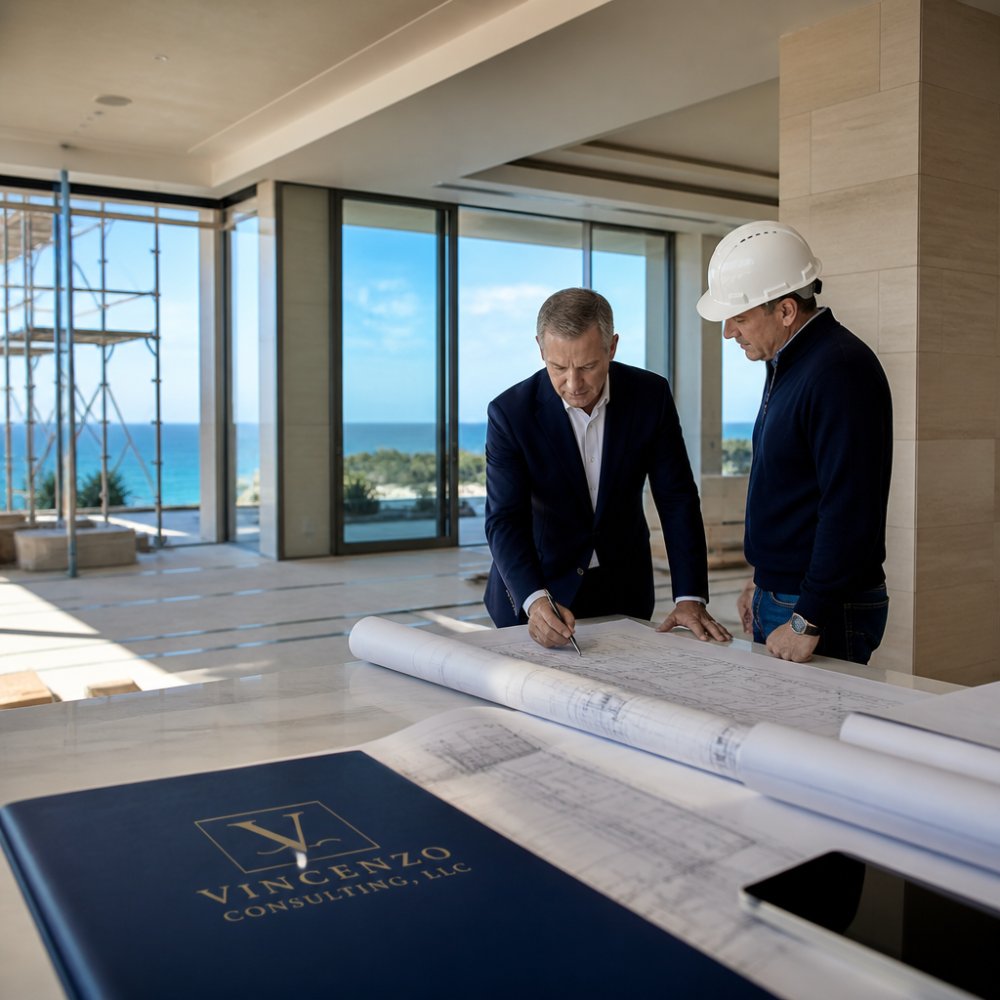
High-end residential construction projects fail most often not because of poor craftsmanship, but because of fragmented accountability among architects, engineers, and contractors. When no single party answers to the owner, decisions drift toward convenience rather than the original vision, and small deviations compound into costly compromises. This guide from Vincenzo Consulting, LLC explains how oversight protects your investment and peace of mind.
The stakes differ sharply from standard homebuilding. A custom estate involves complex building systems, premium materials, and extended timelines where errors surface months after they are buried behind finished walls. Without a dedicated advocate, owners frequently discover that budget adherence slipped quietly or the timeline stretched without explanation. Independent oversight closes that gap by placing a fiduciary on your side of the table.
Below, we walk through the specific mechanisms that keep luxury projects on track, from financial controls to site-level verification. The framework has protected owners through decades of complex builds, whether you are constructing a waterfront retreat or renovating a historic property.
The Core of Oversight for High-End Residential Projects: The Owner's Representative
An owner's representative is a professional hired exclusively to protect the homeowner's interests throughout the construction project management lifecycle. Unlike the general contractor, who manages the build, the owner's representative manages the process on your behalf, serving as the central point of contact among all stakeholders.
This role exists because information asymmetry works against owners. Contractors understand costs, schedules, and quality standards far better than most clients. An experienced representative rebalances that dynamic by conducting technical review of plans, verifying installation quality, and challenging decisions that conflict with your objectives.
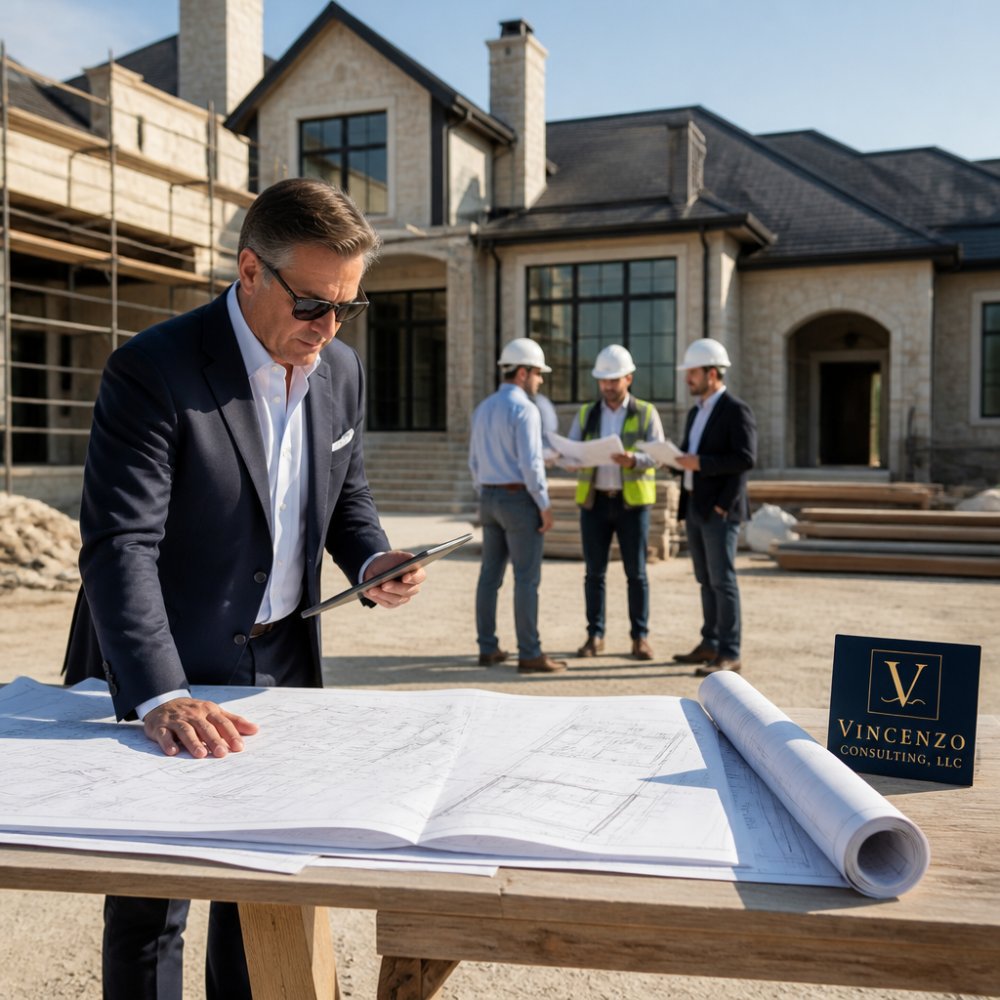
The most effective representatives combine construction administration expertise with a service mindset. They attend every critical meeting, maintain meticulous construction documentation, and report in plain language rather than industry jargon. For first-time luxury builders especially, this guidance prevents costly learning experiences.
Managing High-End Residential Budgets: Cost Control and Financial Discipline
Budget overruns in luxury construction rarely stem from a single dramatic event (peer-reviewed research). They accumulate through change orders, vague allowances, and unverified invoices that pass without scrutiny. Managing high-end residential budgets requires a system of checks that catches these leaks before they become structural problems.
A disciplined owner's representative reviews every invoice against actual progress, not just the schedule of values, confirming that billed materials have arrived and labor charges correspond to completed work. Cost control also involves challenging contractor assumptions about premium materials, ensuring quoted prices reflect what specifications actually require.
The practical tool is a living budget document, updated weekly, that tracks every dollar against the original plan. When a variance appears, the representative flags it immediately and presents options: adjust scope, source alternatives, or approve the increase with full awareness. This transparency keeps owners empowered rather than surprised.
Enforcing Schedule, Quality, and Compliance on the Project Timeline
A luxury estate involves hundreds of subcontractors whose work must sequence perfectly. The owner's representative enforces the project timeline by tracking milestones, identifying delays early, and holding parties accountable before slippage becomes critical.
Schedule enforcement mechanics. The representative maintains a critical path method (CPM) schedule that maps every trade's dependency (pmi.org). When a marble supplier in Italy ships late, the CPM reveals whether the delay impacts the overall completion date or can be absorbed by float. The representative issues a formal delay notice the moment a milestone slips, triggering the contractor's obligation to propose a recovery plan. This documentation is essential if you later pursue liquidated damages or termination rights.
Quality assurance through staged inspections. Quality assurance operates through scheduled site inspections at every stage, from foundation through punch list management. The representative verifies that installation matches architectural drawings, materials meet specifications, and workmanship meets the standard your budget commands. Deficiencies are documented and corrected before the next trade covers them up.
The inspection protocol follows a hold-point system. Certain work cannot proceed until the representative signs off. Typical hold points include:
- Foundation: Verify rebar placement, concrete mix design, and waterproofing membrane installation before the pour
- Rough-in: Inspect plumbing, electrical, and HVAC chases before drywall installation
- Moisture protection: Confirm flashing, weather barriers, and window installation meet manufacturer specifications
- Finish work: Review millwork tolerances, paint quality, and stone alignment against approved samples
Each inspection generates a written report with photographs, and deficiencies are logged in a cloud-based tracking system with assigned responsibility and due dates. The representative verifies correction and re-inspects before signing off.
Regulatory compliance and permit navigation. Permit acquisition, building code adherence, and inspection scheduling require familiarity with local requirements. An experienced representative manages these processes so compliance enforcement never stalls the project, while maintaining accurate construction documentation that satisfies inspectors and protects you during any future property transaction.
Beyond the building permit, high-end projects often require separate approvals for:
- Zoning variances for setbacks, height restrictions, or lot coverage
- Environmental reviews for waterfront properties or protected habitats
- Historic preservation approvals for renovations of designated structures
- Geotechnical permits for deep foundations or retaining walls
The representative tracks every application deadline, coordinates with the design team on plan review comments, and schedules municipal inspections so they never block a trade. When an inspector flags an issue, the representative coordinates the fix and re-inspection.
Trade coordination and sequencing. In a luxury project, the custom millworker, the lighting designer, and the smart-home integrator all need access to the same spaces at different times. The representative sequences these trades to prevent damage and rework, ensuring the custom staircase is installed after the drywall is finished and protected, not before.
Your Construction Project Oversight Checklist: A Practical Framework
A construction project oversight checklist transforms abstract advice into daily practice. Use this framework to evaluate whether your project receives adequate protection at each phase:
- Pre-construction: Review all contracts and specifications before signing; verify insurance and licensing of all parties
- Budget baseline: Establish the approved budget with clear contingency rules for change orders
- Schedule review: Confirm the master timeline includes realistic lead times for premium materials
- Weekly site visits: Conduct documented inspections during active construction phases
- Invoice verification: Cross-check every payment application against observed progress
- Change order control: Require written approval for any scope modification before work proceeds
- Quality checkpoints: Schedule inspections before drywall, finishes, and final installation
- Punch list management: Track every deficiency to completion, not just to identification
- Closeout documentation: Collect warranties, as-built drawings, and maintenance manuals
This checklist represents the minimum standard for protecting a significant investment. Owners who delegate these responsibilities entirely to contractors assume risk a representative would otherwise absorb.
Beyond the Basics: Technology, Disputes, and Sustainability
Modern oversight extends beyond traditional construction management into areas that distinguish exceptional projects: how digital tools create an objective record, how dispute resolution prevents litigation, and how sustainability verification protects your investment in green systems.
Technology integration: building an objective digital record. Real-time progress tracking through project management platforms, drone surveys, and photographic documentation creates an objective record of site conditions. A modern oversight protocol deploys:
- Building Information Modeling (BIM) coordination: Before construction begins, the representative reviews the BIM model to detect clashes between structural steel, ductwork, and plumbing runs. Catching a conflict digitally costs nothing; catching it on-site means demolition and rework.
- Drone-based progress documentation: Weekly aerial surveys create a timestamped visual record of exterior progress, material staging, and site conditions. This documentation resolves disputes about weather delays and verifies that materials are actually on-site before invoices are approved.
- 360-degree site photography: A representative walks the site weekly with a 360-degree camera, creating a navigable visual archive. When a finish issue appears months later, the archive reveals exactly what was behind the drywall and when.
- Cloud-based project management: Platforms like Procore or Buildertrend centralize RFIs, submittals, change orders, and daily logs. The representative ensures every decision is documented in writing, creating a complete audit trail that protects you in any dispute.
This digital layer is not about gadgetry; it is about creating evidence. When a contractor claims a delay was caused by weather, the drone footage and daily logs tell the real story.
Dispute resolution strategies: keeping conflicts out of court. A skilled representative navigates conflicts with documentation and calm, often resolving issues before they escalate to legal action. This discretion preserves working relationships while protecting your position.
The representative's approach follows a structured escalation path:
- Identify and document: The moment a potential dispute emerges, the representative documents the facts, the contract language, and the impact on cost or schedule.
- Open communication: The representative meets with the contractor to discuss the issue, presenting the documentation and seeking a collaborative resolution.
- Formal notice: If informal discussion fails, the representative issues a formal written notice referencing the specific contract clause at issue, creating a record for potential mediation.
- Mediation: Before any legal action, the representative recommends mediation with a construction-specialist mediator. Mediation resolves most disputes in days, not the years litigation requires (uscourts.gov).
- Legal escalation: Only if mediation fails does the representative recommend engaging construction attorneys, and even then, the documentation assembled ensures your counsel starts from a position of strength.
Sustainability and green building oversight: verifying performance, not just paperwork. Owners pursuing energy-efficient systems or sustainable materials need verification that these features perform as specified, not merely that they appear on paper. This includes validating installation quality and operational functionality of complex building systems.
For projects pursuing LEED certification or Passive House standards, the oversight protocol includes:
- Performance testing: Blower-door tests verify air tightness, and thermal imaging identifies insulation gaps before drywall closes them off.
- System commissioning: A commissioning agent tests every HVAC zone, verifying that the geothermal loop or heat-recovery ventilator actually delivers the specified performance.
- Material chain-of-custody: For certified sustainable materials, the representative verifies that the lumber or stone delivered to the site matches the certification documentation, preventing substitution with cheaper, non-certified alternatives.
- Energy modeling validation: After completion, the representative compares actual energy consumption against the model used to justify the system design, identifying any operational issues that undermine efficiency.
Sustainability oversight also extends to indoor air quality. The representative schedules ventilation flush-out periods before occupancy and verifies that low-VOC paints and finishes were actually used, not just specified. For luxury clients with health concerns, this verification ensures no specification shortcut compromises the indoor environment.
How Owner's Representative Services Adapt to Your Project's Needs
Oversight for high-end residential projects is not one-size-fits-all. The depth of involvement should match your experience level, project complexity, and personal availability. A seasoned developer may need only periodic audits, while a first-time luxury homeowner benefits from weekly hands-on representation.
The engagement model typically scales across three levels. Full-service representation places the consultant on-site regularly, managing day-to-day coordination with the contractor. Selective oversight focuses on specific risk areas, such as budget control or complex building systems. Advisory support provides expert consultation at key milestones without continuous presence.
Vincenzo Consulting, LLC structures its owner's representative services around your specific requirements, drawing on more than 35 years of executive leadership across luxury residential, commercial, and infrastructure projects. This experience means anticipating problems before they emerge, whether in subcontractor coordination, architectural oversight, or risk mitigation. The goal is always the same: aligning scope, budget, and schedule with your objectives so the finished property preserves its value for decades.
Conclusion: Securing Your Vision and Property Value
Building a high-end residence tests even experienced owners. The complexity of modern construction, the number of stakeholders, and the financial scale create risks that demand professional attention. Independent oversight is not an added expense; it is the mechanism that protects your vision and the long-term value of your property.
At Vincenzo Consulting, LLC, we provide discreet, white-glove owner's representation that ensures disciplined execution and accountability throughout the project lifecycle. Our approach combines rigorous financial discipline, strategic oversight, and a commitment to protecting your interests at every decision point. When you build at this level, you deserve a partner whose only allegiance is to you.
Get started with Vincenzo Consulting, LLC and secure the predictable results your investment demands.
Frequently Asked Questions
What is the difference between a general contractor and an owner's representative?
A general contractor is hired to build the project, managing subcontractors and day-to-day site work. An owner's representative works exclusively for you, the property owner. They do not build but oversee the process to ensure the contractor fulfills their contract. This includes monitoring the budget, schedule, and quality of workmanship. This independent oversight for high-end residential projects protects your interests, offering an objective layer of accountability that a contractor, focused on their own bottom line, cannot provide.
How does construction oversight protect property value?
Oversight protects property value by ensuring the project is built exactly to the approved specifications and high standards. A dedicated owner's representative conducts site inspections to catch installation errors before they become costly problems. They ensure the correct materials are used and that building systems are installed properly. This meticulous attention to detail preserves the architectural integrity and operational functionality of your home, preventing the expensive repairs and diminished resale value that often result from poor construction quality.
What are the primary risks of building a high-end residential project without independent oversight?
Without independent oversight, you face significant risks. Budget overruns are common when change orders go unchecked. Schedule slippages can stall your project for months. More critically, you may receive substandard workmanship that isn't caught until after the warranty expires. Poor coordination between architects and contractors can lead to design flaws. Independent oversight for high-end residential projects acts as a risk mitigation strategy, ensuring compliance with plans and protecting you from disputes and costly litigation.
What does a construction project oversight checklist include?
A comprehensive construction project oversight checklist covers several areas: budget adherence, reviewing invoices and change orders; project timeline, tracking progress against the master schedule; quality assurance, conducting regular site inspections; and regulatory compliance, verifying permits are in place. It also includes technical review of shop drawings, subcontractor coordination, and punch list management during project closeout. This ensures every phase of the project lifecycle is monitored, providing project transparency and protecting your investment from start to finish.
This article was written using GrandRanker